



Seasonal Influenza Vaccination of Children Induces Humoral and Cell-Mediated Immunity Beyond the Current Season: Cross-reactivity With Past and Future Strains
Supporting Files

-
11 15 2016 ; 11-15-
-
Available in CDC Stacks on 2017-12-15T00:00:00Z
File Language:
English
Details
-
Alternative Title:J Infect Dis
-
Personal Author:Reber, Adrian J. ; Kim, Jin Hyang ; Coleman, Laura A. ; Spencer, Sarah M. ; Chung, Jessie R. ; Chen, Jufu ; Gargiullo, Paul ; Sundaram, Maria E. ; Belongia, Edward A. ; Shay, David K. ; Katz, Jacqueline M. ; Sambhara, Suryaprakash
-
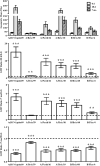
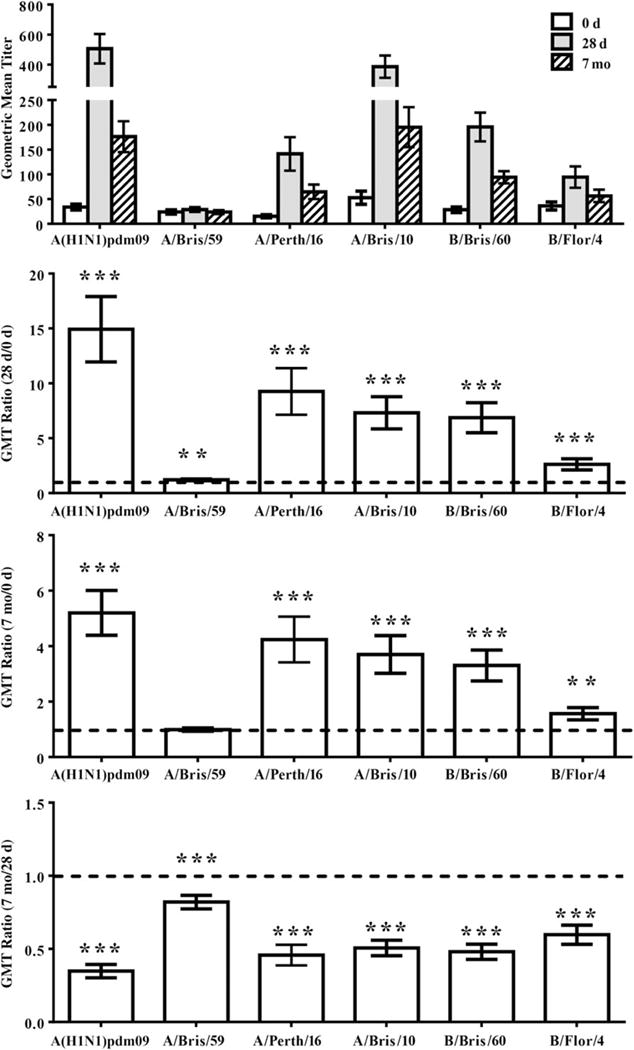
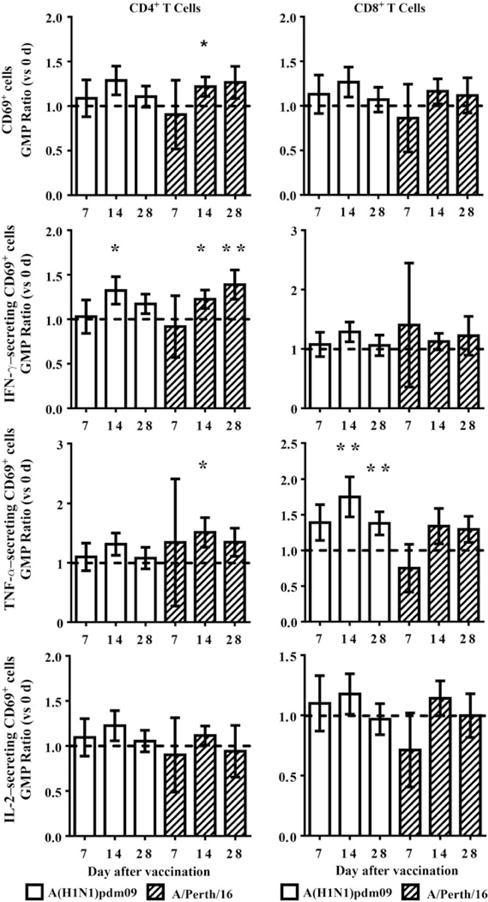
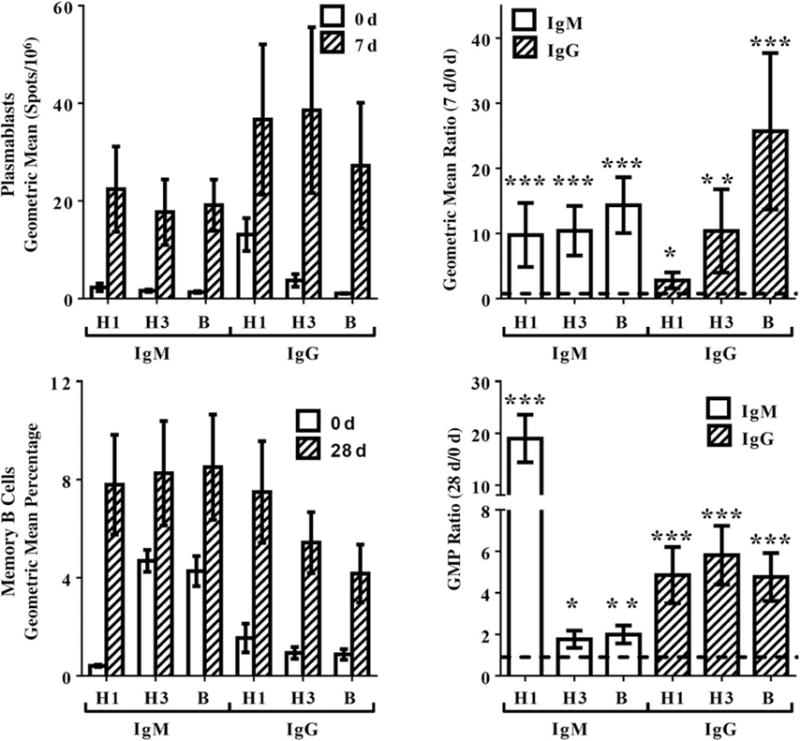
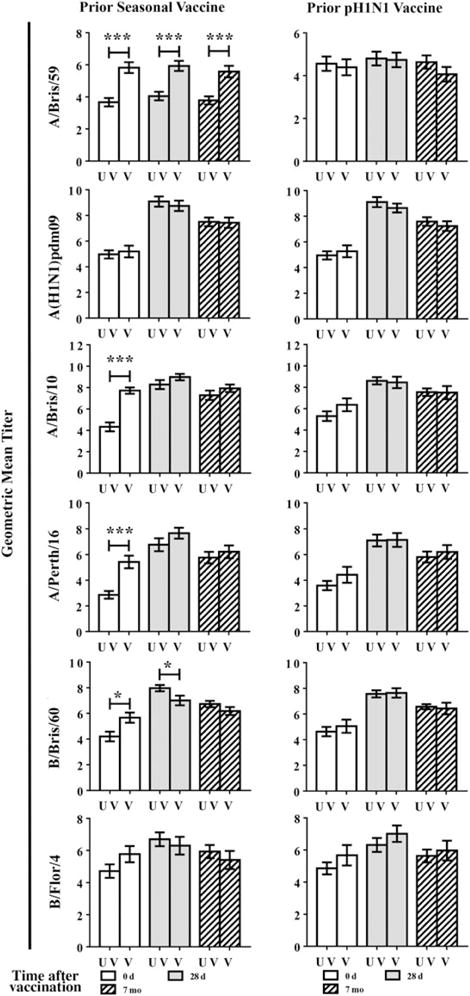
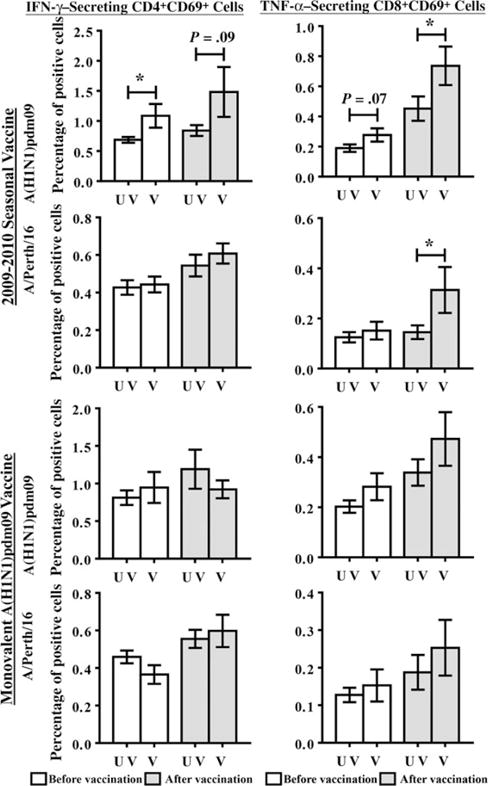
Description:Background ; Influenza viruses gradually accumulate point mutations, reducing the effectiveness of prior immune protection. ; Methods ; Children aged 9–14 years received 2010–2011 trivalent inactivated influenza vaccine (TIV). Vaccination history, hemagglutination-inhibition (HI) titers, and cell-mediated immune responses were assessed to investigate the cross-reactivity with past and future influenza virus strains. ; Results ; 2010–2011 TIV induced significant T-cell responses and HI titers of ≥160, with a fold-rise of ≥4 and titers of ≥100 maintained for >7 months in the majority of children. Pre-existing memory B cells in these children differentiated quickly to antibody-secreting cells to the new vaccine antigens. Children vaccinated in the previous year maintained high HI titers well into 2010, demonstrating elevated HI titers against A/Perth/16/2009, the future (in 2010–2011) H3N2 component. Prior vaccination enhanced CD8+ T-cell responses to A/Perth/16/2009. Children vaccinated with the prior 2009–2010 seasonal vaccine also demonstrated higher preexisting levels of interferon γ–secreting CD4+CD69+ T cells to 2009 pandemic influenza A(H1N1). Children previously vaccinated with 2009–2010 seasonal influenza vaccine also showed greater expansion of tumor necrosis factor α–secreting CD8+CD69+ T cells to 2009 pandemic influenza A(H1N1) upon vaccination in the 2010–2011 season than those who were not previously vaccinated. ; Conclusions ; Seasonal influenza viruses continuously drift, which allows them to circumvent protective immunity, but conserved epitopes provide immunological cross-reactivity in children through either vaccination directly or through prime/boost in the prior influenza season.
-
Keywords:
- B cell
- children
- cross-reactivity
- hemagglutination inhibition
- immune response
- influenza
- T cell
- vaccine
- Adolescent
- Antibodies, Viral
- Child
- Cross Reactions
- Female
- Hemagglutination Inhibition Tests
- Humans
- Immunity, Cellular
- Immunity, Humoral
- Influenza Vaccines
- Influenza, Human
- Male
- Orthomyxoviridae
- T-Lymphocytes
- Time Factors
- Vaccines, Inactivated
-
Source:J Infect Dis. 214(10):1477-1486
-
Pubmed ID:27571905
-
Pubmed Central ID:PMC5731644
-
Document Type:
-
Funding:
-
Volume:214
-
Issue:10
-
Download URL:
-
File Type:
 [PDF - 817.94 KB]
 -
Collection(s):
-
Main Document Checksum:urn:sha256:aa7cbf466263795db29ea7cdad4cfa2673194a19dea5031d94616656d88f949c
Supporting Files


File Language:
English
 Was this page helpful?
 Found an issue?



CDC STACKS serves as an archival repository of CDC-published products including
scientific findings, journal articles, guidelines, recommendations, or other public health information authored or
co-authored by CDC or funded partners.
As a repository, CDC STACKS retains documents in their original published format to ensure public access to scientific information.
As a repository, CDC STACKS retains documents in their original published format to ensure public access to scientific information.
You May Also Like
COLLECTION
CDC Public Access