


Hepatitis B vaccine immunogenicity among adults vaccinated during an outbreak response in an assisted living facility—Virginia, 2010
Supporting Files

-
2 07 2014
-
File Language:
English
Details
-
Alternative Title:Vaccine
-
Personal Author:
-
Description:Background
Failure to adhere to infection control guidelines, especially during assisted monitoring of blood glucose, has caused multiple hepatitis B outbreaks in assisted living facilities (ALFs). In conjunction with the response to such an outbreak at an ALF (“Facility X”) where most residents had neuropsychiatric disorders, we evaluated seroprotection rates conferred by hepatitis B vaccine and assessed the influence of demographic factors on vaccine response.
Methods
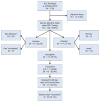
Residents were screened for hepatitis B and C infection, and those susceptible were vaccinated against hepatitis A and hepatitis B with one dose of TWINRIX™ (GSK) given at 0, 1, and 7 months. Blood samples were collected 1–2 months after receipt of the third vaccine dose to test for antibody to hepatitis B surface antigen (anti-HBs).
Results
Of the 27 residents who had post-vaccination blood specimens collected, 22 (81%) achieved anti-HBs concentrations ≥10 mIU/mL. Neither age nor neuropsychiatric comorbidity was a significant determinant of seroprotection. Geometric mean concentration was lower among residents aged 60–74 years (74.3 mIU/mL) than among residents aged 46–59 years (105.3 mIU/mL) but highest among residents aged ≥75 years (122.5 mIU/mL). The effect of diabetes on vaccination response could not be examined because 16/17 (94%) diabetic residents had HBV infection by the time of investigation.
Conclusions
Adult vaccine recipients of all ages, even those over 60 years of age, demonstrated a robust capacity for achieving hepatitis B seroprotection in response to the combined hepatitis A/hepatitis B vaccine. The role for vaccination in interrupting HBV transmission during an outbreak remains unclear, but concerns about age-related response to hepatitis B vaccine may be insufficient to justify foregoing vaccination of susceptible residents of ALFs.
-
Subjects:
-
Keywords:
-
Source:Vaccine. 32(7):852-856
-
Pubmed ID:24370706
-
Pubmed Central ID:PMC5719870
-
Document Type:
-
Funding:
-
Volume:32
-
Issue:7
-
Collection(s):
-
Main Document Checksum:urn:sha256:9991a31e8ed4a4ee483820483b40c3a08cdfeb95def938e40e27a6c4d2ac828c
-
Download URL:
-
File Type:
 [PDF
- 189.56 KB
]
[PDF
- 189.56 KB
]
Supporting Files


File Language:
English
ON THIS PAGE


CDC STACKS serves as an archival repository of CDC-published products including
scientific findings,
journal articles, guidelines, recommendations, or other public health information authored or
co-authored by CDC or funded partners.
As a repository, CDC STACKS retains documents in their original published format to ensure public access to scientific information.
As a repository, CDC STACKS retains documents in their original published format to ensure public access to scientific information.
You May Also Like
COLLECTION
CDC Public Access