


Serum Total Testosterone Concentrations in the US Household Population from the NHANES 2011–2012 Study Population
Supporting Files

-
October 28 2015
-
File Language:
English
Details
-
Alternative Title:Clin Chem
-
Personal Author:
-
Description:BACKGROUND
Limited information is available about testosterone concentrations representative of the general US population, especially children, women, and non-Hispanic Asians.
METHODS
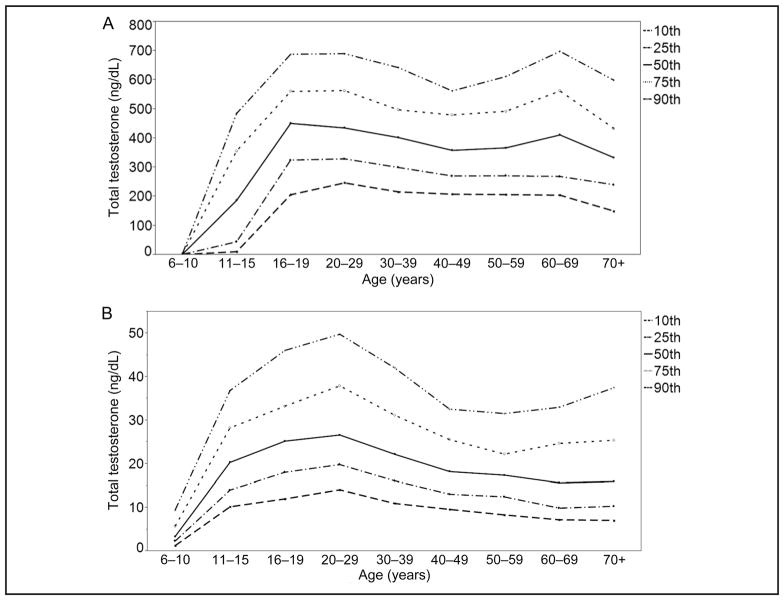
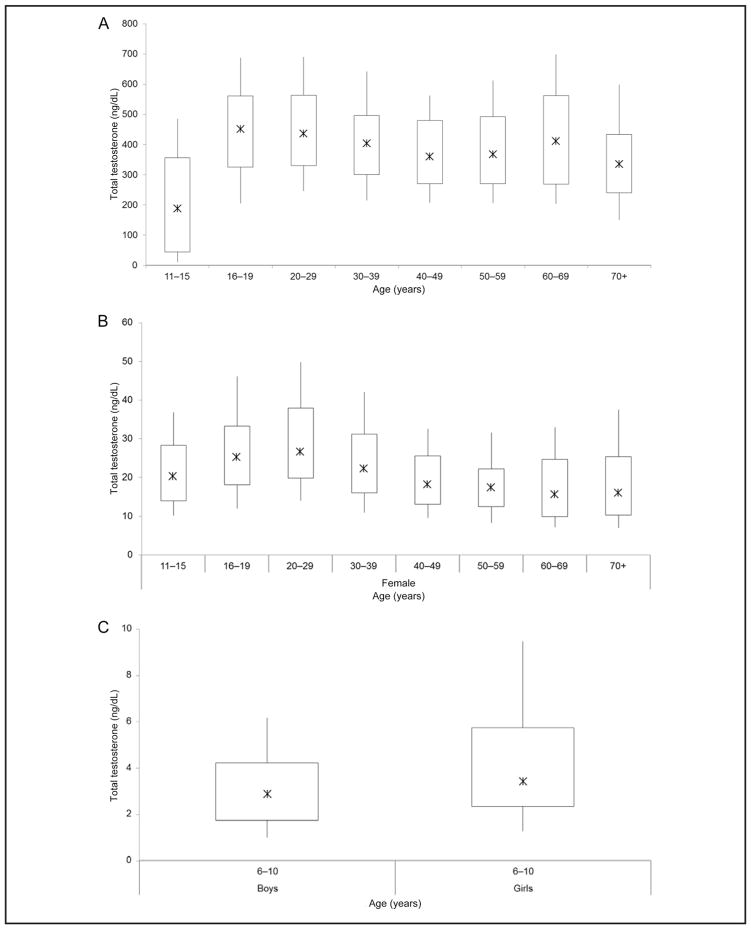
We obtained nationally representative data for total testosterone (totalT), measured with standardized LC-MS/MS, for the US population age 6 years and older from the 2011–2012 National Health and Nutrition Examination Survey (NHANES). We analyzed 6746 serum samples and calculated the geometric means, distribution percentiles, and covariate-adjusted geometric means by age, sex, and race/ethnicity.
RESULTS
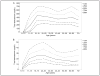
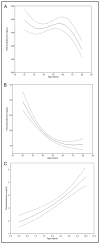
The 10th–90th percentiles of totalT values in adults (≥20 years) was 150–698 ng/dL (5.20–24.2 nmol/L) in men, 7.1–49.8 ng/dL (0.25–1.73 nmol/L) in women, and 1.0–9.5 ng/dL (0.04–0.33 nmol/L) in children (6–10 years old). Differences among race/ethnic groups existed in children and men: covariate-adjusted totalT values in non-Hispanic Asians were highest among children (58% compared to non-Hispanic black children) and lowest among men (12% compared to Mexican-American men). Covariate-adjusted totalT values in men were higher at age 55–60 years compared to ages 35 and 80 years, a pattern different from that observed in previous NHANES cycles.
CONCLUSIONS
TotalT patterns were different among age groups in men compared with previous NHANES cycles. Covariate-adjusted totalT values peaked at age 55–60 years in men, which appeared to be consistent with the increased use of exogenous testosterone. Differences among race/ethnic groups existed and appeared more pronounced in children than adults.
-
Subjects:
-
Source:Clin Chem. 61(12):1495-1504
-
Pubmed ID:26510959
-
Pubmed Central ID:PMC5698798
-
Document Type:
-
Funding:
-
Place as Subject:
-
Volume:61
-
Issue:12
-
Collection(s):
-
Main Document Checksum:urn:sha256:ea3d71c45e8d0e193664a56a1d0fce71c4257cc3b7956d11233f4c6ff52f0ae2
-
Download URL:
-
File Type:
 [PDF
- 749.78 KB
]
[PDF
- 749.78 KB
]
Supporting Files


File Language:
English
ON THIS PAGE


CDC STACKS serves as an archival repository of CDC-published products including
scientific findings,
journal articles, guidelines, recommendations, or other public health information authored or
co-authored by CDC or funded partners.
As a repository, CDC STACKS retains documents in their original published format to ensure public access to scientific information.
As a repository, CDC STACKS retains documents in their original published format to ensure public access to scientific information.
You May Also Like
COLLECTION
CDC Public Access