


Etymologia: Marburg [mahrʹboork] Virus
Supporting Files
Public Domain

-
Oct 2017
File Language:
English
Details
-
Alternative Title:Emerg Infect Dis
-
Personal Author:
-
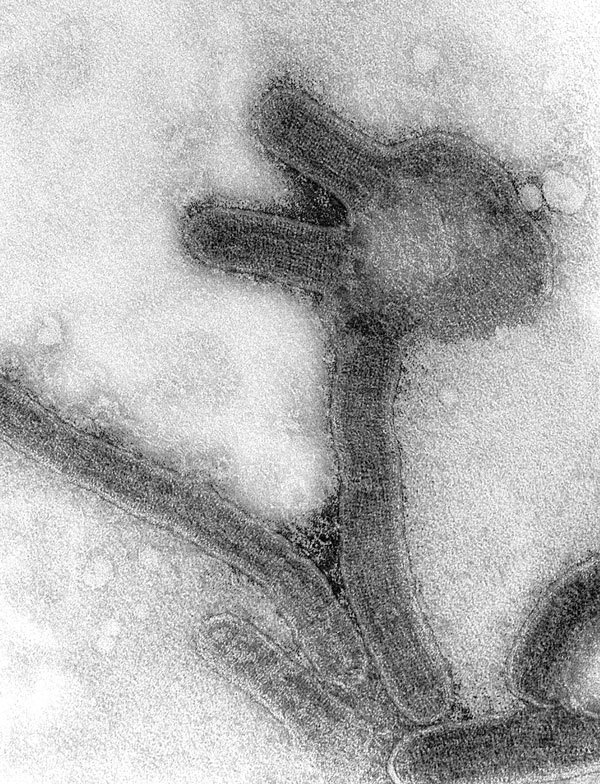
Description:In August and September 1967, an outbreak of a viral hemorrhagic fever occurred among laboratory workers in Marburg and Frankfurt, Germany, and Belgrade, Yugosla- via (now Serbia) who were processing kidneys from African green monkeys that had been imported from Uganda. (These kidneys were used in the production of polio vaccine.) Of 25 primary and 6 secondary cases, 7 were fatal.
A new virus, named Marburg virus, was isolated from patients and monkeys, and the high case-fatality ratio called for the best biocontainment of the day. The Centers for Disease Control and Prevention (CDC) borrowed a mobile containment laboratory from the National Institutes of Health and set it up in the CDC parking lot; it provided approximately biosafety level 2+ containment. A few isolated, sporadic cases were reported in the following decades until a 1998 outbreak in the Democratic Republic of the Congo affected 154 people with a case-fatality ratio of 83%, and a 2004 outbreak in Angola affected 227 people with a case-fatality ratio of 90%.
-
Subjects:
-
Source:Emerg Infect Dis. 23(10):1689.
-
Pubmed Central ID:PMC5621541
-
Document Type:
-
Genre:
-
Place as Subject:
-
Volume:23
-
Issue:10
-
Collection(s):
-
Main Document Checksum:urn:sha256:3326fe1541debb1a851e324358db9fdb42e11695de25c43260e7f31132f577c9
-
Download URL:
-
File Type:
 [PDF
- 477.67 KB
]
[PDF
- 477.67 KB
]
Supporting Files


File Language:
English
ON THIS PAGE

CDC STACKS serves as an archival repository of CDC-published products including
scientific findings,
journal articles, guidelines, recommendations, or other public health information authored or
co-authored by CDC or funded partners.
As a repository, CDC STACKS retains documents in their original published format to ensure public access to scientific information.
As a repository, CDC STACKS retains documents in their original published format to ensure public access to scientific information.
You May Also Like
COLLECTION
Emerging Infectious Diseases