



Human immune system mouse models of Ebola virus infection
Supporting Files

-
Aug 12 2017
-
Available in CDC Stacks on August 12, 2018, 12:00 AM
File Language:
English
Details
-
Alternative Title:Curr Opin Virol
-
Personal Author:
-
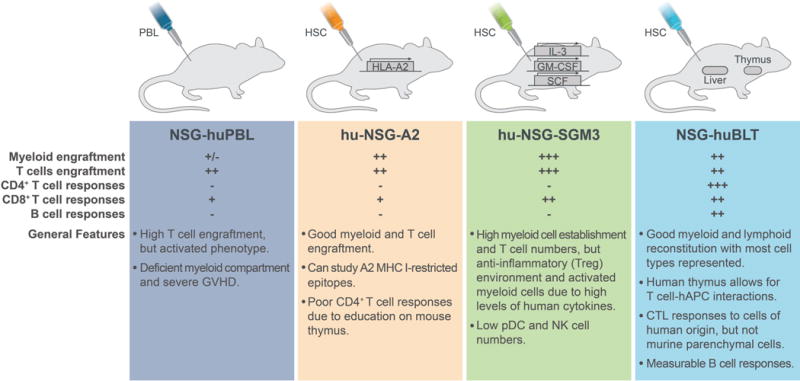
Description:Human immune system (HIS) mice, immunodeficient mice engrafted with human cells (with or without donor-matched tissue), offer a unique opportunity to study pathogens that cause disease predominantly or exclusively in humans. Several HIS mouse models have recently been used to study Ebola virus (EBOV) infection and disease. The results of these studies are encouraging and support further development and use of these models in Ebola research. HIS mice provide a small animal model to study EBOV isolates, investigate early viral interactions with human immune cells, screen vaccines and therapeutics that modulate the immune system, and investigate sequelae in survivors. Here we review existing models, discuss their use in pathogenesis studies and therapeutic screening, and highlight considerations for study design and analysis. Finally, we point out caveats to current models, and recommend future efforts for modeling EBOV infection in HIS mice.
-
Subjects:
-
Source:Curr Opin Virol. 25:90-96.
-
Pubmed ID:28810165
-
Pubmed Central ID:PMC5610641
-
Document Type:
-
Funding:
-
Volume:25
-
Download URL:
-
File Type:
 [PDF - 407.23 KB]
 -
Collection(s):
-
Main Document Checksum:urn:sha256:5088526d1c480e012626f94c463d744d7a26b9b1a292ad2067dff712e2ed8046
Supporting Files


File Language:
English
 Was this page helpful?
 Found an issue?

CDC STACKS serves as an archival repository of CDC-published products including
scientific findings, journal articles, guidelines, recommendations, or other public health information authored or
co-authored by CDC or funded partners.
As a repository, CDC STACKS retains documents in their original published format to ensure public access to scientific information.
As a repository, CDC STACKS retains documents in their original published format to ensure public access to scientific information.
You May Also Like
COLLECTION
CDC Public Access