



Early Hearing Detection and Vocabulary of Children With Hearing Loss
Supporting Files

-
2017/07/08
-
Available in CDC Stacks on September 12, 2017, 12:00 AM
File Language:
English
Details
-
Alternative Title:Pediatrics
-
Personal Author:
-
Description:BACKGROUND AND OBJECTIVES
To date, no studies have examined vocabulary outcomes of children meeting all 3 components of the Early Hearing Detection and Intervention (EHDI) guidelines (hearing screening by 1 month, diagnosis of hearing loss by 3 months, and intervention by 6 months of age). The primary purpose of the current study was to examine the impact of the current EHDI 1-3-6 policy on vocabulary outcomes across a wide geographic area. A secondary goal was to confirm the impact of other demographic variables previously reported to be related to language outcomes.
METHODS
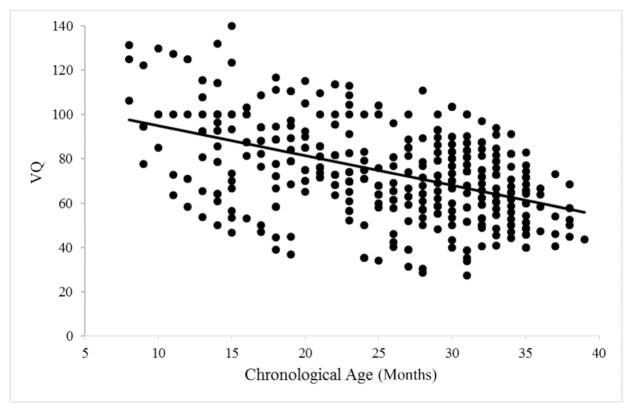
This was a cross-sectional study of 448 children with bilateral hearing loss between 8 and 39 months of age (mean = 25.3 months, SD = 7.5 months). The children lived in 12 different states and were participating in the National Early Childhood Assessment Project.
RESULTS
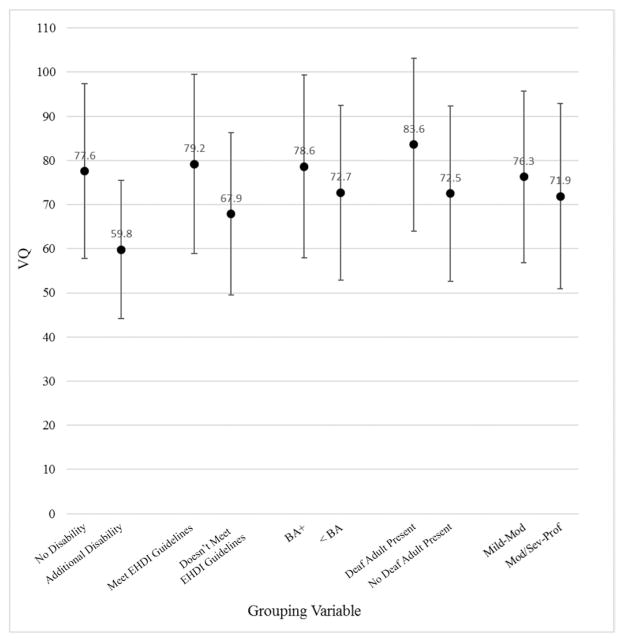
The combination of 6 factors in a regression analysis accounted for 41% of the variance in vocabulary outcomes. Vocabulary quotients were significantly higher for children who met the EHDI guidelines, were younger, had no additional disabilities, had mild to moderate hearing loss, had parents who were deaf or hard of hearing, and had mothers with higher levels of education.
CONCLUSIONS
Vocabulary learning may be enhanced with system improvements that increase the number of children meeting the current early identification and intervention guidelines. In addition, intervention efforts need to focus on preventing widening delays with chronological age, assisting mothers with lower levels of education, and incorporating adults who are deaf/hard-of-hearing in the intervention process. -
Subjects:
-
Source:Pediatrics. 140(2).
-
Pubmed ID:28689189
-
Pubmed Central ID:PMC5595069
-
Document Type:
-
Funding:
-
Genre:
-
Volume:140
-
Issue:2
-
Download URL:
-
File Type:
 [PDF - 623.92 KB]
 -
Collection(s):
-
Main Document Checksum:urn:sha-512:9445a02515a96b7d7f3216bfd1e236dbb461b83b897d388808733e88bd6879a01b8d71a8ff328058bf4a8c69fd9af0b91651e1626ed8aa5f15f89d8fdfea2f75
Supporting Files


File Language:
English
 Was this page helpful?
 Found an issue?



CDC STACKS serves as an archival repository of CDC-published products including
scientific findings, journal articles, guidelines, recommendations, or other public health information authored or
co-authored by CDC or funded partners.
As a repository, CDC STACKS retains documents in their original published format to ensure public access to scientific information.
As a repository, CDC STACKS retains documents in their original published format to ensure public access to scientific information.
You May Also Like
COLLECTION
CDC Public Access