



New Developments in Diagnosis, Prognosis, and Assessment of Response in Multiple Myeloma
Supporting Files

-
11 15 2016 ; 11-15-
-
Available in CDC Stacks on 2017-11-15T00:00:00Z
File Language:
English
Details
-
Alternative Title:Clin Cancer Res
-
Personal Author:
-
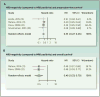
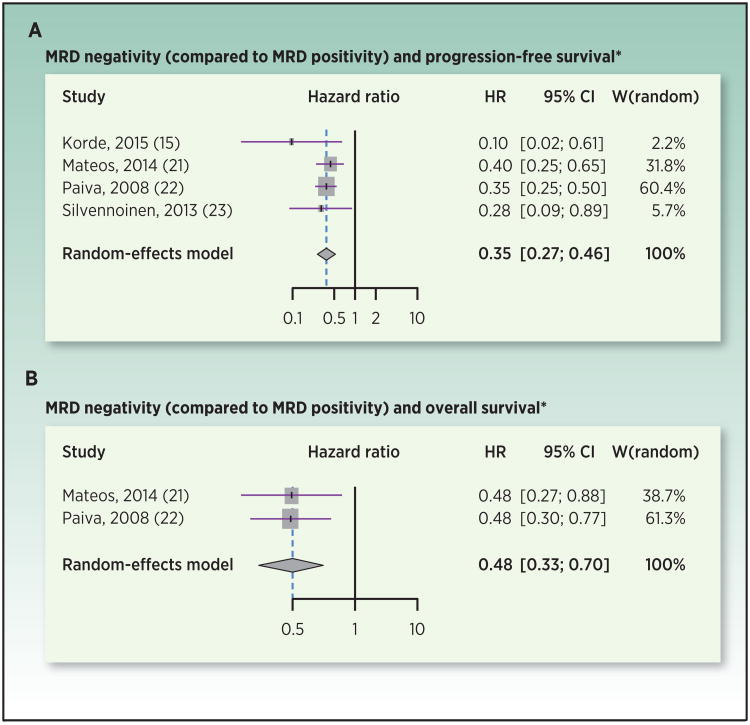
Description:Over the past few years, the management of multiple myeloma has changed. We have new guidelines regarding how to set the diagnosis, when to initiate therapy, and how to monitor treatment response. In 2014, the updated International Myeloma Working Group (IMWG) diagnostic criteria changed the definition of multiple myeloma from being a disease defined by symptoms to a disease defined by biomarkers. Today, modern combination therapies have reported up to 60% to 80% of patients reaching a complete response. As a logical and necessary step forward, investigators have explored strategies to detect minimal residual disease (MRD) and its correlation with clinical outcomes. Recent meta-analysis data show that MRD negativity is associated with longer progression-free survival and overall survival. In 2016, the updated IMWG response criteria include MRD as the deepest level of treatment response in multiple myeloma. Simultaneously, we are still quite behind in our understanding of the heterogeneous biology of multiple myeloma and its implications for therapy. Emerging DNA sequencing data show that newly diagnosed multiple myeloma patients have a broad range of mutations, which are distributed unevenly in multiple parallel subclones already present at diagnosis. To move beyond the ill-defined category of "high-risk multiple myeloma," which confers to approximately 25% of all newly diagnosed patients, prospective studies are needed to dissect tumor biology and define multiple myeloma subtypes, and, based on biology, seek to define rational therapies for individual subtypes. This article discusses novel insights and gives perspectives on diagnosis and MRD monitoring and future directions for prognosis and clinical management of multiple myeloma. Clin Cancer Res; 22(22); 5428-33. ©2016 AACR SEE ALL ARTICLES IN THIS CCR FOCUS SECTION, "MULTIPLE MYELOMA MULTIPLYING THERAPIES".
-
Subjects:
-
Source:Clin Cancer Res. 22(22):5428-5433
-
Pubmed ID:28151710
-
Pubmed Central ID:PMC5587183
-
Document Type:
-
Funding:
-
Volume:22
-
Issue:22
-
Download URL:
-
File Type:
 [PDF - 522.10 KB]
 -
Collection(s):
-
Main Document Checksum:urn:sha256:a5083d2b09334ea5431a1adc9d87cda90bab73743b41827b94cb5db80596aae2
Supporting Files


File Language:
English
 Was this page helpful?
 Found an issue?

CDC STACKS serves as an archival repository of CDC-published products including
scientific findings, journal articles, guidelines, recommendations, or other public health information authored or
co-authored by CDC or funded partners.
As a repository, CDC STACKS retains documents in their original published format to ensure public access to scientific information.
As a repository, CDC STACKS retains documents in their original published format to ensure public access to scientific information.
You May Also Like
COLLECTION
CDC Public Access