



Patient Preferences for Primary Care Provider Roles in Breast Cancer Survivorship Care
Supporting Files

-
9 1 2017 ; 9-01-
-
Available in CDC Stacks on September 01, 2018, 12:00 AM
File Language:
English
Details
-
Alternative Title:J Clin Oncol
-
Personal Author:
-
Description:Purpose
Prior studies suggest a need for greater clarity about provider roles in team-based cancer care. However, little is known about patient’s preferences for which providers handle their care needs after primary cancer treatment.
Methods
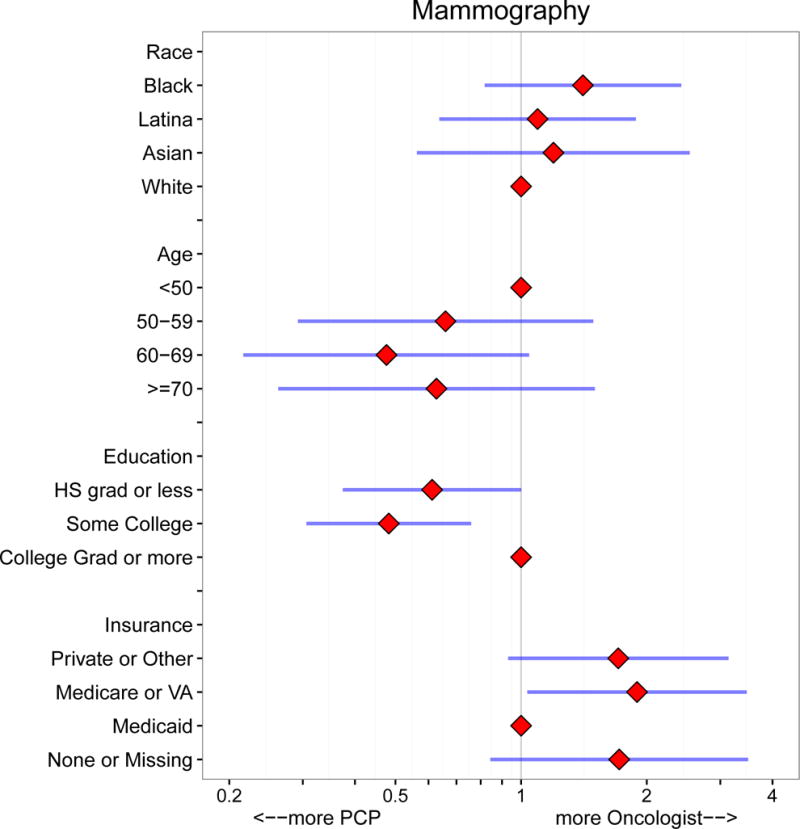
We surveyed women newly diagnosed with stages 0-II breast cancer who were treated in 2014–15 as reported to the Georgia and Los Angeles SEER registries (N=2,372, 68% response rate). Patient preferences for which provider handles the following care needs after treatment were ascertained: follow-up mammograms, screening for other cancers, general preventive care, and comorbidity management. The associations between patient demographic factors with preferences for provider roles (Oncology-directed care vs. primary care provider (PCP)-directed) were assessed using multivariable logistic regression.
Results
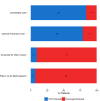
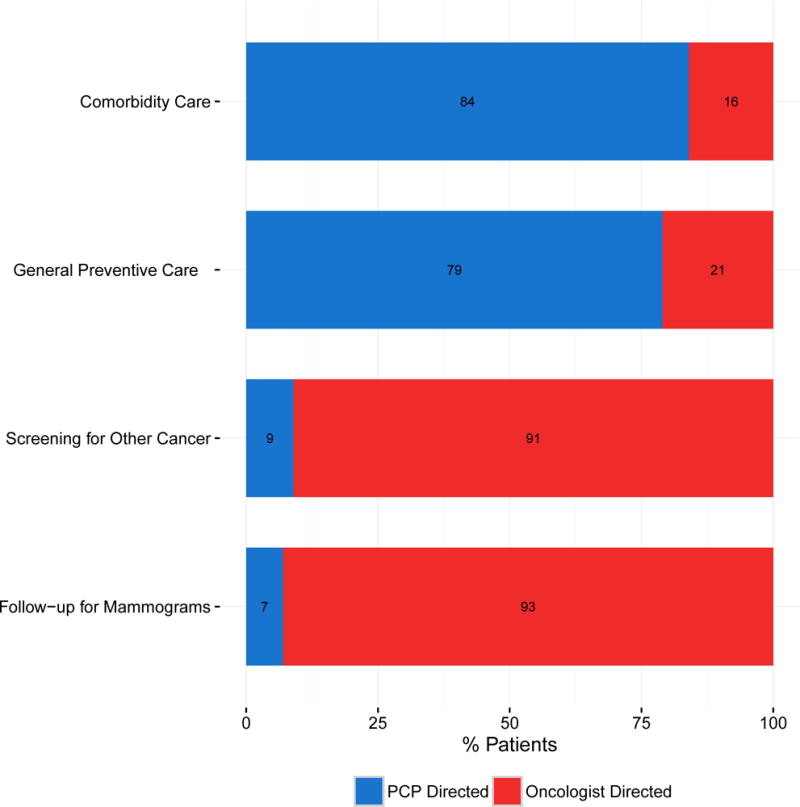
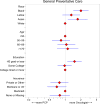
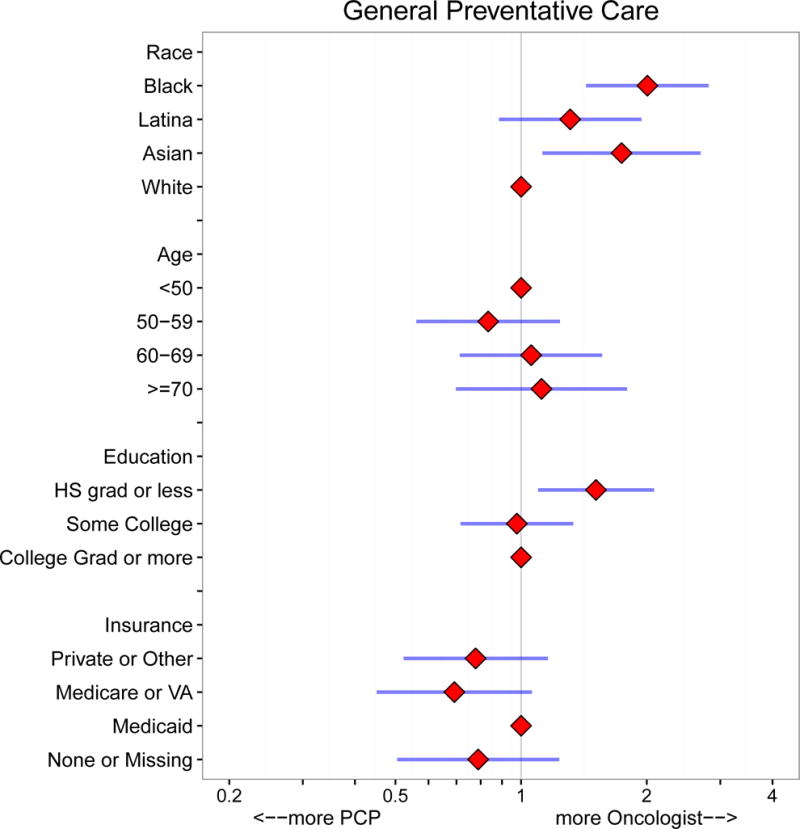
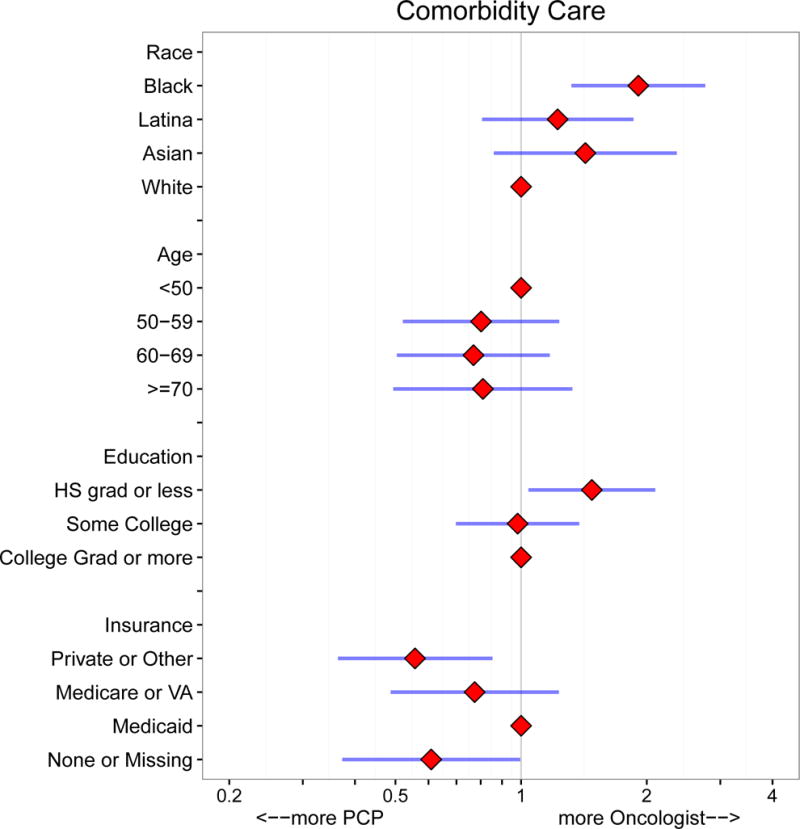
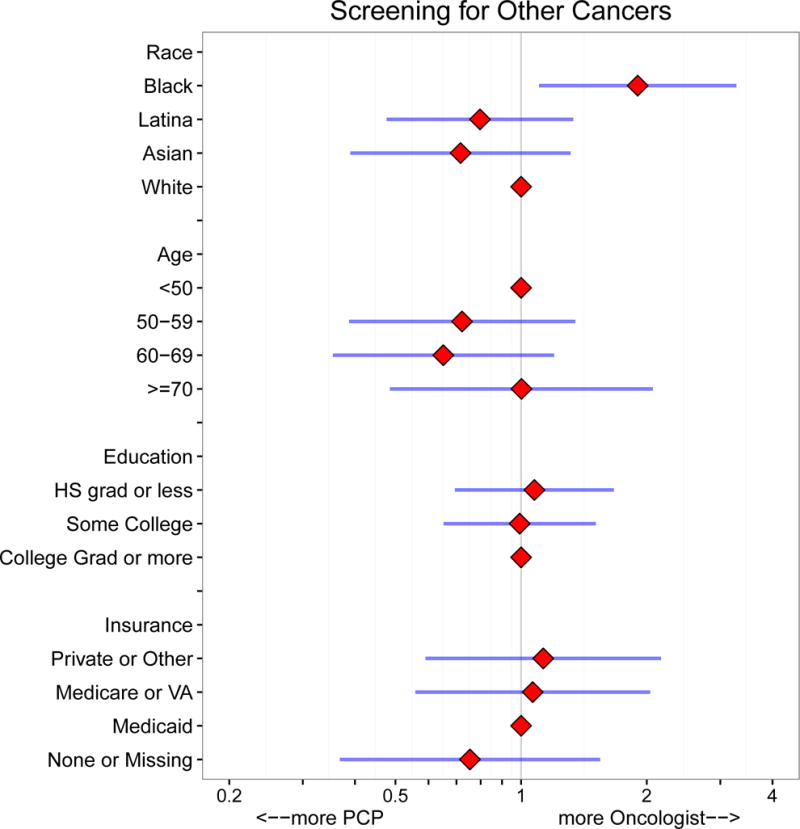
The majority of women preferred that their PCPs handle their general preventive care (79%) and comorbidity care (84%), but a notable minority of women preferred their oncologists direct this care (21% and 16%). Minority women (black and Asian vs. white) and women with a high school education or less (vs. college grad or more) had a greater odds of preferring oncology-directed care (vs. PCP-directed) for their general preventive care (black OR: 2.01, 95%CI: 1.43, 2.82; Asian OR: 1.74, 95%CI: 1.13, 2.69; ≤ high school OR: 1.51, 95%CI: 1.10, 2.08). Similar variation existed for comorbidity care.
Conclusion
In this sample, minority women and those with less education more often preferred oncologists direct aspects of their care after breast cancer treatment that are normally delivered by a PCP. Efforts to clarify provider roles in survivorship care to patients may be effective in improving team-based cancer care. -
Keywords:
-
Source:J Clin Oncol. 35(25):2942-2948
-
Pubmed ID:28700276
-
Pubmed Central ID:PMC5575964
-
Document Type:
-
Funding:HHSN261201000140C/CA/NCI NIH HHSUnited States/ ; HHSN261201000035C/CA/NCI NIH HHSUnited States/ ; P30 CA046592/CA/NCI NIH HHSUnited States/ ; T32 CA083654/CA/NCI NIH HHSUnited States/ ; HHSN261201000035I/CA/NCI NIH HHSUnited States/ ; HHSN261201300015C/CA/NCI NIH HHSUnited States/ ; HHSN261201000034C/CA/NCI NIH HHSUnited States/ ; U58 DP003862/DP/NCCDPHP CDC HHSUnited States/ ; K07 CA201052/CA/NCI NIH HHSUnited States/ ; P01 CA163233/CA/NCI NIH HHSUnited States/ ; U58 DP003875/DP/NCCDPHP CDC HHSUnited States/
-
Volume:35
-
Issue:25
-
Download URL:
-
File Type:
 [PDF - 457.50 KB]
 -
Collection(s):
-
Main Document Checksum:urn:sha256:4362cdeab17468b4da76a55ad896c51984314cce139a9d7c268863a8c1564ee2
Supporting Files


File Language:
English
 Was this page helpful?
 Found an issue?

CDC STACKS serves as an archival repository of CDC-published products including
scientific findings, journal articles, guidelines, recommendations, or other public health information authored or
co-authored by CDC or funded partners.
As a repository, CDC STACKS retains documents in their original published format to ensure public access to scientific information.
As a repository, CDC STACKS retains documents in their original published format to ensure public access to scientific information.
You May Also Like
COLLECTION
CDC Public Access