


Giardiasis Diagnosis and Treatment Practices Among Commercially Insured Persons in the United States
Supporting Files

-
5 01 2017
-
File Language:
English
Details
-
Alternative Title:Clin Infect Dis
-
Personal Author:
-
Description:Background
Giardiasis, the most common enteric parasitic infection in the United States, causes an estimated 1.2 million episodes of illness annually. Published clinical recommendations include readily available Giardia-specific diagnostic testing and antiparasitic drugs. We investigated sequences of giardiasis diagnostic and treatment events using MarketScan, a large health insurance claims database.
Methods
We created a longitudinal cohort of 2995 persons diagnosed with giardiasis (International Classification of Diseases, Ninth Revision, Clinical Modification [ICD-9-CM] code 007.1) from 2006 to 2010, and analyzed claims occurring 90 days before to 90 days after initial diagnosis. We evaluated differences in number and sequence of visits, diagnostic tests, and prescriptions by age group (children 1–17 years, adults 18–64 years) using χ2 tests and data visualization software.
Results
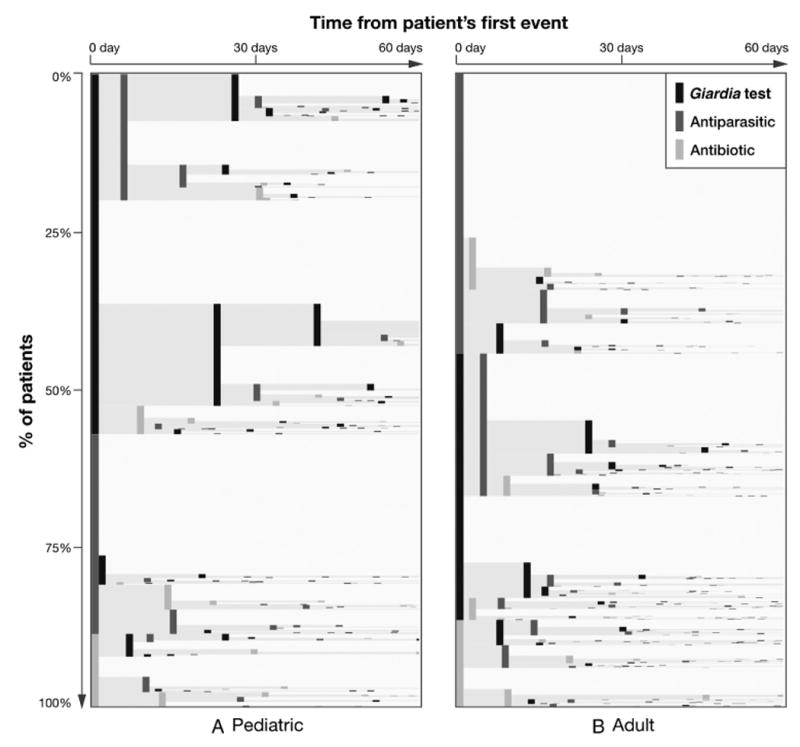
Among 2995 patients (212 433 claims), 18% had a Giardia-specific test followed by or concurrent with an effective antiparasitic drug, without ineffective antibiotics. Almost two-thirds of patients had an antiparasitic and 27% had an antibiotic during the study window. Compared with children, adults more often had ≥3 visits before diagnosis (19% vs 15%; P = .02). Adults were also less likely to have a Giardia-specific diagnostic test (48% vs 58%; P < .001) and more likely to have an antibiotic prescription (28% vs 25%; P = .04). When Giardia-specific tests and antiparasitic and antibiotic prescriptions were examined, pediatric clinical event sequences most frequently began with a Giardia-specific test, whereas adult sequences most frequently began with an antiparasitic prescription.
Conclusions
Giardiasis care infrequently follows all aspects of clinical recommendations. Multiple differences between pediatric and adult care, despite age-agnostic recommendations, suggest opportunities for provider education or tailored guidance.
-
Subjects:
-
Source:Clin Infect Dis. 64(9):1244-1250
-
Pubmed ID:28207070
-
Pubmed Central ID:PMC5532738
-
Document Type:
-
Funding:
-
Place as Subject:
-
Volume:64
-
Issue:9
-
Collection(s):
-
Main Document Checksum:urn:sha256:ca64e22a9ffc6eb72f16251c98329e6c0534b834b1929c8cfcb558fbd5ed493b
-
Download URL:
-
File Type:
 [PDF
- 414.31 KB
]
[PDF
- 414.31 KB
]
Supporting Files


File Language:
English
ON THIS PAGE

CDC STACKS serves as an archival repository of CDC-published products including
scientific findings,
journal articles, guidelines, recommendations, or other public health information authored or
co-authored by CDC or funded partners.
As a repository, CDC STACKS retains documents in their original published format to ensure public access to scientific information.
As a repository, CDC STACKS retains documents in their original published format to ensure public access to scientific information.
You May Also Like
COLLECTION
CDC Public Access