



Exploring Adduct Formation between Human Serum Albumin and Eleven Organophosphate Ester Flame Retardants and Plasticizers Using MALDI-TOF/TOF and LC-Q/TOF
Supporting Files

-
8-2017
-
File Language:
English
Details
-
Alternative Title:Chemosphere
-
Personal Author:
-
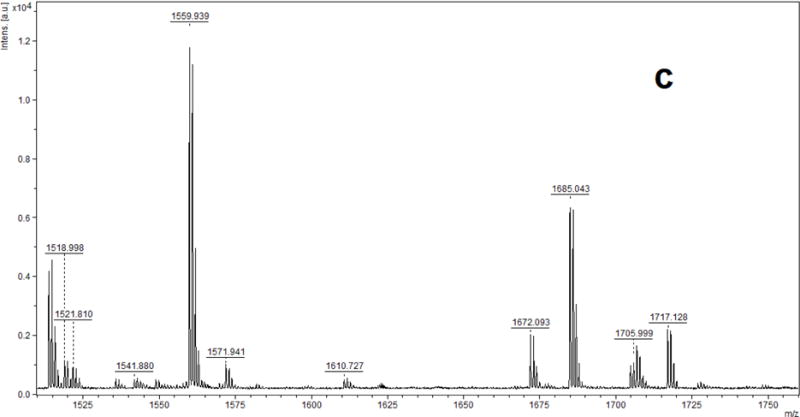
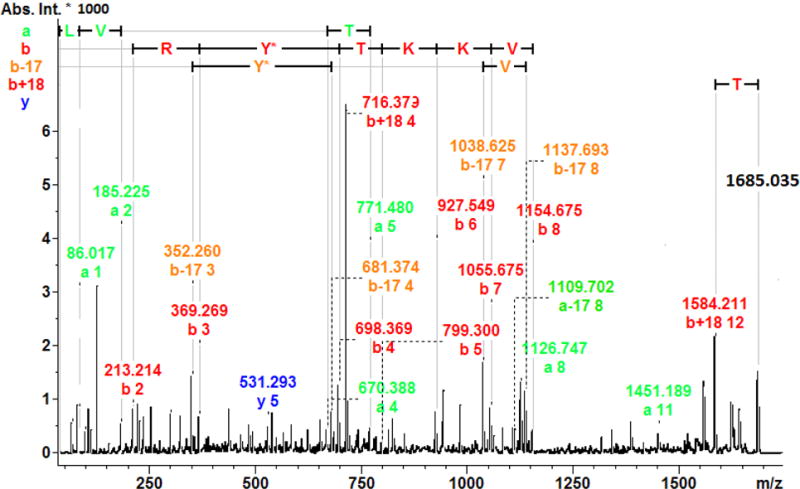
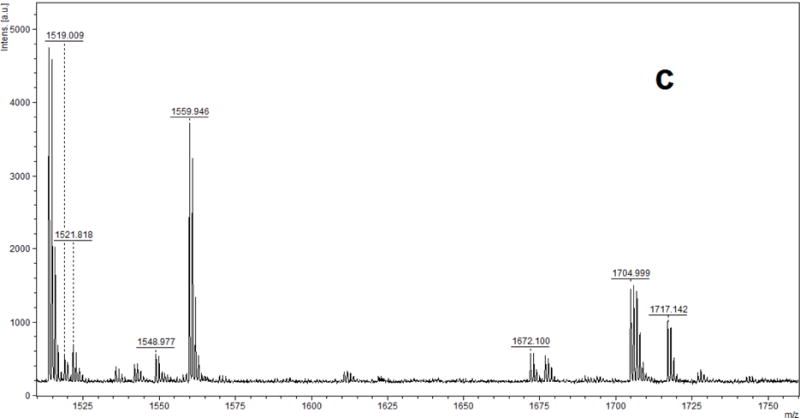
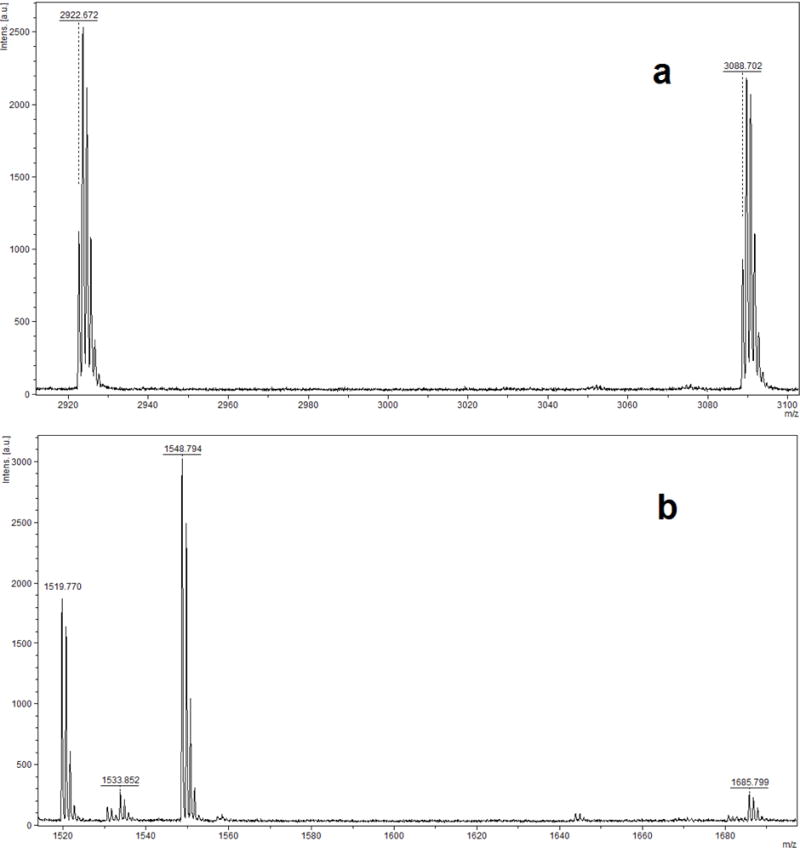
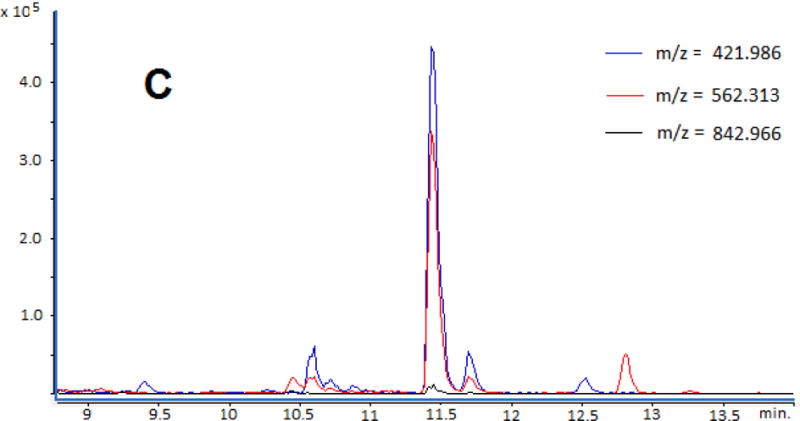
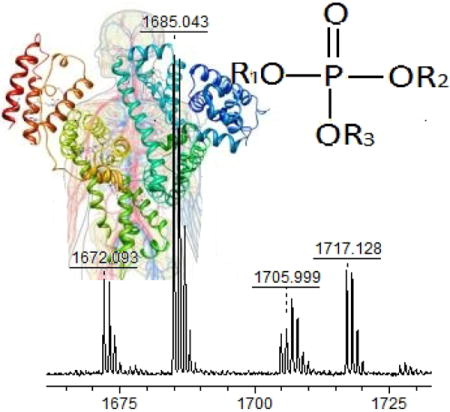
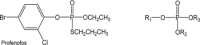
Description:Organophosphate (OP) and organophosphate ester (OPE) adducts of albumin are valuable biomarkers for retrospective verification of exposure. In the present study, our goal was to determine whether OPE flame retardants (OPE FRs) and OPE plasticizers can covalently bind to human serum albumin (HSA), which would allow the resulting adducts to be used to evaluate exposure. Eleven OPE FRs and plasticizers were examined in a HSA-adduct in vitro assay. Pure HSA was incubated with the target OPEs, as well as with an OP insecticide (profenofos) positive control. After enzymatic cleavage with pepsin or Glu-C, the digested albumin was analyzed by matrix-assisted laser desorption ionization tandem time-of-flight mass spectrometry (MALDI-TOF/TOF-MS) and liquid chromatography-quadrupole time-of-flight mass spectrometry (LC-Q-ToF-MS). Under optimized HSA assay conditions, tyrosine adducts were formed at Y| and Y|/Y| with a characteristic mass shift for phosphorylation (Δm/z 166) for the profenofos positive control. However, no such phosphorylated peptides were detected for the 11 target OPEs. This negative result suggests that these OPEs have very different affinities from the OP insecticide. They are less reactive or they may specifically interact with other proteins.
-
Keywords:
-
Source:Chemosphere. 180:169-177
-
Pubmed ID:28407546
-
Pubmed Central ID:PMC5494263
-
Document Type:
-
Funding:
-
Volume:180
-
Collection(s):
-
Main Document Checksum:urn:sha-512:79fcf5173d5c07d8e284f7b419d041f99849ea4d14abd6a48c963de806a6cb599f5d121d11bd61877c26e310f2ac9a5d46e4792e3614fe74d577debbdc7769b4
-
Download URL:
-
File Type:
 [PDF
- 730.31 KB
]
[PDF
- 730.31 KB
]
Supporting Files


File Language:
English
 Was this page helpful?
 Found an issue?




CDC STACKS serves as an archival repository of CDC-published products including
scientific findings,
journal articles, guidelines, recommendations, or other public health information authored or
co-authored by CDC or funded partners.
As a repository, CDC STACKS retains documents in their original published format to ensure public access to scientific information.
As a repository, CDC STACKS retains documents in their original published format to ensure public access to scientific information.
You May Also Like
COLLECTION
CDC Public Access