



MicroRNA-34a targets epithelial to mesenchymal transition-inducing transcription factors (EMT-TFs) and inhibits breast cancer cell migration and invasion
Supporting Files

-
Mar 28 2017
Details
-
Alternative Title:Oncotarget
-
Personal Author:Imani, Saber ; Wei, Chunli ; Cheng, Jingliang ; Asaduzzaman Khan, Md. ; Fu, Shangyi ; Yang, Luquan ; Tania, Mousumi ; Zhang, Xianqin ; Xiao, Xiuli ; Zhang, Xianning ; Fu, Junjiang
-
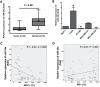
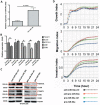
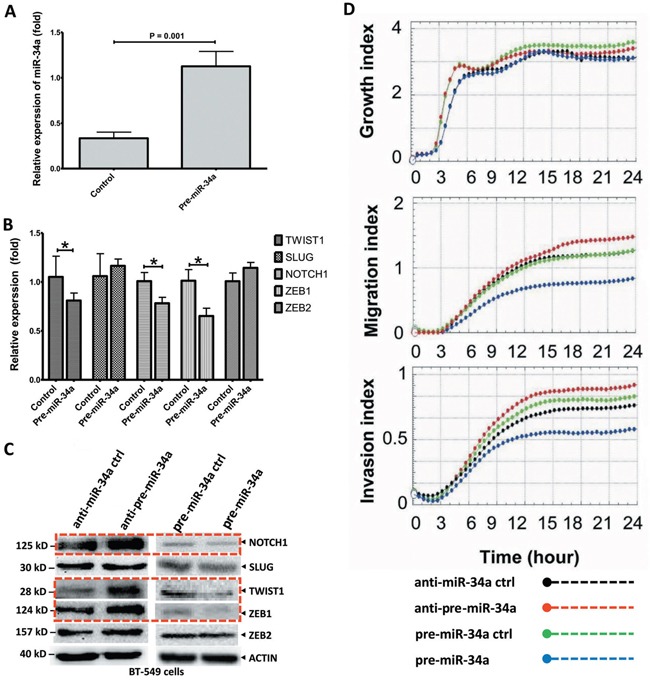
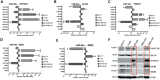
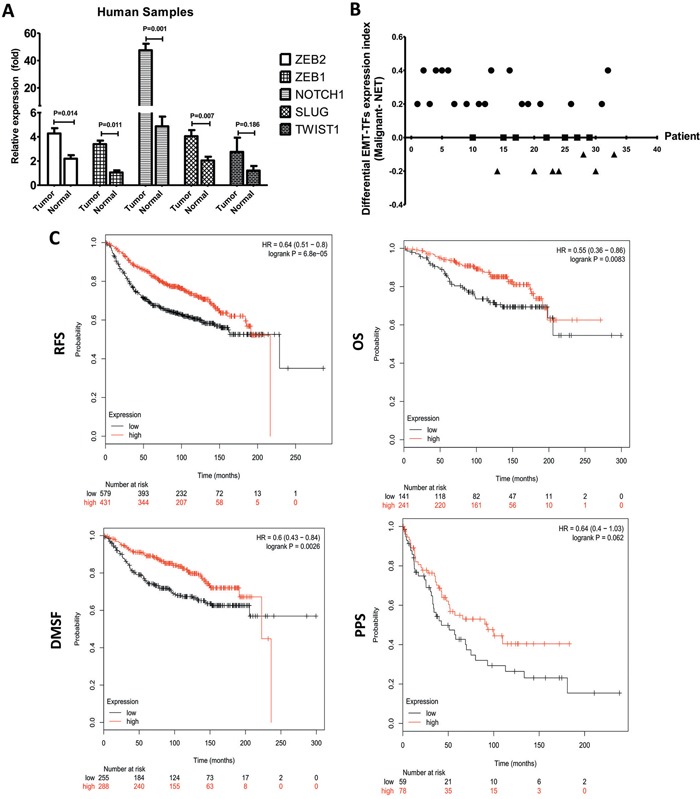
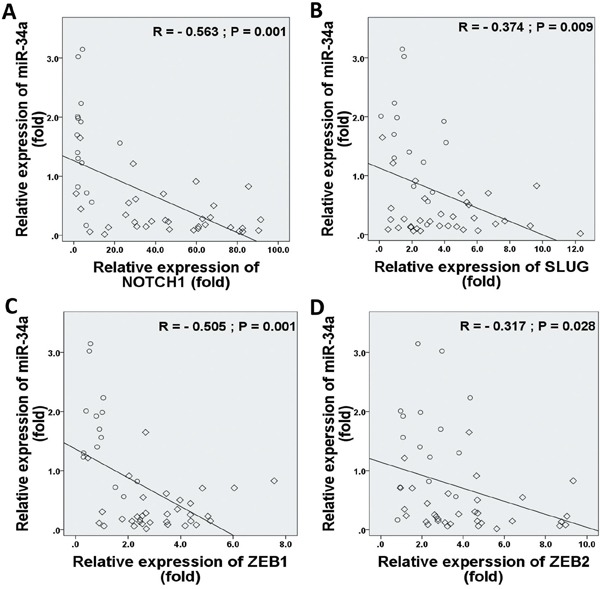
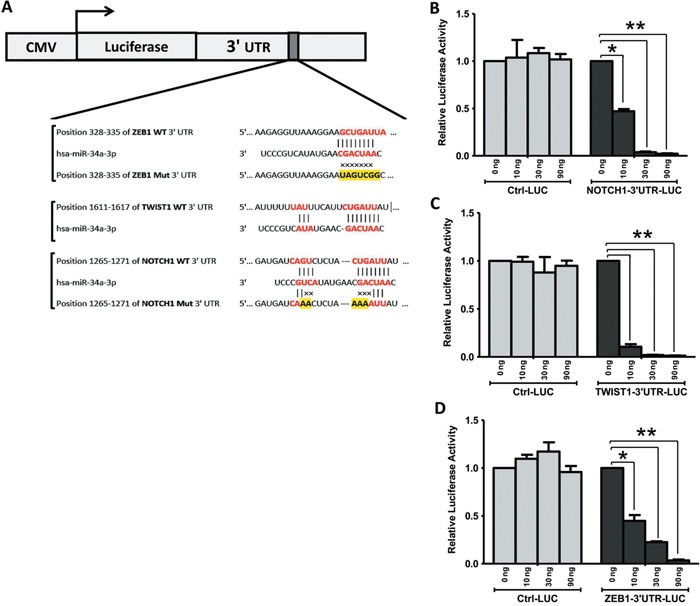
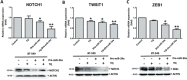
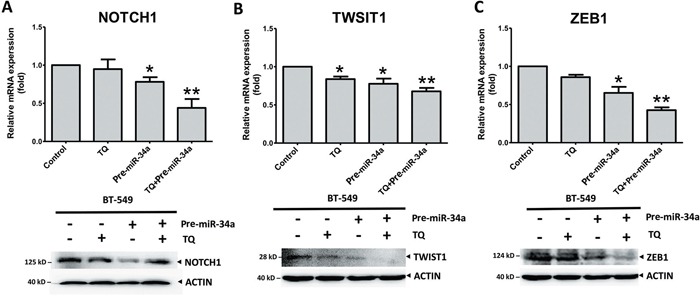
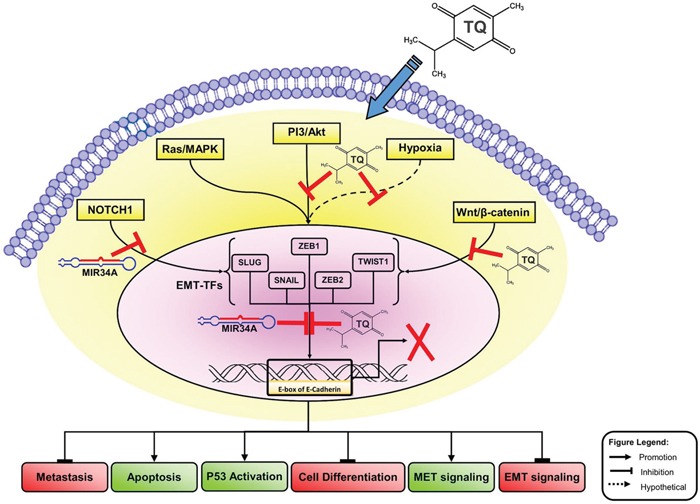
Description:MicroRNA-34a (miR-34a) plays an essential role against tumorigenesis and progression of cancer metastasis. Here, we analyzed the expression, targets and functional effects of miR-34a on epithelial to mesenchymal transition-inducing transcription factors (EMT-TFs), such as TWIST1, SLUG and ZEB1/2, and an EMT-inducing protein NOTCH1 in breast cancer (BC) cell migration and invasion and its correlation with tumorigenesis and clinical outcomes. Expression of miR-34a is downregulated in human metastatic breast cancers (MBC) compared to normal breast tissues and is negatively correlated with clinicopathological features of MBC patients. Ectopic expression of miR-34a in MBC cell-line BT-549 significantly inhibits cell migration and invasion, but exhibits no clear effect on BC cell growth. We found that miR-34a is able to inactivate EMT signaling pathway with mediatory of NOTCH1, TWIST1, and ZEB1 upon 3'-UTR activity in MBC cell lines, but has no inhibitory effects on SLUG and ZEB2. Furthermore, we investigated the synergistic effects of Thymoquinone (TQ) and miR-34a together on the expression of EMT-associated proteins. Results showed that co-delivery of miR-34a and TQ is able to inactivate EMT signaling pathway by directly targeting TWIST1 and ZEB1 in BT-549 cell line, indicating that they might be a promising therapeutic combination against breast cancer metastasis. Epigenetic inactivation of the EMT-TFs/miR-34a pathway can potentially alter the equilibrium of these regulations, facilitating EMT and metastasis in BC. Altogether, our findings suggest that miR-34a alone could serve as a potential therapeutic agent for MBC, and together with TQ, their therapeutic potential is synergistically enhanced.
-
Subjects:
-
Source:Oncotarget. 2017; 8(13):21362-21379.
-
Pubmed ID:28423483
-
Pubmed Central ID:PMC5400590
-
Document Type:
-
Funding:
-
Volume:8
-
Issue:13
-
Download URL:
-
File Type:
 [PDF - 6.75 MB]
 -
Collection(s):
-
Main Document Checksum:urn:sha256:48aa60abd7e43202a897361ae26c4a30da53c7d6a64ef65ead59ae24768ba1c9
Supporting Files


 Was this page helpful?
 Found an issue?






CDC STACKS serves as an archival repository of CDC-published products including
scientific findings, journal articles, guidelines, recommendations, or other public health information authored or
co-authored by CDC or funded partners.
As a repository, CDC STACKS retains documents in their original published format to ensure public access to scientific information.
As a repository, CDC STACKS retains documents in their original published format to ensure public access to scientific information.
You May Also Like
COLLECTION
CDC Public Access