



Size-Dependent Deposition, Translocation, and Microglial Activation of Inhaled Silver Nanoparticles in the Rodent Nose and Brain
Supporting Files
Peer Reviewed

-
2016/05/06
File Language:
English
Details
-
Journal Article:Environmental Health Perspectives
-
Personal Author:
-
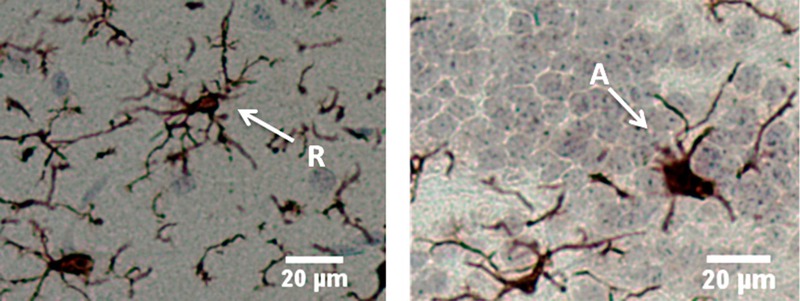
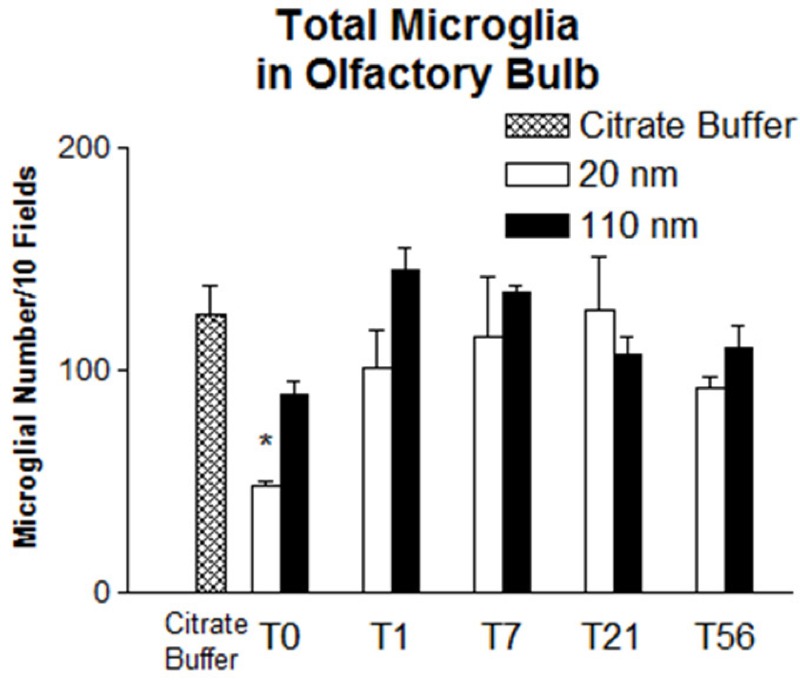
Description:Background: Silver nanoparticles (AgNP) are present in personal, commercial, and industrial products, which are often aerosolized. Current understanding of the deposition, translocation, and health-related impacts of AgNP inhalation is limited. Objectives: To determine 1) the deposition and retention of inhaled Ag in the nasal cavity from nose-only exposure; 2) the timing for Ag translocation to and retention/clearance in the olfactory bulb (OB); and 3) whether the presence of Ag in the OB affects microglial activity. Methods: Male Sprague-Dawley rats were exposed nose-only to citrate-buffered 20 or 110 nm AgNP (C20 or C110, respectively) or citrate buffer alone for six hours. The nasal cavity and OB were examined for the presence of Ag and biological responses up to 56 days post exposure (8 weeks). Results: The highest nasal Ag deposition was observed at Day 0 for both AgNP sizes. Aerosolized C20 resulted in rapid translocation of Ag to the OB and microglial activation at Days 0, 1 and 7. In contrast, inhalation of C110 resulted in a gradual but progressive transport of Ag to and retention in the OB, with a trend for microglial activation to variably be above control. Conclusions: This study demonstrates that after a six-hour inhalation exposure in rats to 20 and 110 nm AgNP at a single point in time, Ag deposition in the nose, the rate of translocation to the brain, and subsequent microglial activation in the OB, differed depending on AgNP size and time since exposure. Description provided by NIOSH
-
Subjects:
-
Keywords:
-
Source:Environ Health Perspect 2016 Dec; 124(12):1870-1875
-
ISSN:0091-6765
-
Pubmed ID:27152509
-
Pubmed Central ID:PMC5132640
-
Document Type:
-
Funding:
-
Genre:
-
Place as Subject:
-
CIO:
-
Topic:
-
Location:
-
Pages in Document:6 pdf pages
-
Volume:124
-
Issue:12
-
NIOSHTIC Number:nn:20047987
-
Contact Point Address:Kent E. Pinkerton, Center for Health and the Environment, University of California, One Shields Avenue, Davis, CA 95616, USA
-
Email:kepinkerton@ucdavis.edu
-
CAS Registry Number:
-
Federal Fiscal Year:2017
-
NORA Priority Area:
-
Performing Organization:University of California - Davis
-
Peer Reviewed:True
-
Download URL:
-
File Type:
 [PDF - 403.67 KB]
 -
Collection(s):
-
Main Document Checksum:urn:sha-512:80f609d077ea1c6b95b5168288e6fa676e9956d35ebb81d5720c4e9a8c713dd2b20ca3d6508f4bf54fb21f76eb022ac2b392827f10534855487cf18ff5450800
Supporting Files


File Language:
English
 Was this page helpful?
 Found an issue?



CDC STACKS serves as an archival repository of CDC-published products including
scientific findings, journal articles, guidelines, recommendations, or other public health information authored or
co-authored by CDC or funded partners.
As a repository, CDC STACKS retains documents in their original published format to ensure public access to scientific information.
As a repository, CDC STACKS retains documents in their original published format to ensure public access to scientific information.
You May Also Like