


Swine Influenza Virus (H1N2) Characterization and Transmission in Ferrets, Chile
Supporting Files
Public Domain

-
Feb 2017
-
File Language:
English
Details
-
Alternative Title:Emerg Infect Dis
-
Personal Author:
-
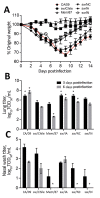
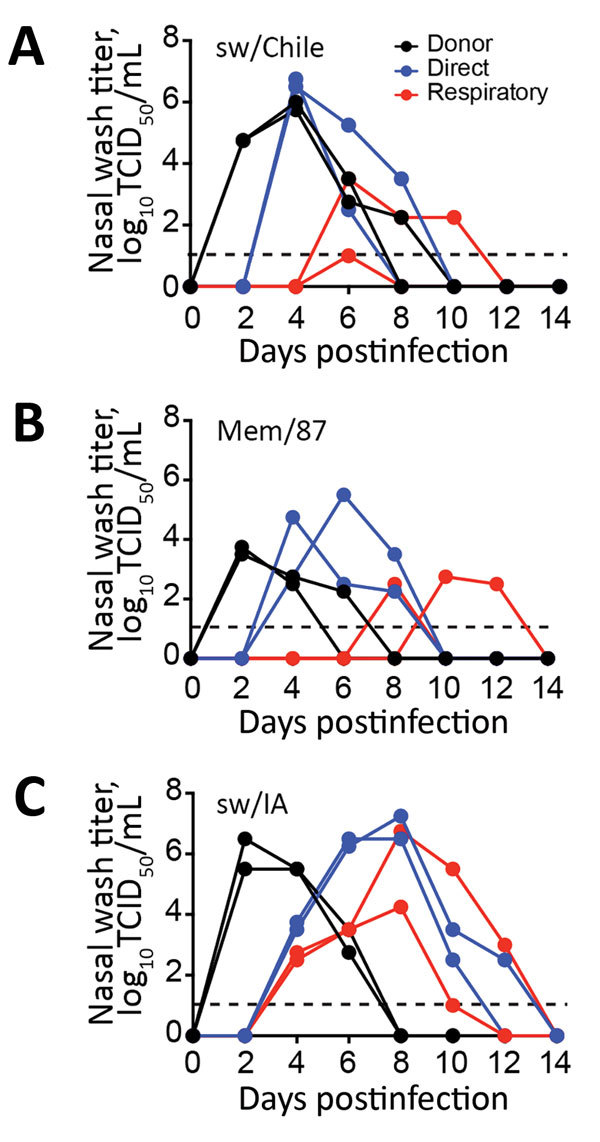
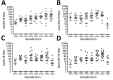
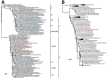
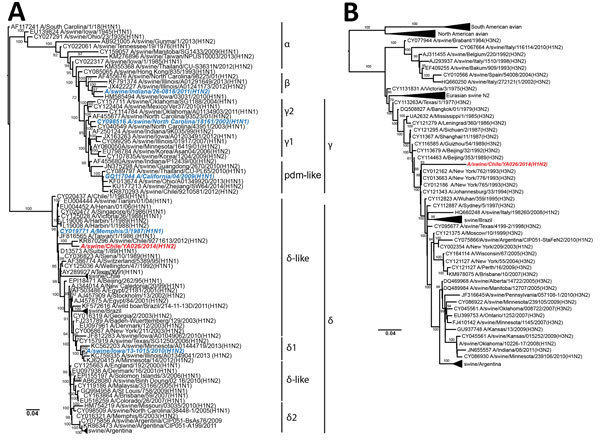
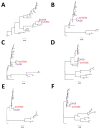
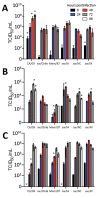
Description:Phylogenetic analysis of the influenza hemagglutinin gene (HA) has suggested that commercial pigs in Chile harbor unique human seasonal H1-like influenza viruses, but further information, including characterization of these viruses, was unavailable. We isolated influenza virus (H1N2) from a swine in a backyard production farm in Central Chile and demonstrated that the HA gene was identical to that in a previous report. Its HA and neuraminidase genes were most similar to human H1 and N2 viruses from the early 1990s and internal segments were similar to influenza A(H1N1)pdm09 virus. The virus replicated efficiently in vitro and in vivo and transmitted in ferrets by respiratory droplet. Antigenically, it was distinct from other swine viruses. Hemagglutination inhibition analysis suggested that antibody titers to the swine Chilean H1N2 virus were decreased in persons born after 1990. Further studies are needed to characterize the potential risk to humans, as well as the ecology of influenza in swine in South America.
-
Subjects:
-
Source:Emerg Infect Dis. 23(2):241-251.
-
Pubmed ID:28098524
-
Pubmed Central ID:PMC5324791
-
Document Type:
-
Place as Subject:
-
Volume:23
-
Issue:2
-
Collection(s):
-
Main Document Checksum:urn:sha256:1fa71bfbc82381ac035275719d40759908cd58f47eb121394416b388dbd6a254
-
Download URL:
-
File Type:
 [PDF
- 4.89 MB
]
[PDF
- 4.89 MB
]
Supporting Files


File Language:
English
ON THIS PAGE








CDC STACKS serves as an archival repository of CDC-published products including
scientific findings,
journal articles, guidelines, recommendations, or other public health information authored or
co-authored by CDC or funded partners.
As a repository, CDC STACKS retains documents in their original published format to ensure public access to scientific information.
As a repository, CDC STACKS retains documents in their original published format to ensure public access to scientific information.
You May Also Like
COLLECTION
Emerging Infectious Diseases