


Changing Epidemiology of Human Brucellosis, China, 1955–2014
Supporting Files
Public Domain

-
Feb 2017
-
File Language:
English
Details
-
Alternative Title:Emerg Infect Dis
-
Personal Author:Lai, Shengjie ; Zhou, Hang ; Xiong, Weiyi ; Gilbert, Marius ; Huang, Zhuojie ; Yu, Jianxing ; Yin, Wenwu ; Wang, Liping ; Chen, Qiulan ; Li, Yu ; Mu, Di ; Zeng, Lingjia ; Ren, Xiang ; Geng, Mengjie ; Zhang, Zike ; Cui, Buyun ; Li, Tiefeng ; Wang, Dali ; Li, Zhongjie ; Wardrop, Nicola A. ; Tatem, Andrew J. ; Yu, Hongjie
-
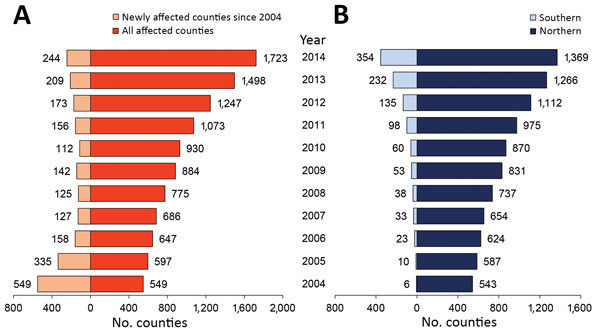
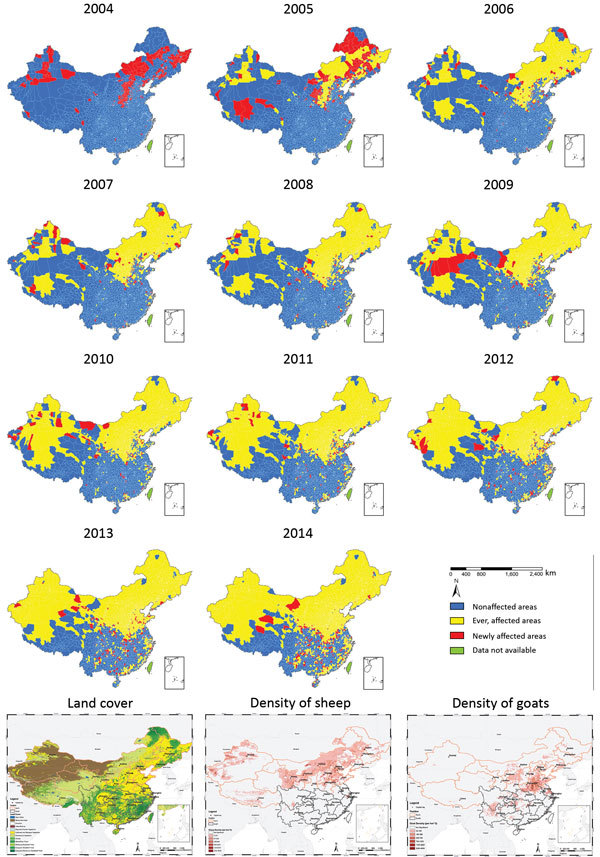
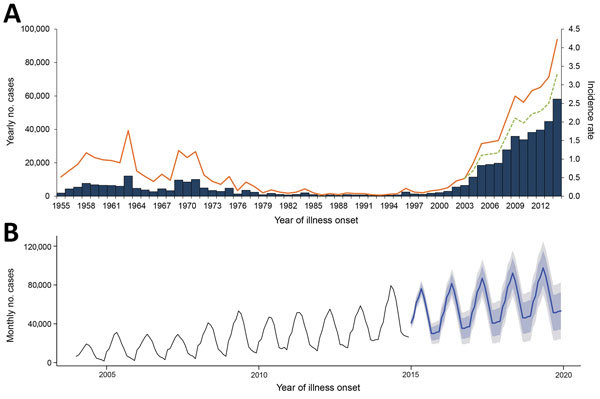
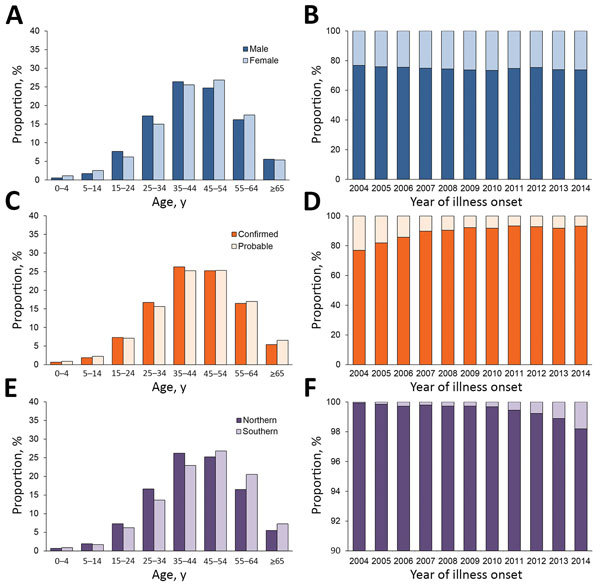
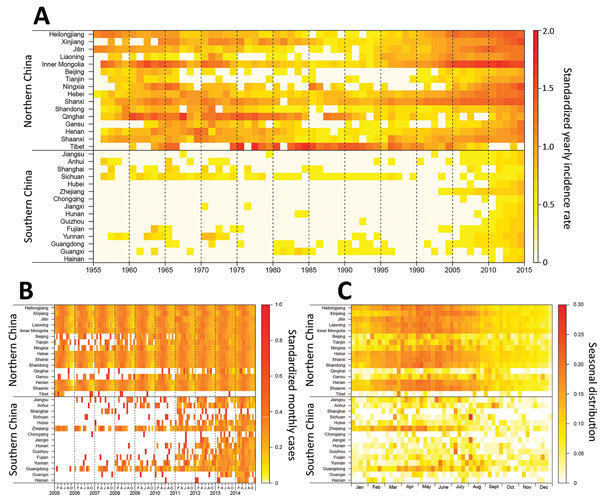
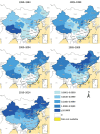
Description:Brucellosis, a zoonotic disease, was made statutorily notifiable in China in 1955. We analyzed the incidence and spatial-temporal distribution of human brucellosis during 1955-2014 in China using notifiable surveillance data: aggregated data for 1955-2003 and individual case data for 2004-2014. A total of 513,034 brucellosis cases were recorded, of which 99.3% were reported in northern China during 1955-2014, and 69.1% (258, 462/374, 141) occurred during February-July in 1990-2014. Incidence remained high during 1955-1978 (interquartile range 0.42-1.0 cases/100,000 residents), then decreased dramatically in 1979-1994. However, brucellosis has reemerged since 1995 (interquartile range 0.11-0.23 in 1995-2003 and 1.48-2.89 in 2004-2014); the historical high occurred in 2014, and the affected area expanded from northern pastureland provinces to the adjacent grassland and agricultural areas, then to southern coastal and southwestern areas. Control strategies in China should be adjusted to account for these changes by adopting a One Health approach.
-
Subjects:
-
Source:Emerg Infect Dis. 23(2):184-194.
-
Pubmed ID:28098531
-
Pubmed Central ID:PMC5324817
-
Document Type:
-
Place as Subject:
-
Location:
-
Volume:23
-
Issue:2
-
Collection(s):
-
Main Document Checksum:urn:sha256:2b0b3406890fde1c0f12e97c81d3769f0ceae39c4d259d0661bc201f78e988e8
-
Download URL:
-
File Type:
 [PDF
- 6.39 MB
]
[PDF
- 6.39 MB
]
Supporting Files


File Language:
English
ON THIS PAGE





CDC STACKS serves as an archival repository of CDC-published products including
scientific findings,
journal articles, guidelines, recommendations, or other public health information authored or
co-authored by CDC or funded partners.
As a repository, CDC STACKS retains documents in their original published format to ensure public access to scientific information.
As a repository, CDC STACKS retains documents in their original published format to ensure public access to scientific information.
You May Also Like
COLLECTION
Emerging Infectious Diseases