



Imaging Mass Spectrometry Reveals Loss of Polyunsaturated Cardiolipins in the Cortical Contusion, Hippocampus and Thalamus after Traumatic Brain Injury
Supporting Files

-
11 2016 ; 11-2016
-
Available in CDC Stacks on 2017-11-01T00:00:00Z
File Language:
English
Details
-
Alternative Title:J Neurochem
-
Personal Author:
-
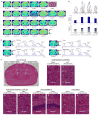
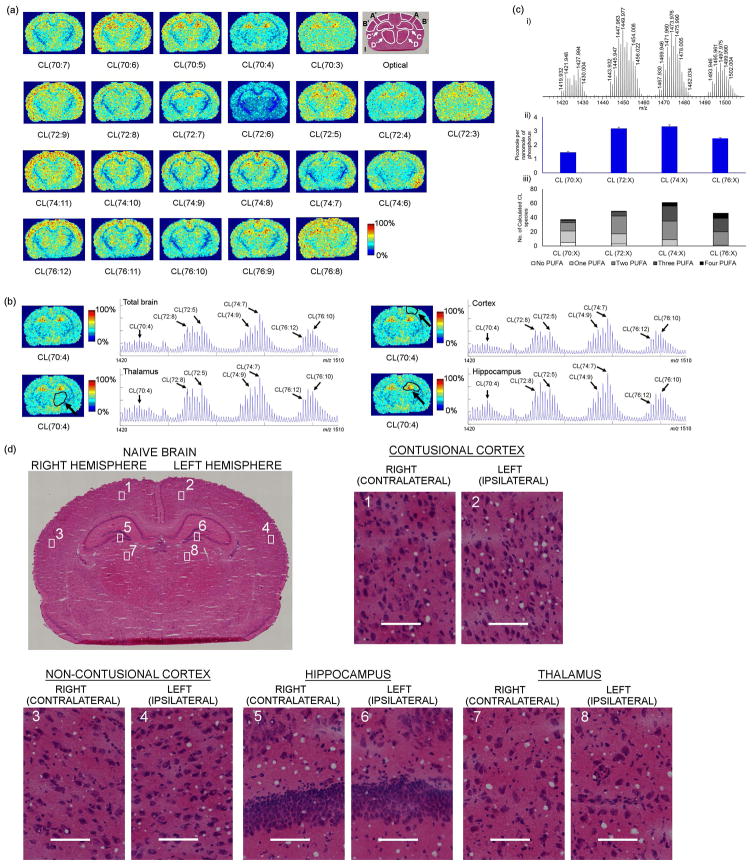
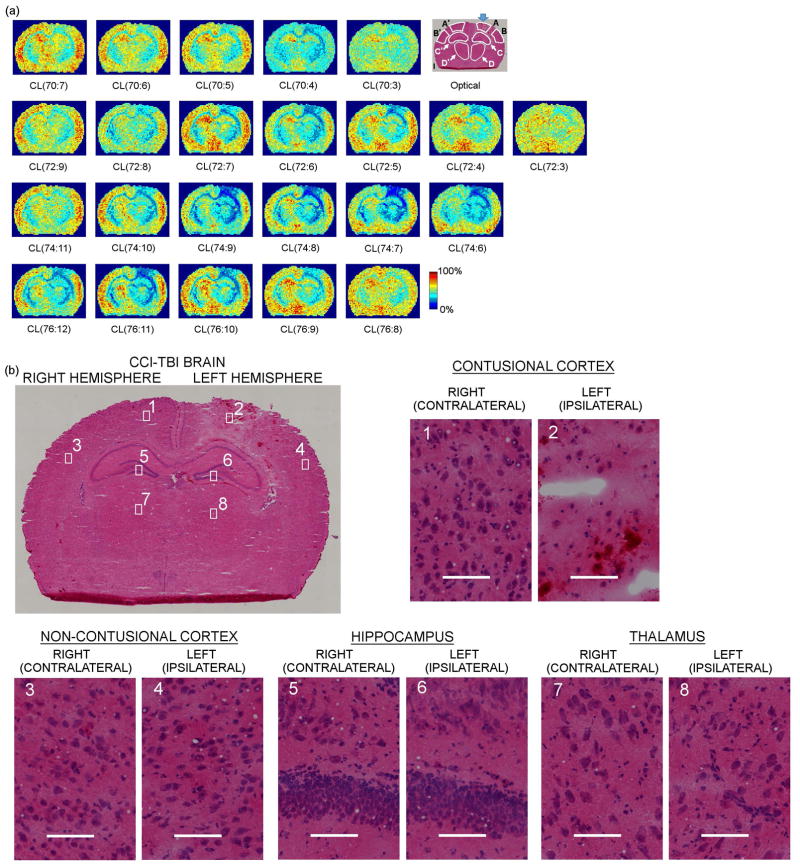
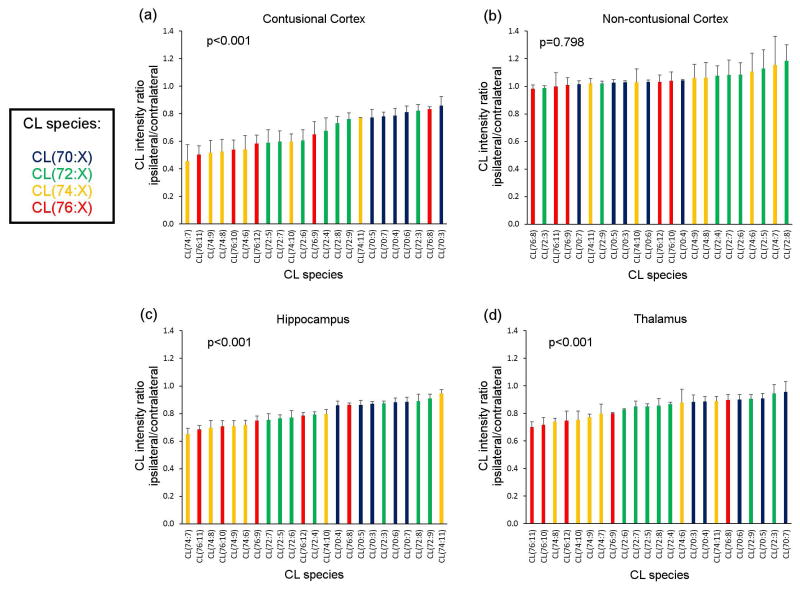
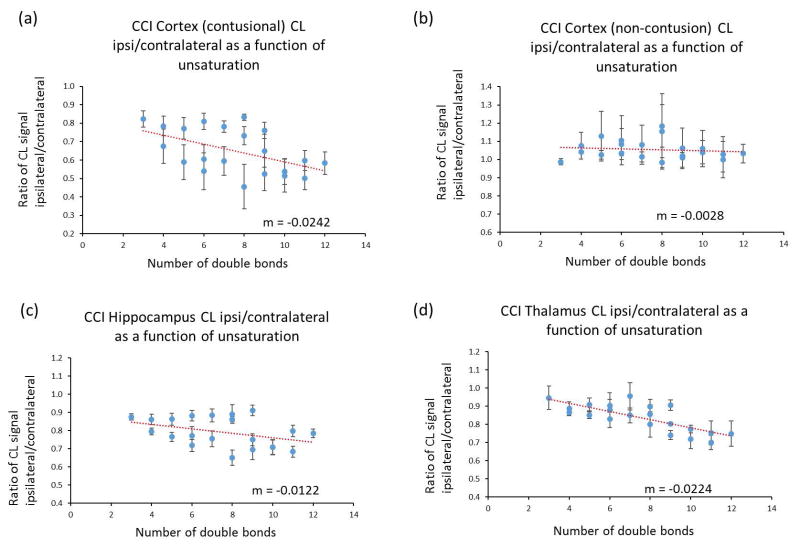
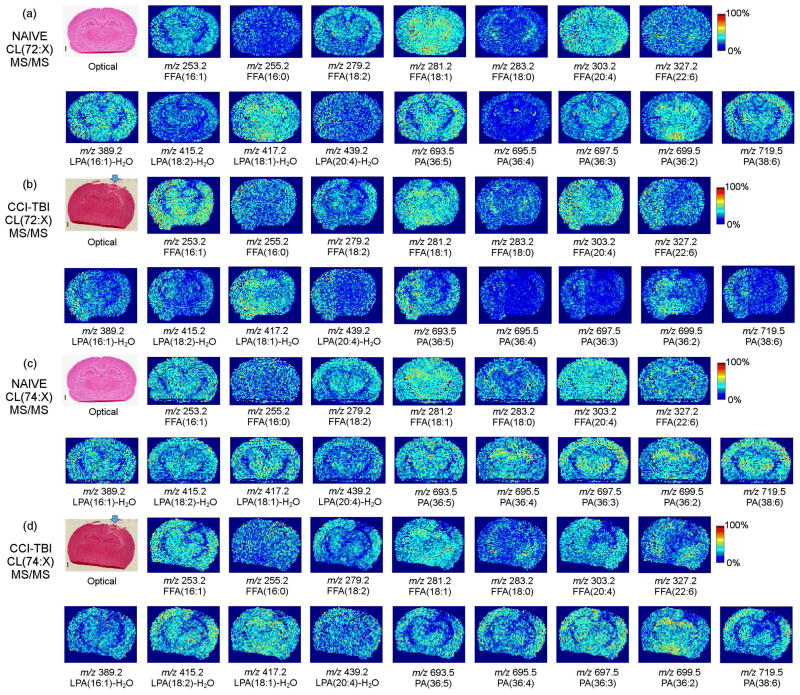
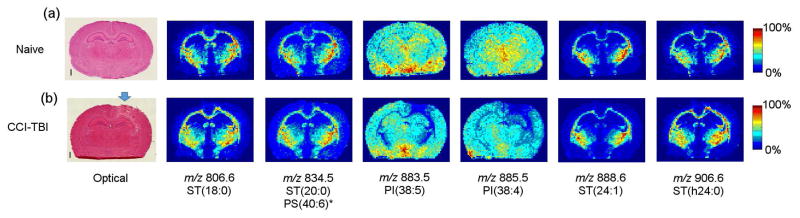
Description:Traumatic brain injury (TBI) leads to changes in ion fluxes, alterations in mitochondrial function, and increased generation of reactive oxygen species, resulting in secondary tissue damage. Mitochondria play important signaling roles in coordination of multiple metabolic platforms in addition to their well-known role in bioenergetics. Mitochondrial signaling strongly depends on cardiolipin (CL), a mitochondria-specific structurally unusual anionic phospholipid containing four fatty acyl chains. While our previous reports indicated that CL is selectively oxidized and presents itself as a target for the redox therapy following TBI, the topography of changes of CL in the injured brain remained to be defined. Here, we present a matrix-assisted laser desorption/ionization imaging study which reports regio-specific changes in CL, in a controlled cortical impact model of TBI in rats. Matrix-assisted laser desorption/ionization imaging revealed that TBI caused early decreases in CL in the contusional cortex, ipsilateral hippocampus, and thalamus with the most highly unsaturated CL species being most susceptible to loss. Phosphatidylinositol was the only other lipid species that exhibited a significant decrease, albeit to a lesser extent than CL. Signals for other lipids remained unchanged. This is the first study evaluating the spatial distribution of CL loss after acute brain injury. We propose that the CL loss may constitute an upstream mechanism for CL-driven signaling in different brain regions as an early response mechanism and may also underlie the bioenergetic changes that occur in hippocampal, cortical, and thalamic mitochondria after TBI.
-
Keywords:
-
Source:J Neurochem. 139(4):659-675
-
Pubmed ID:27591733
-
Pubmed Central ID:PMC5323070
-
Document Type:
-
Funding:R01 ES020693/ES/NIEHS NIH HHSUnited States/ ; R01 OH008282/OH/NIOSH CDC HHSUnited States/ ; U19 AI068021/AI/NIAID NIH HHSUnited States/ ; P30 CA047904/CA/NCI NIH HHSUnited States/ ; R37 NS061817/NS/NINDS NIH HHSUnited States/ ; R01 NS076511/NS/NINDS NIH HHSUnited States/ ; U54 GM103529/GM/NIGMS NIH HHSUnited States/ ; R01 NS061817/NS/NINDS NIH HHSUnited States/
-
Volume:139
-
Issue:4
-
Download URL:
-
File Type:
 [PDF - 3.78 MB]
 -
Collection(s):
-
Main Document Checksum:urn:sha256:cb1a57613fb55772a1d3aa4aa22c0e44f9575ee1a8d35e62c0511def17d58f92
Supporting Files


File Language:
English
 Was this page helpful?
 Found an issue?





CDC STACKS serves as an archival repository of CDC-published products including
scientific findings, journal articles, guidelines, recommendations, or other public health information authored or
co-authored by CDC or funded partners.
As a repository, CDC STACKS retains documents in their original published format to ensure public access to scientific information.
As a repository, CDC STACKS retains documents in their original published format to ensure public access to scientific information.
You May Also Like
COLLECTION
CDC Public Access