


Measles and Rubella Seroprevalence Among HIV- Infected And Uninfected Zambian Youth
Supporting Files

-
3 2017
-
File Language:
English
Details
-
Alternative Title:Pediatr Infect Dis J
-
Personal Author:
-
Description:Background
Measles and congenital rubella syndrome remain significant causes of morbidity and mortality despite available vaccines. HIV-infected youth may be at increased risk of measles because of greater waning immunity following vaccination. At a population level, they constitute a potentially large pool of susceptibles to measles and rubella. More data among HIV-infected youth in sub-Saharan Africa are needed to guide vaccination policy and control strategies.
Methods
This cross-sectional study was nested within two ongoing studies of malaria and HIV in Zambia. Dried blood spot cards from youth (5–15 years) in these studies from 2009–2013 were tested for IgG antibodies to measles and rubella viruses. HIV-uninfected youth, HIV-infected treatment-naïve youth, and HIV-infected youth receiving antiretroviral therapy (ART) were compared.
Results
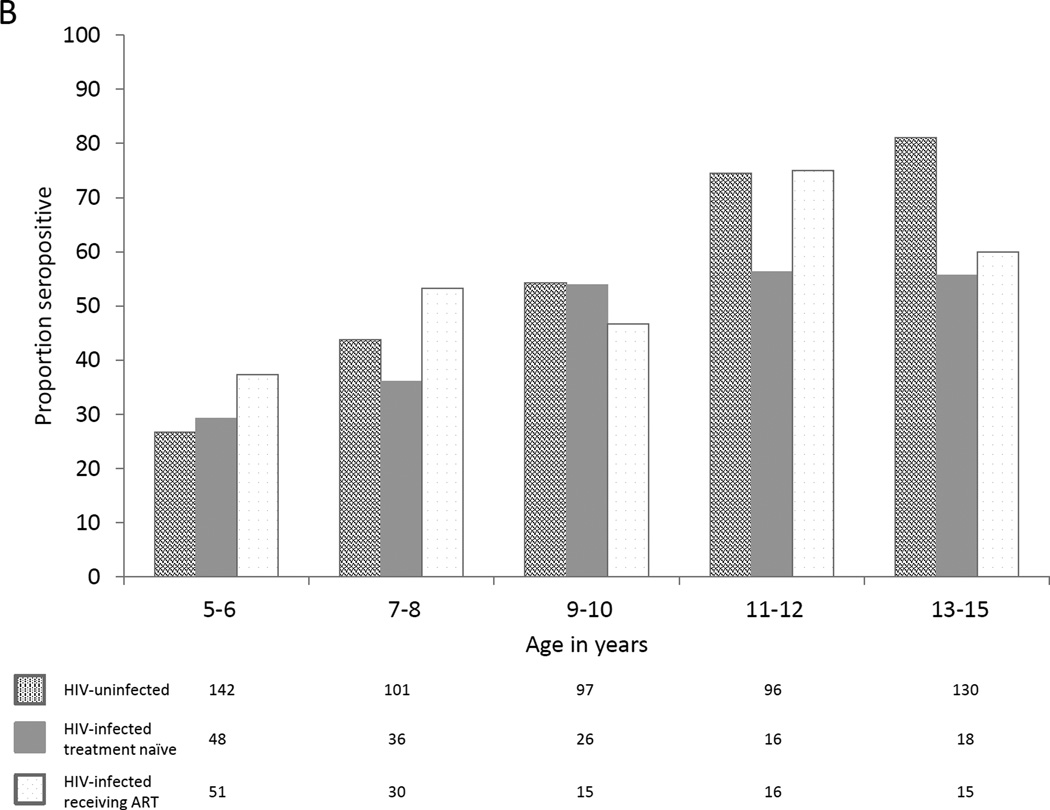
617 HIV-uninfected, 144 HIV-infected treatment-naïve, and 128 HIV-infected youth receiving ART were included in the study. The proportion seropositive for measles virus was significantly higher among HIV-uninfected youth (92.5%) compared to HIV-infected treatment-naïve youth (74.1%) and HIV-infected youth receiving ART (71.9%). No differences by age were observed. The proportion seropositive for rubella virus was significantly higher among HIV-uninfected youth (54.7%) compared with HIV-infected treatment-naïve youth (41.7%) and HIV-infected youth receiving ART (49.6%), with increases observed by age for all groups.
Conclusions
Measles seroprevalence was lower among HIV-infected than uninfected youth, consistent with waning immunity following measles vaccination. HIV-infected youth would likely benefit from revaccination. Half of all youth in rural Zambia were susceptible to rubella and may need targeting for catch-up rubella campaigns when measles-rubella vaccine is introduced.
-
Subjects:
-
Source:Pediatr Infect Dis J. 36(3):301-306
-
Pubmed ID:27879554
-
Pubmed Central ID:PMC5303148
-
Document Type:
-
Funding:
-
Volume:36
-
Issue:3
-
Collection(s):
-
Main Document Checksum:urn:sha256:d332ec5425bd5c8b825b336a81575df7fb80c35e33078113c7d4f2d97745ca4e
-
Download URL:
-
File Type:
 [PDF
- 1.14 MB
]
[PDF
- 1.14 MB
]
Supporting Files


File Language:
English
ON THIS PAGE



CDC STACKS serves as an archival repository of CDC-published products including
scientific findings,
journal articles, guidelines, recommendations, or other public health information authored or
co-authored by CDC or funded partners.
As a repository, CDC STACKS retains documents in their original published format to ensure public access to scientific information.
As a repository, CDC STACKS retains documents in their original published format to ensure public access to scientific information.
You May Also Like
COLLECTION
CDC Public Access