



Isolation of Genetically Diverse Marburg Viruses from Egyptian Fruit Bats
Supporting Files
Public Domain

-
07/31/2009
File Language:
English
Details
-
Alternative Title:PLoS Pathog
-
Personal Author:Towner, Jonathan S. ; Amman, Brian R. ; Sealy, Tara K. ; Carroll, Serena A. Reeder ; Comer, James A. ; Kemp, Alan ; Swanepoel, Robert ; Paddock, Christopher D. ; Balinandi, Stephen ; Khristova, Marina L. ; Formenty, Pierre B. H. ; Albarino, Cesar G. ; Miller, David M. ; Reed, Zachary D. ; Kayiwa, John T. ; Mills, James N. ; Cannon, Deborah L. ; Greer, Patricia W. ; Byaruhanga, Emmanuel ; Farnon, Eileen C. ; Atimnedi, Patrick ; Okware, Samuel ; Katongole-Mbidde, Edward ; Downing, Robert ; Tappero, Jordan W. ; Zaki, Sherif R. ; Ksiazek, Thomas G. ; Nichol, Stuart T. ; Rollin, Pierre E.
-
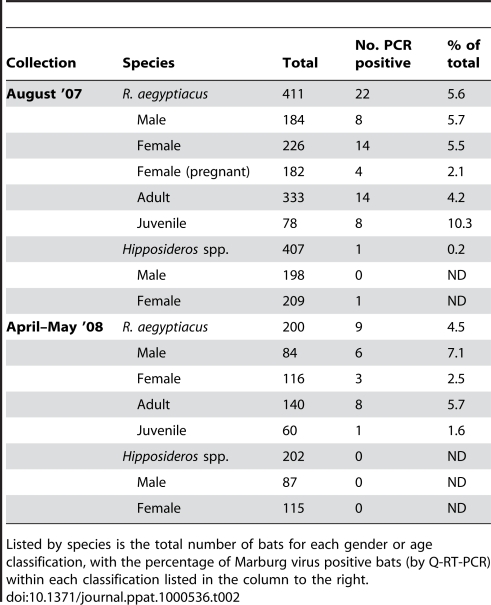
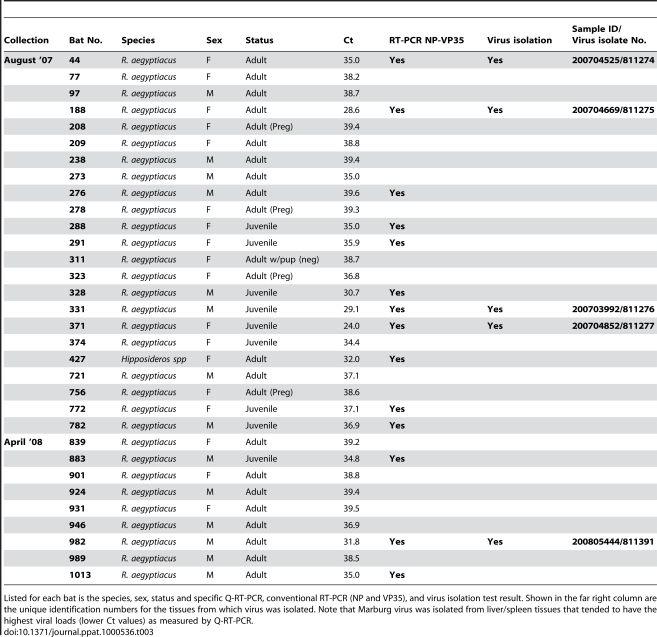
Description:In July and September 2007, miners working in Kitaka Cave, Uganda, were diagnosed with Marburg hemorrhagic fever. The likely source of infection in the cave was Egyptian fruit bats (Rousettus aegyptiacus) based on detection of Marburg virus RNA in 31/611 (5.1%) bats, virus-specific antibody in bat sera, and isolation of genetically diverse virus from bat tissues. The virus isolates were collected nine months apart, demonstrating long-term virus circulation. The bat colony was estimated to be over 100,000 animals using mark and re-capture methods, predicting the presence of over 5,000 virus-infected bats. The genetically diverse virus genome sequences from bats and miners closely matched. These data indicate common Egyptian fruit bats can represent a major natural reservoir and source of Marburg virus with potential for spillover into humans.
-
Subjects:
-
Source:PLoS Pathog. 2009; 5(7)
-
Pubmed ID:19649327
-
Pubmed Central ID:PMC2713404
-
Document Type:
-
Place as Subject:
-
Volume:5
-
Issue:7
-
Download URL:
-
File Type:
 [PDF - 341.74 KB]
 -
Collection(s):
-
Main Document Checksum:urn:sha256:4bcd5297011448a0e55080cbe8c46c5497be292c03a54c1e4c45e49ed23647ce
Supporting Files


File Language:
English
 Was this page helpful?
 Found an issue?





CDC STACKS serves as an archival repository of CDC-published products including
scientific findings, journal articles, guidelines, recommendations, or other public health information authored or
co-authored by CDC or funded partners.
As a repository, CDC STACKS retains documents in their original published format to ensure public access to scientific information.
As a repository, CDC STACKS retains documents in their original published format to ensure public access to scientific information.
You May Also Like
COLLECTION
CDC Public Access