


Enrollment Characteristics and Risk Behaviors of Injection Drug Users Participating in the Bangkok Tenofovir Study, Thailand
Supporting Files
Public Domain

-
Sep 28 2011
-
File Language:
English
Details
-
Alternative Title:PLoS One
-
Personal Author:
-
Corporate Authors:
-
Description:Background
The Bangkok Tenofovir Study was launched in 2005 to determine if pre-exposure prophylaxis with tenofovir will reduce the risk of HIV infection among injecting drug users (IDUs). We describe recruitment, screening, enrollment, and baseline characteristics of study participants and contrast risk behavior of Tenofovir Study participants with participants in the 1999–2003 AIDSVAX B/E Vaccine Trial.
Methods
The Bangkok Tenofovir Study is an ongoing, phase-3, randomized, double-blind, placebo-controlled, HIV pre-exposure prophylaxis trial of daily oral tenofovir. The Tenofovir Study and the Vaccine Trial were conducted among IDUs at 17 drug-treatment clinics in Bangkok. Tenofovir Study sample size was based on HIV incidence in the Vaccine Trial. Standardized questionnaires were used to collect demographic, risk behavior, and incarceration data. The Tenofovir Study is registered with ClinicalTrials.gov, number-NCT00119106.
Results
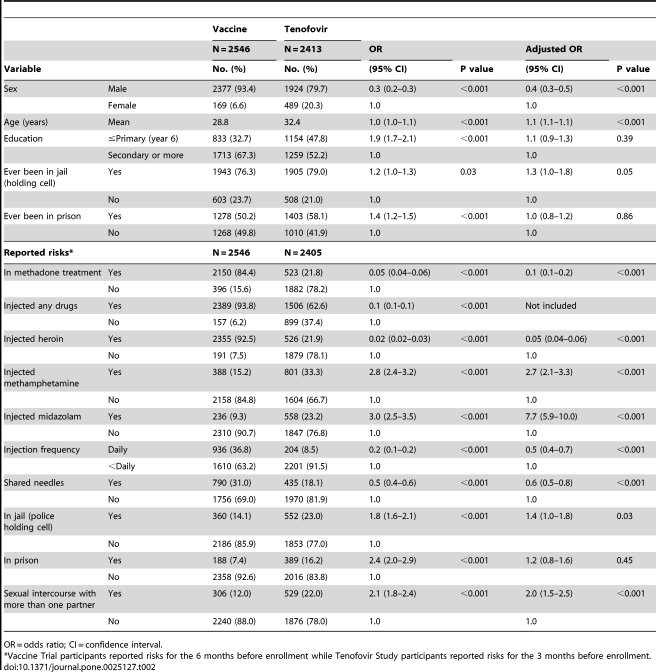
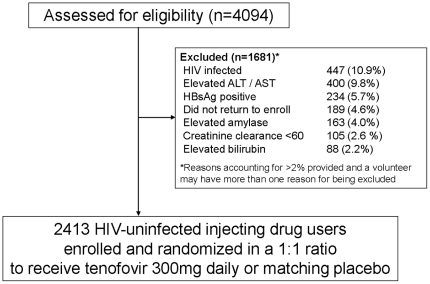
From June 2005 through July 2010, 4094 IDUs were screened and 2413 enrolled in the Bangkok Tenofovir Study. The median age of enrolled participants was 31 years (range, 20–59), 80% were male, and 63% reported they injected drugs during the 3 months before enrollment. Among those who injected, 53% injected methamphetamine, 37% midazolam, and 35% heroin. Tenofovir Study participants were less likely to inject drugs, inject daily, or share needles (all, p<0.001) than Vaccine Trial participants.
Discussion
The Bangkok Tenofovir Study has been successfully launched and is fully enrolled. Study participants are significantly less likely to report injecting drugs and sharing needles than participants in the 1999–2003 AIDSVAX B/E Vaccine Trial suggesting HIV incidence will be lower than expected. In response, the Bangkok Tenofovir Study enrollment was increased from 1600 to 2400 and the study design was changed from a defined 1-year follow-up period to an endpoint-driven design. Trial results demonstrating whether or not daily oral tenofovir reduces the risk of HIV infection among IDUs are expected in 2012.
-
Subjects:
-
Source:PLoS One. 2011; 6(9).
-
Document Type:
-
Place as Subject:
-
Volume:6
-
Issue:9
-
Collection(s):
-
Main Document Checksum:urn:sha-512:b3b8289deedf301ea2e1e590db450f66b7326d451cd87b587f324fccdd9dbc2b55682580f9f58a886f6da60365cba5f5946e8a0504bc61817c388eb9e12c55fc
-
Download URL:
-
File Type:
 [PDF
- 155.39 KB
]
[PDF
- 155.39 KB
]
Supporting Files


File Language:
English
ON THIS PAGE

CDC STACKS serves as an archival repository of CDC-published products including
scientific findings,
journal articles, guidelines, recommendations, or other public health information authored or
co-authored by CDC or funded partners.
As a repository, CDC STACKS retains documents in their original published format to ensure public access to scientific information.
As a repository, CDC STACKS retains documents in their original published format to ensure public access to scientific information.
You May Also Like
COLLECTION
CDC Public Access