


Immune Response to Invasive Group B Streptococcus Disease in Adults
Supporting Files
Public Domain

-
Nov 2016
-
Details
-
Alternative Title:Emerg Infect Dis
-
Personal Author:
-
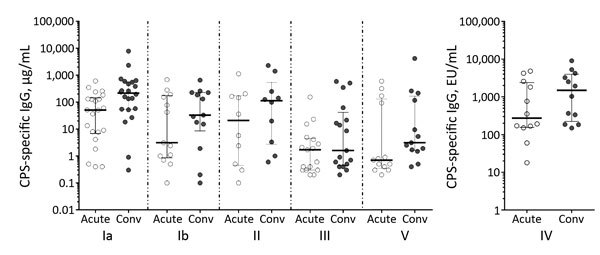
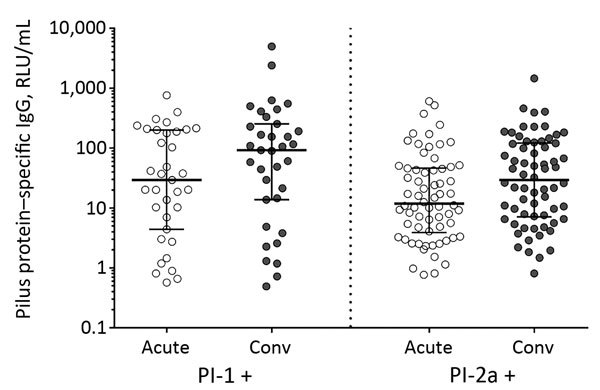
Description:Immunization of nonpregnant adults could help prevent invasive group B Streptococcus (GBS) infections, but adult immune responses have not been investigated. We defined capsular polysaccharide (CPS) and pilus island (PI) surface antigen distribution and expression and immune responses to GBS infection in nonpregnant adults. Prospective surveillance from 7 hospitals in Houston, Texas, USA, identified 102 adults with GBS bacteremia; 43% had skin/soft tissue infection, 16% bacteremia without focus, and 12% osteomyelitis. CPS-specific IgG was determined by ELISA and pilus-specific IgG by multiplex immunoassay. CPS types were Ia (24.5%), Ib (12.7%), II (9.8%), III (16.7%), IV (13.7%), and V (12.7%); 9.8% were nontypeable by serologic methods. Pili, expressed by 89%, were most often PI-2a. CPS and pilus-specific IgG increased during convalescence among patients with strains expressing CPS or PI. All GBS expressed CPS or PI; 79% expressed both. Increased antibodies to CPS and PI during recovery suggests that GBS bacteremia in adults is potentially vaccine preventable.
-
Subjects:
-
Source:Emerg Infect Dis. 22(11):1877-1883.
-
Pubmed ID:27767008
-
Pubmed Central ID:PMC5088039
-
Document Type:
-
Volume:22
-
Issue:11
-
Collection(s):
-
Main Document Checksum:urn:sha256:46ef7ee57ae964db4a1a81111b54f792a2f53512c7f554e08c217f3feb089890
-
Download URL:
-
File Type:
 [PDF
- 1.00 MB
]
[PDF
- 1.00 MB
]
Supporting Files


ON THIS PAGE



CDC STACKS serves as an archival repository of CDC-published products including
scientific findings,
journal articles, guidelines, recommendations, or other public health information authored or
co-authored by CDC or funded partners.
As a repository, CDC STACKS retains documents in their original published format to ensure public access to scientific information.
As a repository, CDC STACKS retains documents in their original published format to ensure public access to scientific information.
You May Also Like
COLLECTION
Emerging Infectious Diseases