



Transmission of Babesia microti Parasites by Solid Organ Transplantation
Supporting Files

-
Nov 2016
File Language:
English
Details
-
Alternative Title:Emerg Infect Dis
-
Personal Author:
-
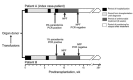
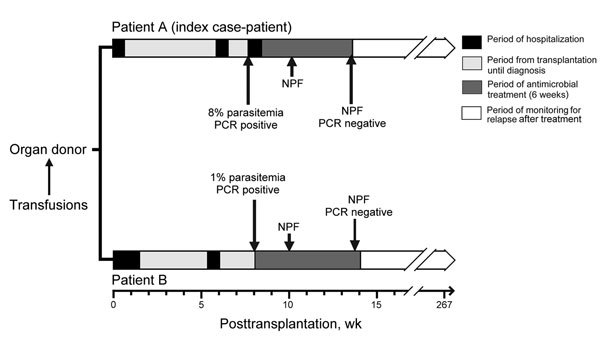
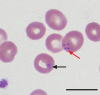
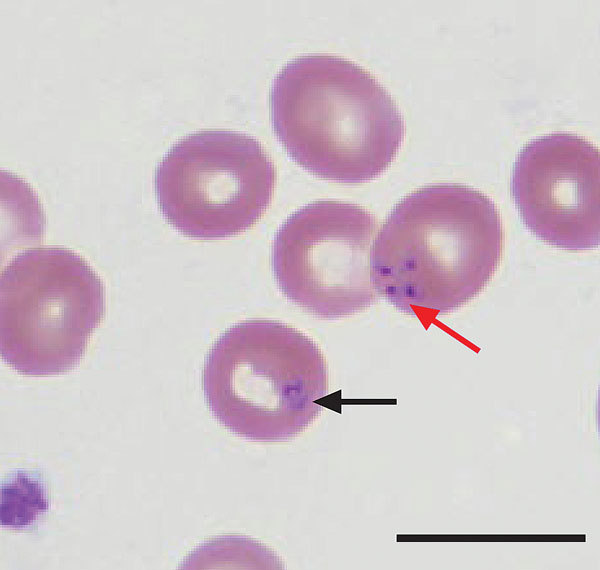
Description:Babesia microti, an intraerythrocytic parasite, is tickborne in nature. In contrast to transmission by blood transfusion, which has been well documented, transmission associated with solid organ transplantation has not been reported. We describe parasitologically confirmed cases of babesiosis diagnosed ≈8 weeks posttransplantation in 2 recipients of renal allografts from an organ donor who was multiply transfused on the day he died from traumatic injuries. The organ donor and recipients had no identified risk factors for tickborne infection. Antibodies against B. microti parasites were not detected by serologic testing of archived pretransplant specimens. However, 1 of the organ donor's blood donors was seropositive when tested postdonation and had risk factors for tick exposure. The organ donor probably served as a conduit of Babesia parasites from the seropositive blood donor to both kidney recipients. Babesiosis should be included in the differential diagnosis of unexplained fever and hemolytic anemia after blood transfusion or organ transplantation.
-
Subjects:
-
Source:Emerg Infect Dis. 22(11):1869-1876.
-
Pubmed ID:27767010
-
Pubmed Central ID:PMC5088010
-
Document Type:
-
Funding:
-
Volume:22
-
Issue:11
-
Download URL:
-
File Type:
 [PDF - 1.12 MB]
 -
Collection(s):
-
Main Document Checksum:urn:sha256:50b65e415a28f0a0a705696dbb7cd67d8e3e81e410bba41dde066e0d568e6056
Supporting Files


File Language:
English
 Was this page helpful?
 Found an issue?

CDC STACKS serves as an archival repository of CDC-published products including
scientific findings, journal articles, guidelines, recommendations, or other public health information authored or
co-authored by CDC or funded partners.
As a repository, CDC STACKS retains documents in their original published format to ensure public access to scientific information.
As a repository, CDC STACKS retains documents in their original published format to ensure public access to scientific information.
You May Also Like
COLLECTION
Emerging Infectious Diseases