



Serum from obstructive sleep apnea patients induces inflammatory responses in coronary artery endothelial cells
Supporting Files

-
11 2016 ; 11-2016
-
Available in CDC Stacks on 2017-11-01T00:00:00Z
File Language:
English
Details
-
Alternative Title:Atherosclerosis
-
Personal Author:
-
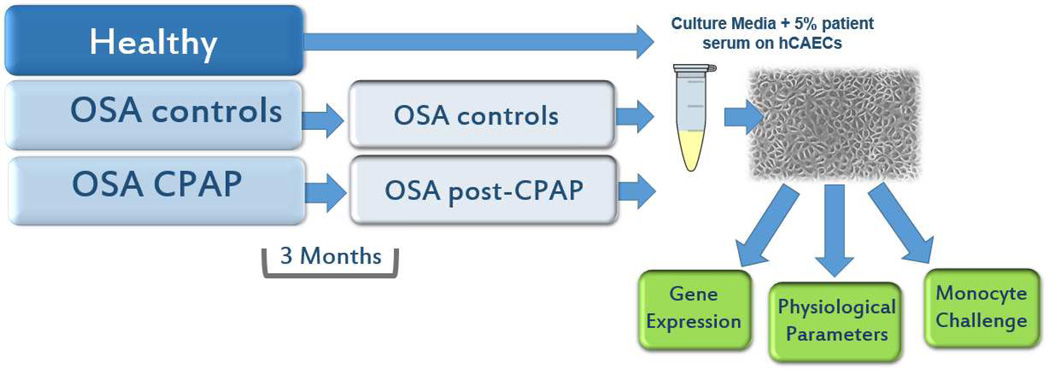
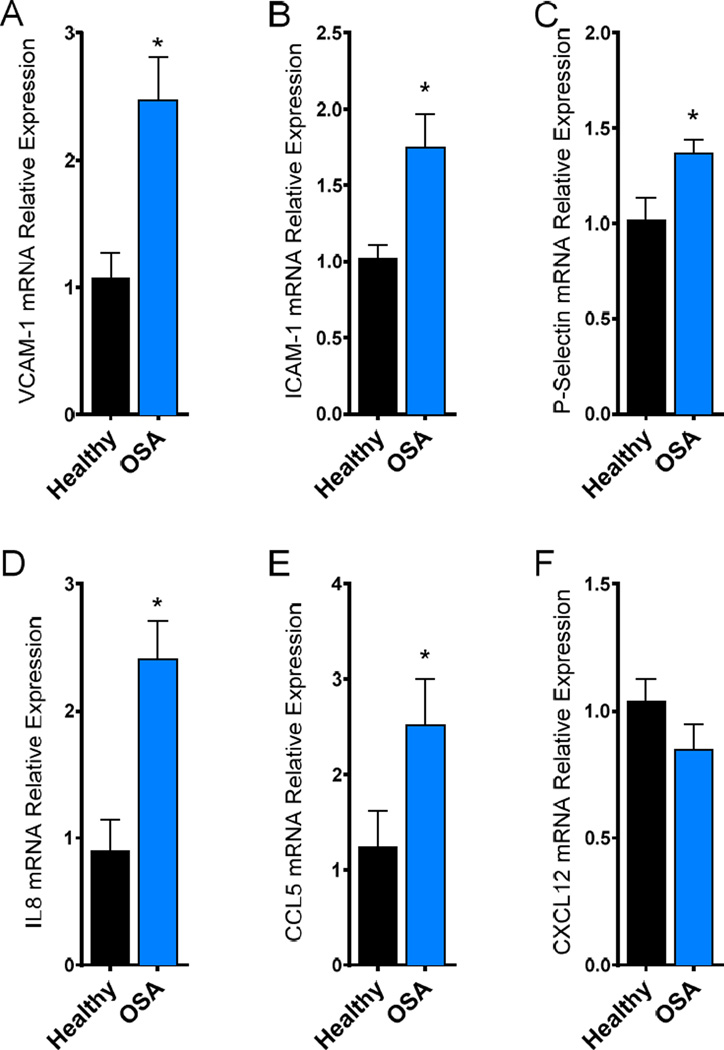
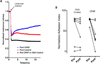
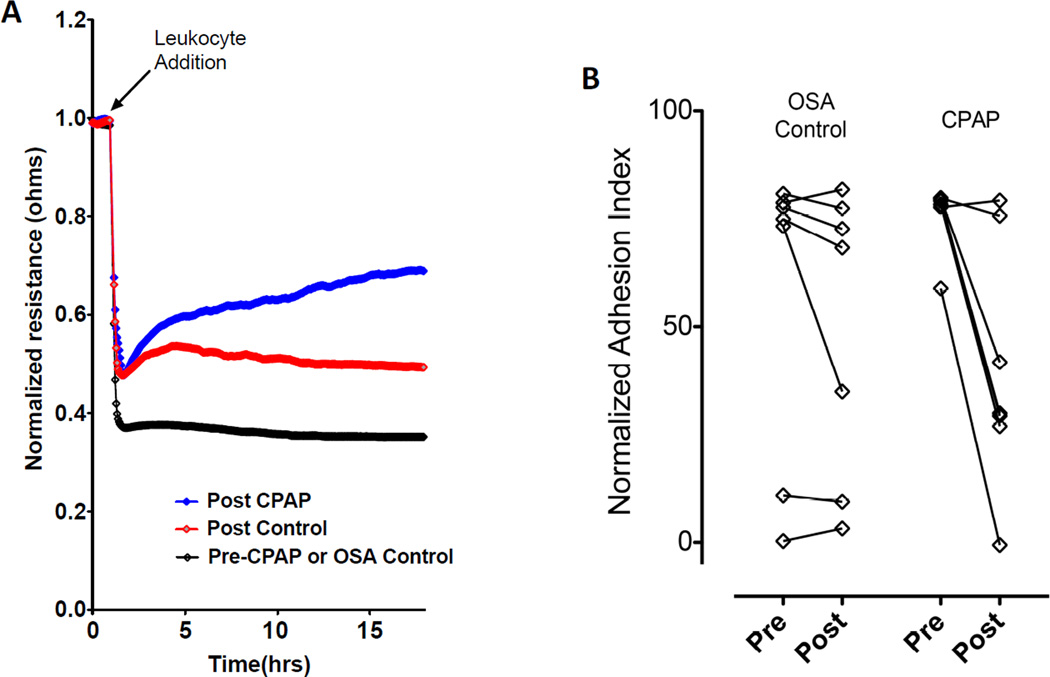
Description:Background and aims ; Obstructive sleep apnea (OSA) is characterized by intermittent airway obstruction and systemic hypoxia during sleep, which can contribute to an increase in reactive oxygen species, vascular remodeling, vasoconstriction and ultimately cardiovascular disease. Continuous positive airway pressure (CPAP) is a clinical therapy that maintains airway patency and mitigates several symptoms of OSA. However, it is currently unknown whether CPAP therapy also reduces the overall inflammatory potential in the circulation; to address this in an unbiased manner, we applied a novel endothelial biosensor approach, the serum cumulative inflammatory potential (SCIP) assay. ; Methods ; We studied healthy controls (n=7), OSA subjects receiving no treatment, (OSA controls) (n=7) and OSA subjects receiving CPAP for 3 months (n=8). Serum was obtained from OSA subjects before and after CPAP or no treatment. A battery of quantitative and functional assays was performed to assess the serum inflammatory potential, in terms of endothelial responses. For the SCIP assay, human coronary artery endothelial cells (hCAECs) were incubated with 5% serum in media from individual subjects for 4 h. qPCR was performed to assess endothelial inflammatory transcript (ICAM-1, VCAM-1, IL-8, P-selectin, CCL5, and CXCL12) responses to serum. Additionally, transendothelial resistance was measured in serum-incubated hCAECs following leukocyte challenge. ; Results ; hCAECs exhibited significant increases in VCAM-1, ICAM-1, IL-8 and P-selectin mRNA when incubated with serum from OSA patients compared to serum from healthy control subjects. Furthermore, compared to no treatment, serum from CPAP-treated individuals was less potent at inducing inflammatory gene expression in the SCIP assay. Similarly, in a leukocyte adhesion assay, naïve cells treated with serum from patients who received CPAP exhibited improved endothelial barrier function than cells treated with OSA control serum. ; Conclusions ; OSA results in greater serum inflammatory potential, thereby driving endothelial activation and dysfunction.
-
Keywords:
- Obstructive Sleep Apnea
- inflammation
- hypoxia
- serum
- bioassay
- Adult
- Biosensing Techniques
- Case-Control Studies
- Cell Adhesion
- Cohort Studies
- Continuous Positive Airway Pressure
- Coronary Vessels
- Endothelial Cells
- Humans
- Hypoxia
- Inflammation
- Intercellular Adhesion Molecule-1
- Interleukin-8
- Leukocytes
- Male
- Middle Aged
- P-Selectin
- Risk Factors
- Sleep Apnea, Obstructive
- Vascular Cell Adhesion Molecule-1
-
Source:Atherosclerosis. 254:59-66
-
Pubmed ID:27693879
-
Pubmed Central ID:PMC5097675
-
Document Type:
-
Funding:R01 HL080105/HL/NHLBI NIH HHSUnited States/ ; R01OH010828/ACL/ACL HHSUnited States/ ; R01 OH010828/OH/NIOSH CDC HHSUnited States/ ; R01 ES014639/ES/NIEHS NIH HHSUnited States/ ; R01 HL128970/HL/NHLBI NIH HHSUnited States/ ; K12 GM088021/GM/NIGMS NIH HHSUnited States/ ; R56 ES014639/ES/NIEHS NIH HHSUnited States/ ; R01 HL133100/HL/NHLBI NIH HHSUnited States/
-
Volume:254
-
Download URL:
-
File Type:
 [PDF - 1.39 MB]
 -
Collection(s):
-
Main Document Checksum:urn:sha256:58e96af60b7a2c052b4a68fa243efb3920ac34fa0cec0ebd5b4a38ba47759b1d
Supporting Files


File Language:
English
 Was this page helpful?
 Found an issue?




CDC STACKS serves as an archival repository of CDC-published products including
scientific findings, journal articles, guidelines, recommendations, or other public health information authored or
co-authored by CDC or funded partners.
As a repository, CDC STACKS retains documents in their original published format to ensure public access to scientific information.
As a repository, CDC STACKS retains documents in their original published format to ensure public access to scientific information.
You May Also Like
COLLECTION
CDC Public Access