



HSP90 inhibition leads to degradation of the TYK2 kinase and apoptotic cell death in T-cell acute lymphoblastic leukemia
Supporting Files

-
Aug 12 2015
-
Details
-
Alternative Title:Leukemia
-
Personal Author:
-
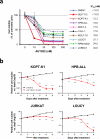
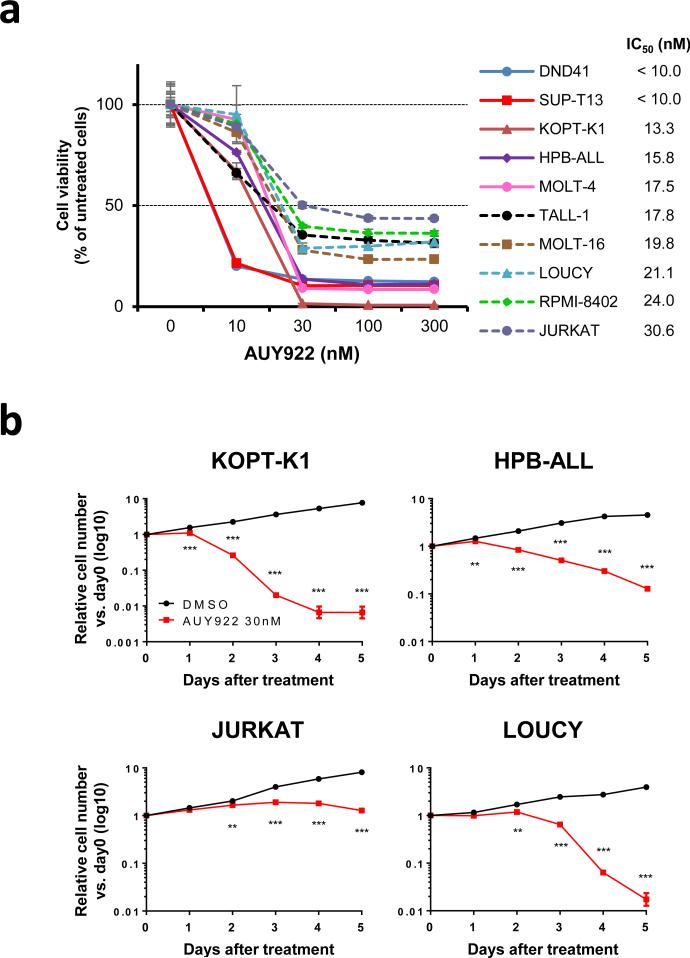
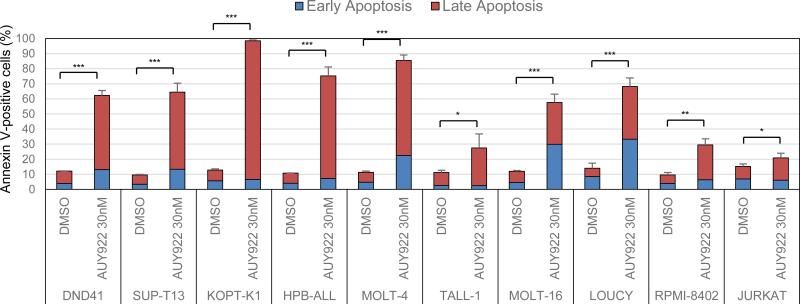
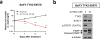
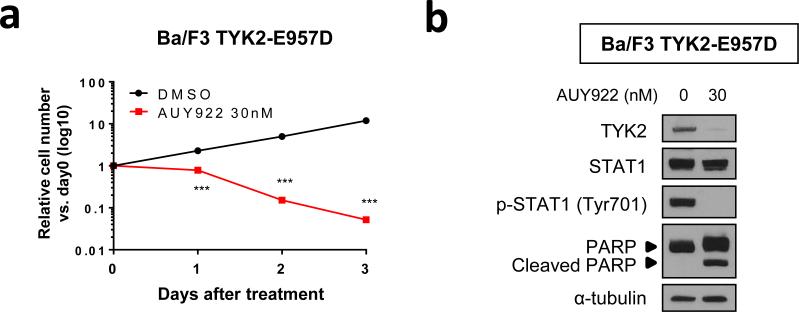
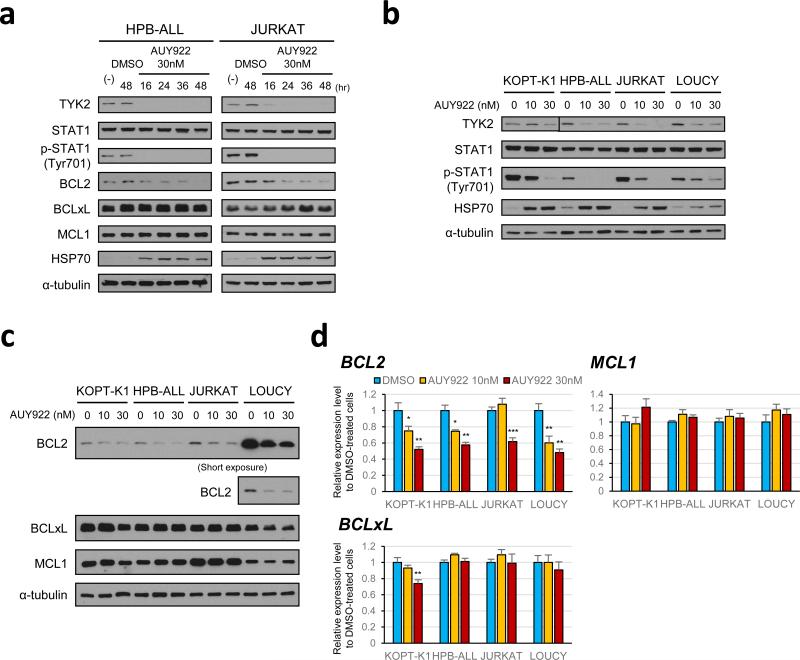
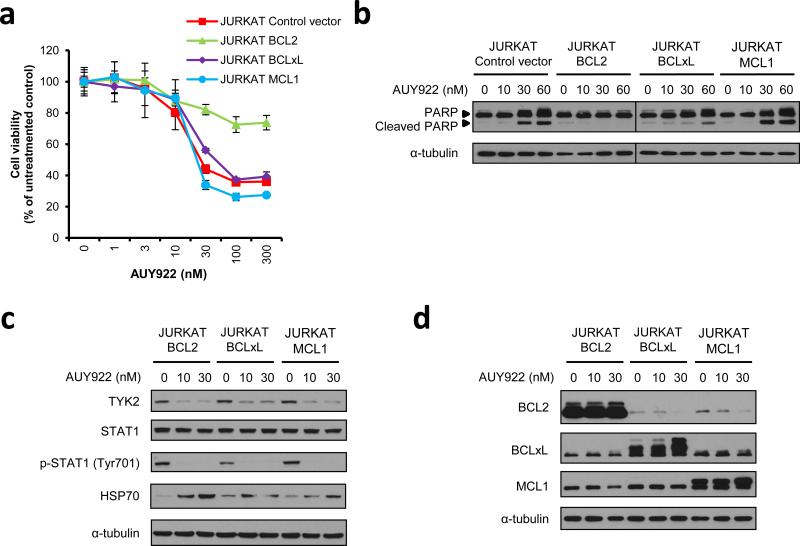
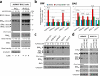
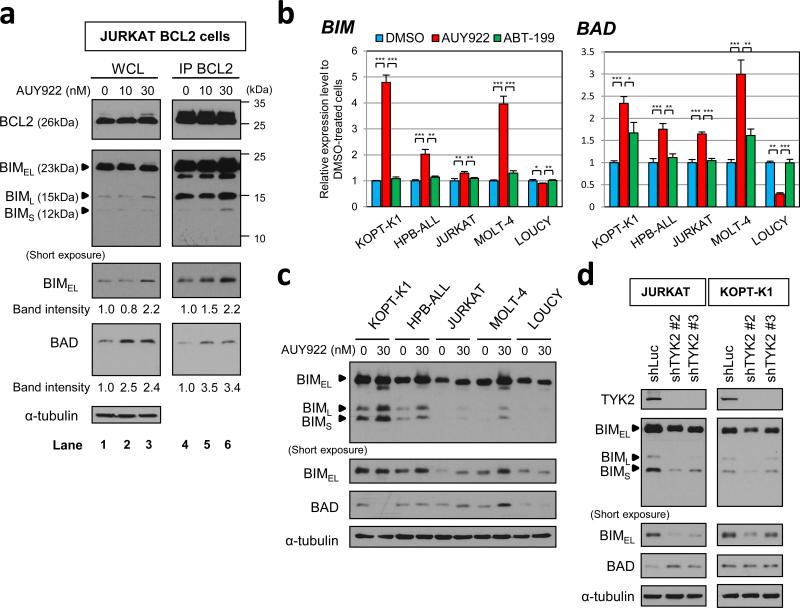
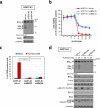
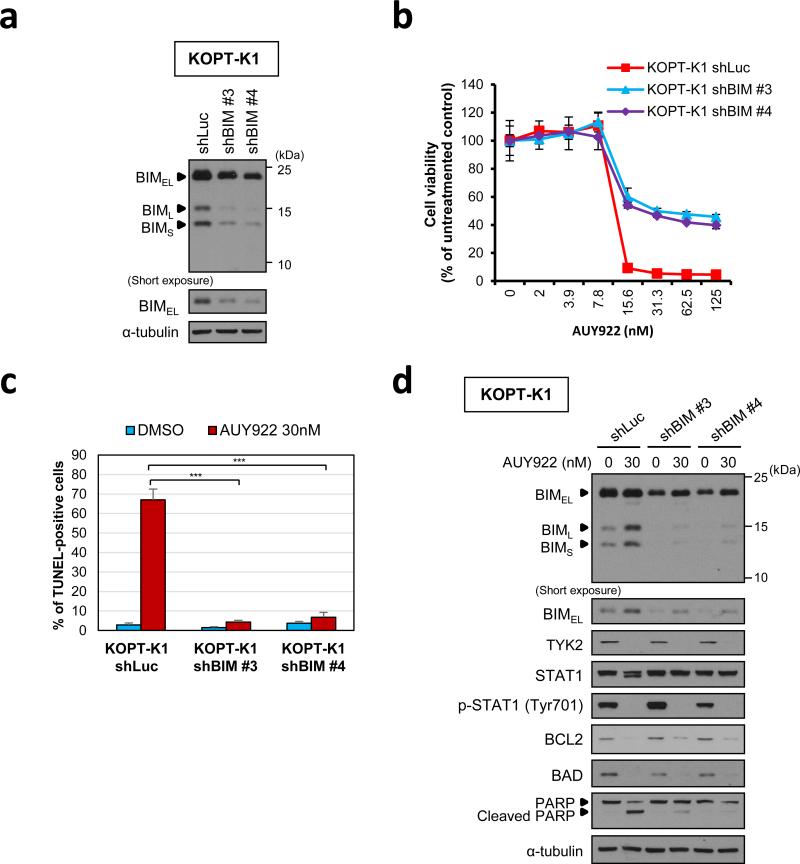
Description:We previously found that tyrosine kinase 2 (TYK2) signaling through its downstream effector phospho-STAT1 acts to upregulate BCL2, which in turn mediates aberrant survival of T-cell acute lymphoblastic leukemia (T-ALL) cells. Here we show that pharmacologic inhibition of heat shock protein 90 (HSP90) with a small-molecule inhibitor, NVP-AUY922 (AUY922), leads to rapid degradation of TYK2 and apoptosis in T-ALL cells. STAT1 protein levels were not affected by AUY922 treatment, but phospho-STAT1 (Tyr-701) levels rapidly became undetectable, consistent with a block in signaling downstream of TYK2. BCL2 expression was downregulated after AUY922 treatment, and although this effect was necessary for AUY922-induced apoptosis, it was not sufficient because many T-ALL cell lines were resistant to ABT-199, a specific inhibitor of BCL2. Unlike ABT-199, AUY922 also upregulated the proapoptotic proteins BIM and BAD, whose increased expression was required for AUY922-induced apoptosis. Thus, the potent cytotoxicity of AUY922 involves the synergistic combination of BCL2 downregulation coupled with upregulation of the proapoptotic proteins BIM and BAD. This two-pronged assault on the mitochondrial apoptotic machinery identifies HSP90 inhibitors as promising drugs for targeting the TYK2-mediated prosurvival signaling axis in T-ALL cells.
-
Subjects:
-
Source:Leukemia. 30(1):219-228.
-
Pubmed ID:26265185
-
Pubmed Central ID:PMC4703488
-
Document Type:
-
Funding:
-
Volume:30
-
Issue:1
-
Collection(s):
-
Main Document Checksum:urn:sha256:21acfc36a9adb4780aa7f60ab702e287de6d7176a17c582804cad3d52887958d
-
Download URL:
-
File Type:
 [PDF
- 1.88 MB
]
[PDF
- 1.88 MB
]
Supporting Files


 Was this page helpful?
 Found an issue?


CDC STACKS serves as an archival repository of CDC-published products including
scientific findings,
journal articles, guidelines, recommendations, or other public health information authored or
co-authored by CDC or funded partners.
As a repository, CDC STACKS retains documents in their original published format to ensure public access to scientific information.
As a repository, CDC STACKS retains documents in their original published format to ensure public access to scientific information.
You May Also Like
COLLECTION
CDC Public Access