


Risk of myeloid neoplasms after solid organ transplantation
Supporting Files

-
Apr 14 2014
-
File Language:
English
Details
-
Alternative Title:Leukemia
-
Personal Author:
-
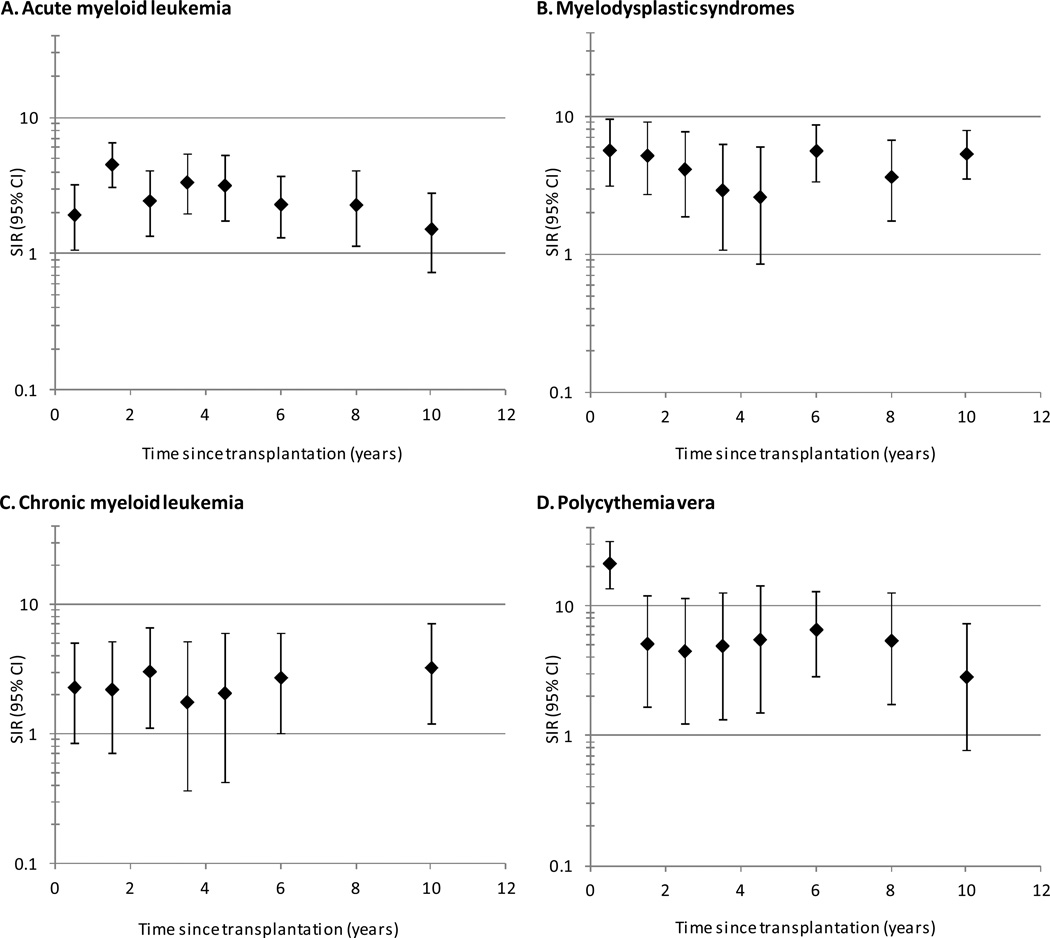
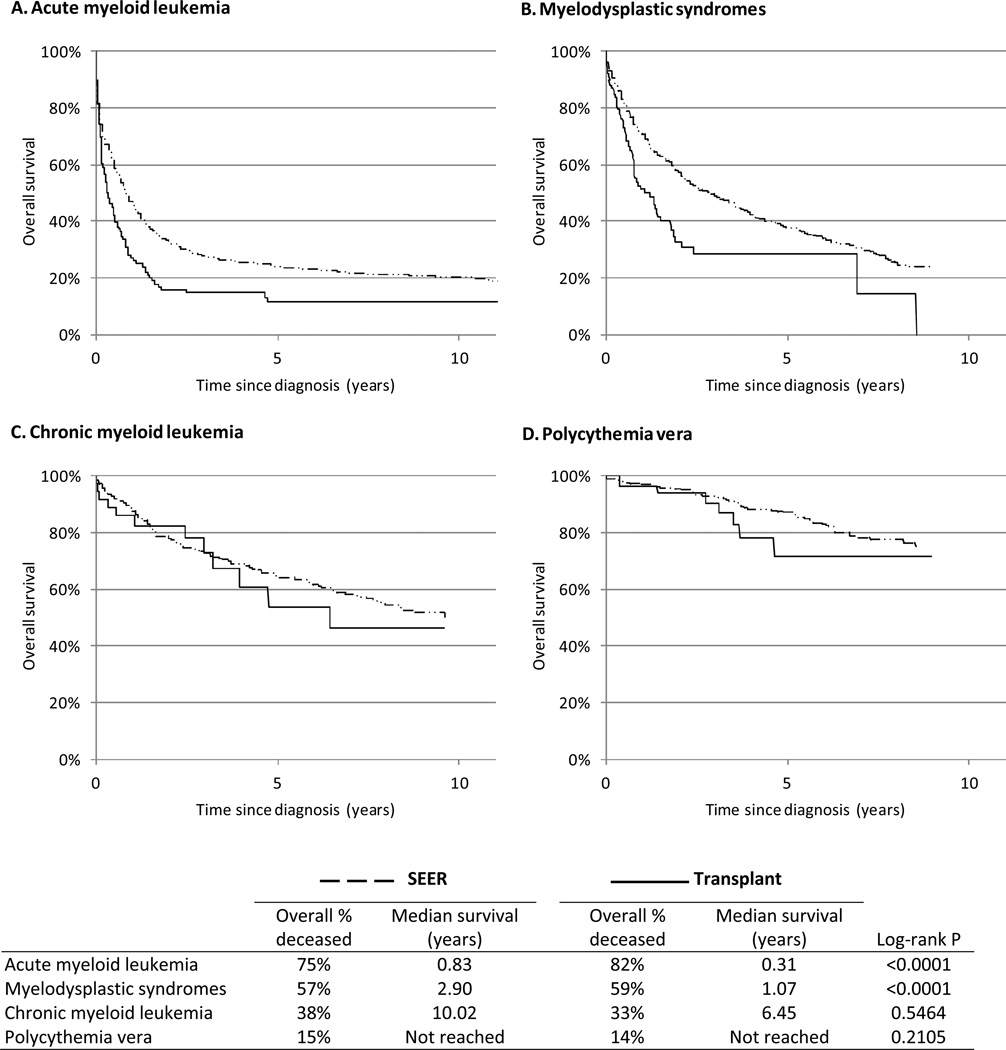
Description:Solid organ transplant recipients have elevated cancer risks, owing in part to pharmacologic immunosuppression. However, little is known about risks for hematologic malignancies of myeloid origin. We linked the US Scientific Registry of Transplant Recipients with 15 population-based cancer registries to ascertain cancer occurrence among 207 859 solid organ transplants (1987-2009). Solid organ transplant recipients had a significantly elevated risk for myeloid neoplasms, with standardized incidence ratios (SIRs) of 4.6 (95% confidence interval 3.8-5.6; N=101) for myelodysplastic syndromes (MDS), 2.7 (2.2-3.2; N=125) for acute myeloid leukemia (AML), 2.3 (1.6-3.2; N=36) for chronic myeloid leukemia and 7.2 (5.4-9.3; N=57) for polycythemia vera. SIRs were highest among younger individuals and varied by time since transplantation and organ type (Poisson regression P<0.05 for all comparisons). Azathioprine for initial maintenance immunosuppression increased risk for MDS (P=0.0002) and AML (2-5 years after transplantation, P=0.0163). Overall survival following AML/MDS among transplant recipients was inferior to that of similar patients reported to US cancer registries (log-rank P<0.0001). Our novel finding of increased risks for specific myeloid neoplasms after solid organ transplantation supports a role for immune dysfunction in myeloid neoplasm etiology. The increased risks and inferior survival should heighten clinician awareness of myeloid neoplasms during follow-up of transplant recipients.
-
Subjects:
-
Source:Leukemia. 28(12):2317-2323.
-
Pubmed ID:24727673
-
Pubmed Central ID:PMC4197126
-
Document Type:
-
Funding:HHSN261201000037C/CA/NCI NIH HHS/United States ; HHSN261201000027C/CA/NCI NIH HHS/United States ; ZIA CP010170-11/Intramural NIH HHS/United States ; N01PC35143/CA/NCI NIH HHS/United States ; U58 DP000805/DP/NCCDPHP CDC HHS/United States ; U58 DP000817/DP/NCCDPHP CDC HHS/United States ; HHSN261201000035C/CA/NCI NIH HHS/United States ; P30 ES005605/ES/NIEHS NIH HHS/United States ; P30 CA086862/CA/NCI NIH HHS/United States ; HHSN261201000036C/CA/NCI NIH HHS/United States ; N01PC35137/CA/NCI NIH HHS/United States ; U58 DP000807/DP/NCCDPHP CDC HHS/United States ; U58 DP000808/DP/NCCDPHP CDC HHS/United States ; N01PC35142/CA/NCI NIH HHS/United States ; Z99 CA999999/Intramural NIH HHS/United States ; HHSN261201000035I/CA/NCI NIH HHS/United States ; U58 DP000848/DP/NCCDPHP CDC HHS/United States ; U58 DP000812/DP/NCCDPHP CDC HHS/United States ; HHSN261201000024C/CA/NCI NIH HHS/United States ; HHSN261201000034C/CA/NCI NIH HHS/United States ; N01PC54405/CA/NCI NIH HHS/United States ; U58 DP000832/DP/NCCDPHP CDC HHS/United States ; N01PC35139/CA/NCI NIH HHS/United States ; HHSN261201000026C/CA/NCI NIH HHS/United States ; U58 DP000824/DP/NCCDPHP CDC HHS/United States
-
Place as Subject:
-
Volume:28
-
Issue:12
-
Collection(s):
-
Main Document Checksum:urn:sha256:8ad96c7a89aced46de88e1ee944790a92b5179cbad3129d4a90d794e0859e8d4
-
Download URL:
-
File Type:
 [PDF
- 1.10 MB
]
[PDF
- 1.10 MB
]
Supporting Files


File Language:
English
ON THIS PAGE




CDC STACKS serves as an archival repository of CDC-published products including
scientific findings,
journal articles, guidelines, recommendations, or other public health information authored or
co-authored by CDC or funded partners.
As a repository, CDC STACKS retains documents in their original published format to ensure public access to scientific information.
As a repository, CDC STACKS retains documents in their original published format to ensure public access to scientific information.
You May Also Like
COLLECTION
CDC Public Access