



Perceptions, Expectations, and Attitudes about Communication with Physicians among Chinese American and non-Hispanic White Women with Early-Stage Breast Cancer
Supporting Files

-
12 2013 ; 12-2013
-
Available in CDC Stacks on December 01, 2014, 12:00 AM
File Language:
English
Details
-
Alternative Title:Support Care Cancer
-
Personal Author:
-
Description:Purpose
Asian Americans have consistently reported poorer communication with physicians compared with non-Hispanic Whites (NHW). This qualitative study sought to elucidate the similarities and differences in communication with physicians between Chinese and NHW breast cancer survivors.
Methods
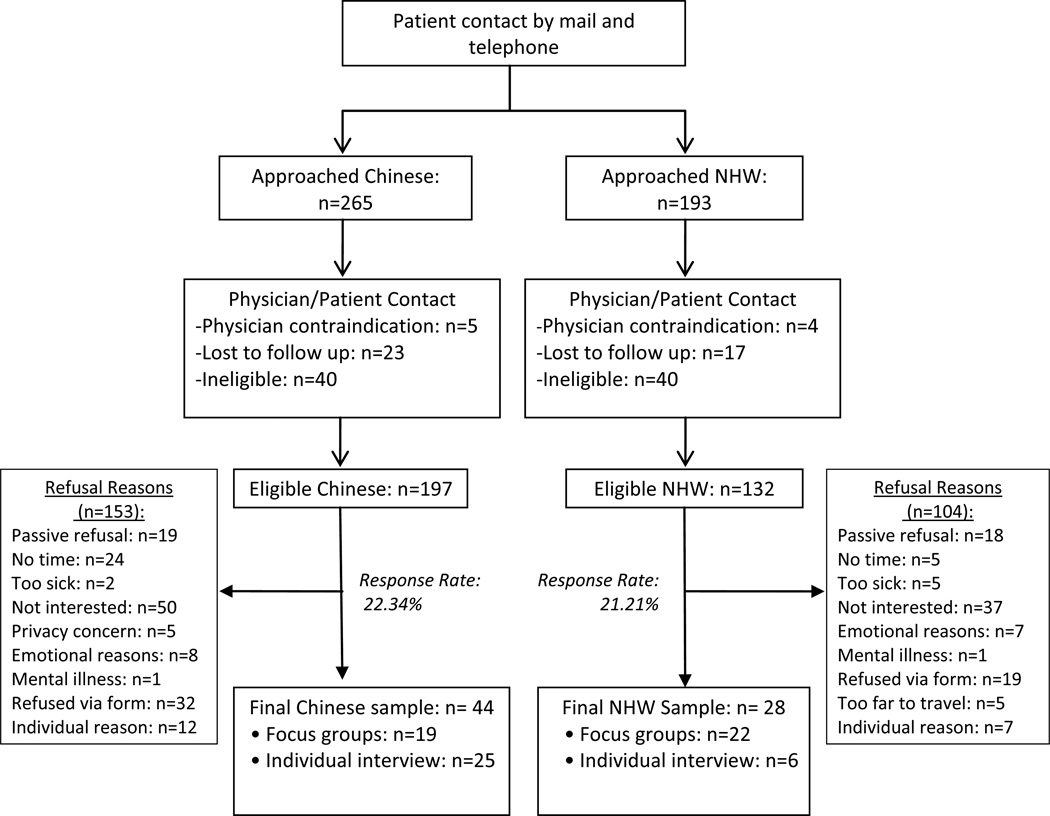
Forty-four Chinese and 28 NHW women with early-stage breast cancer (stage 0-IIa) from the Greater Bay Area Cancer Registry participated in focus group discussions or individual interviews. We oversampled Chinese women because little is known about their cancer care experiences. In both interview formats, questions explored patients’ experiences and feelings when communicating with physicians about their diagnosis, treatment, and follow-up care.
Results
Physician empathy at the time of diagnosis was important to both ethnic groups; however, during treatment and follow-up care, physicians’ ability to treat cancer and alleviate physical symptoms was a higher priority. NHW and US-born Chinese survivors were more likely to assert their needs, whereas Chinese immigrants accepted physician advice even when it did not alleviate physical problems (e.g., pain). Patients viewed all physicians as the primary source for information about cancer care. Many Chinese immigrants sought additional information from primary care physicians and stressed optimal communication over language concordance.
Conclusions
Physician empathy and precise information were important for cancer patients. Cultural differences such as the Western emphasis on individual autonomy vs. Chinese emphasis on respect and hierarchy can be the basis for the varied approaches to physician communication we observed. Interventions based on cultural understanding can foster more effective communication between immigrant patients and physicians ultimately improving patient outcomes. -
Keywords:
-
Source:Support Care Cancer. 21(12):3315-3325
-
Pubmed ID:23903797
-
Pubmed Central ID:PMC4018227
-
Document Type:
-
Funding:HHSN261201000140C/CA/NCI NIH HHSUnited States/ ; U58 DP000807/DP/NCCDPHP CDC HHSUnited States/ ; R21 CA139408/CA/NCI NIH HHSUnited States/ ; HHSN261201000035I/CA/NCI NIH HHSUnited States/ ; HHSN261201000034C/CA/NCI NIH HHSUnited States/ ; HHSN261201000040C/CA/NCI NIH HHSUnited States/ ; HHSN261201000040I/CA/NCI NIH HHSUnited States/ ; CA139408/CA/NCI NIH HHSUnited States/ ; HHSN261201000035C/CA/NCI NIH HHSUnited States/
-
Volume:21
-
Issue:12
-
Download URL:
-
File Type:
 [PDF - 483.38 KB]
 -
Collection(s):
-
Main Document Checksum:urn:sha256:778f6495b9051554e371784e2afb227325b8b954f5cf8fa87635ac74d317d49c
Supporting Files


File Language:
English
 Was this page helpful?
 Found an issue?


CDC STACKS serves as an archival repository of CDC-published products including
scientific findings, journal articles, guidelines, recommendations, or other public health information authored or
co-authored by CDC or funded partners.
As a repository, CDC STACKS retains documents in their original published format to ensure public access to scientific information.
As a repository, CDC STACKS retains documents in their original published format to ensure public access to scientific information.
You May Also Like
COLLECTION
CDC Public Access