


Association of sputum microbiota profiles with severity of community-acquired pneumonia in children
Supporting Files
Public Domain

-
Jul 08 2016
-
File Language:
English
Details
-
Alternative Title:BMC Infect Dis
-
Personal Author:
-
Description:Background
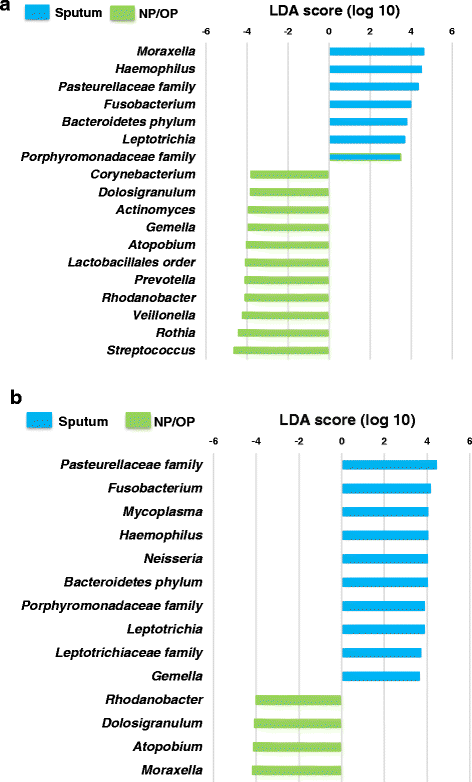
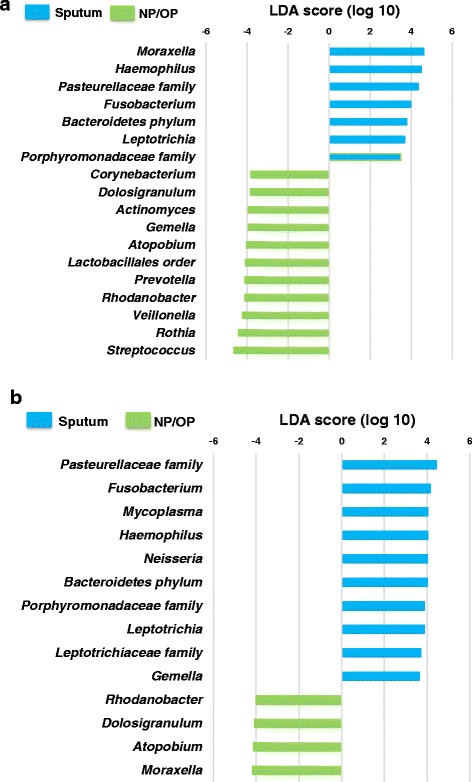
Competitive interactions among bacteria in the respiratory tract microbiota influence which species can colonize and potentially contribute to pathogenesis of community-acquired pneumonia (CAP). However, understanding of the role of respiratory tract microbiota in the clinical course of pediatric CAP is limited.
Methods
We sought to compare microbiota profiles in induced sputum and nasopharyngeal/oropharyngeal (NP/OP) samples from children and to identify microbiota profiles associated with CAP severity. We used 16S ribosomal RNA sequencing and several measures of microbiota profiles, including principal component analysis (PCA), to describe the respiratory microbiota in 383 children, 6 months to <18 years, hospitalized with CAP. We examined associations between induced sputum and NP/OP microbiota profiles and CAP severity (hospital length of stay and intensive care unit admission) using logistic regression.
Results
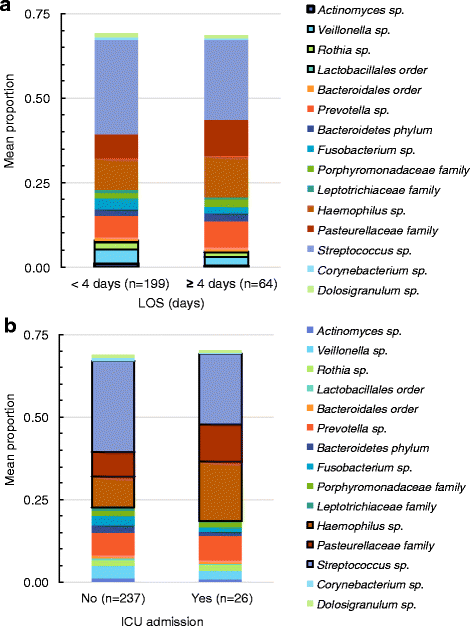
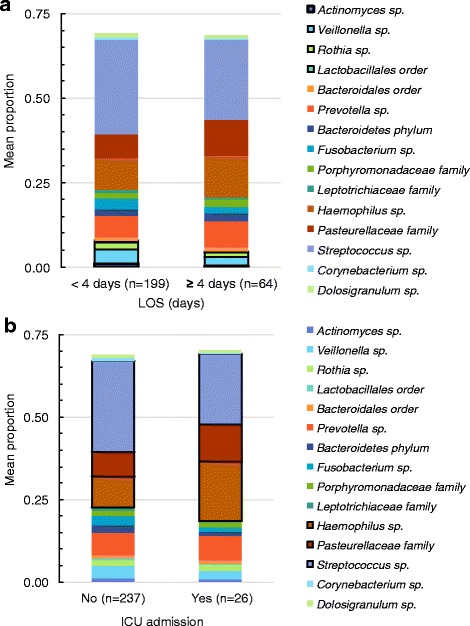
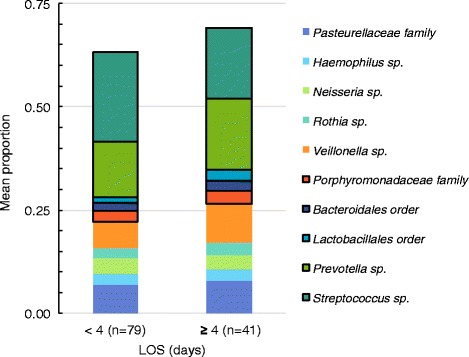
Relative abundance of bacterial taxa differed in induced sputum and NP/OP samples. In children 6 months to < 5 years, the sputum PCA factor with high relative abundance of Actinomyces, Veillonella, Rothia, and Lactobacillales was associated with decreased odds of length of stay ≥ 4 days [adjusted odds ratio (aOR) 0.69; 95 % confidence interval (CI) 0.48–0.99]. The sputum factor with high relative abundance of Haemophilus and Pasteurellaceae was associated with increased odds of intensive care unit admission [aOR 1.52; 95 % CI 1.02–2.26]. In children 5 to < 18 years, the sputum factor with high relative abundance of Porphyromonadaceae, Bacteriodales, Lactobacillales, and Prevotella was associated with increased odds of length of stay ≥ 4 days [aOR 1.52; 95 % CI 1.02–2.26]. Taxa in NP/OP samples were not associated with CAP severity.
Conclusion
Certain taxa in the respiratory microbiota, which were detected in induced sputum samples, are associated with the clinical course of CAP.
Electronic supplementary material
The online version of this article (doi:10.1186/s12879-016-1670-4) contains supplementary material, which is available to authorized users.
-
Subjects:
-
Source:BMC Infect Dis. 16.
-
Pubmed ID:27391033
-
Pubmed Central ID:PMC4939047
-
Document Type:
-
Volume:16
-
Collection(s):
-
Main Document Checksum:urn:sha256:5574083a5bf2884fb26ea63d8717b8df9d1afd53f19f0507ff1d031f3cc27e9f
-
Download URL:
-
File Type:
 [PDF
- 569.56 KB
]
[PDF
- 569.56 KB
]
Supporting Files


File Language:
English
ON THIS PAGE


CDC STACKS serves as an archival repository of CDC-published products including
scientific findings,
journal articles, guidelines, recommendations, or other public health information authored or
co-authored by CDC or funded partners.
As a repository, CDC STACKS retains documents in their original published format to ensure public access to scientific information.
As a repository, CDC STACKS retains documents in their original published format to ensure public access to scientific information.
You May Also Like
COLLECTION
CDC Public Access