



Secondary Infections with Ebola Virus in Rural Communities, Liberia and Guinea, 2014–2015
Supporting Files
Public Domain
Peer Reviewed

-
2016/09/01
File Language:
English
Details
-
Alternative Title:Emerg Infect Dis
-
Journal Article:Emerging Infectious Diseases
-
Personal Author:Lindblade, Kim A. ; Nyenswah, Tolbert G. ; Keita, Sakoba ; Diallo, Boubakar ; Kateh, Francis N. ; Amoah, Aurora ; Nagbe, Thomas K. ; Raghunathan, Pratima L. ; Neatherlin, John C. ; Kinzer, Michael H. ; Pillai, Satish K. ; Attfield, Kathleen R. ; Hajjeh, Rana A. ; Dweh, Emmanuel ; Painter, John ; Barradas, Danielle T. ; Williams, Seymour G. ; Blackley, David J. ; Kirking, Hannah L. ; Patel, Monita R. ; Dea, Monica ; Massoudi, Mehran S. ; Barskey, Albert E. ; Mettee Zarecki, Shauna L. ; Fomba, Moses ; Grube, Steven ; Belcher, Lisa ; Broyles, Laura N. ; Maxwell, T. Nikki ; Hagan, Jose E. ; Yeoman, Kristin ; Westercamp, Matthew ; Mott, Joshua A. ; Mahoney, Frank ; Slutsker, Laurence ; DeCock, Kevin M. ; Marston, Barbara ; Dahl, Benjamin A.
-
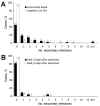
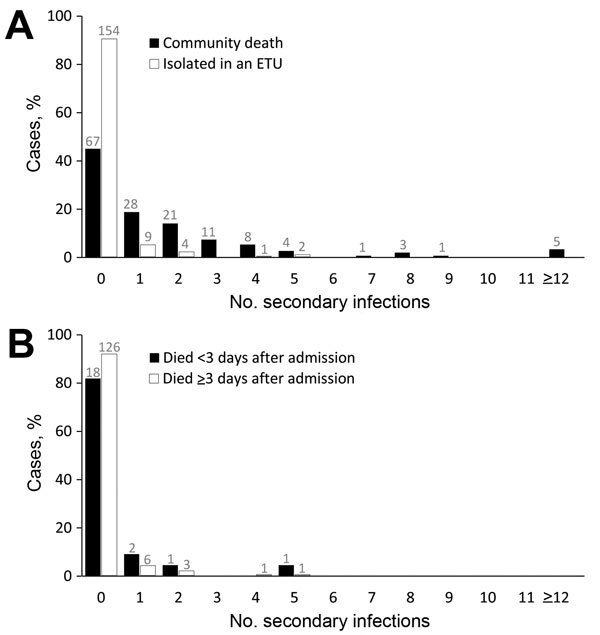
Description:Persons who died of Ebola virus disease at home in rural communities in Liberia and Guinea resulted in more secondary infections than persons admitted to Ebola treatment units. Intensified monitoring of contacts of persons who died of this disease in the community is an evidence-based approach to reduce virus transmission in rural communities. Description provided by NIOSH
-
Subjects:
-
Keywords:
- Ebola virus disease; Infectious diseases; Infection prevention; Infection control;
- Author Keywords: Ebola virus; Ebola virus disease; Guinea; Liberia; disease outbreaks; hemorrhagic fever; hospitalization; patient isolation; public health; quarantine; rural communities; secondary infections; viruses; western Africa
-
Source:Emerg Infect Dis 2016 Sep; 22(9):1653-1655
-
ISSN:1080-6040
-
Pubmed ID:27268508
-
Pubmed Central ID:PMC4994349
-
Document Type:
-
Genre:
-
Place as Subject:
-
CIO:
-
Division:
-
Topic:
-
Location:
-
Pages in Document:3 pdf pages
-
Volume:22
-
Issue:9
-
NIOSHTIC Number:nn:20052064
-
Contact Point Address:Kim A. Lindblade, Centers for Disease Control and Prevention, 1600 Clifton Rd NE, Mailstop A32, Atlanta, GA 300329-4017, USA
-
Email:kil2@cdc.gov
-
Federal Fiscal Year:2016
-
Peer Reviewed:True
-
Download URL:
-
File Type:
 [PDF - 391.23 KB]
 -
Collection(s):
-
Main Document Checksum:urn:sha-512:ddc135722ba4a4468017036fc164d54c496e4e7051d3efef672d48d2e439e051d299a8bf0961f599bed48408679d9912cf39209a2a3b3580e3992b5e9c40c1e5
Supporting Files


File Language:
English
 Was this page helpful?
 Found an issue?

CDC STACKS serves as an archival repository of CDC-published products including
scientific findings, journal articles, guidelines, recommendations, or other public health information authored or
co-authored by CDC or funded partners.
As a repository, CDC STACKS retains documents in their original published format to ensure public access to scientific information.
As a repository, CDC STACKS retains documents in their original published format to ensure public access to scientific information.
You May Also Like