


Clinical Features of and Risk Factors for Fatal Ebola Virus Disease, Moyamba District, Sierra Leone, December 2014–February 2015
Supporting Files
Public Domain

-
Sep 15 2016
File Language:
English
Details
-
Alternative Title:Emerg Infect Dis
-
Personal Author:Haaskjold, Yngvar Lunde ; Bolkan, Håkon Angell ; Krogh, Kurt Østhuus ; Jongopi, James ; Lundeby, Karen Marie ; Mellesmo, Sindre ; Garcés, Pedro San José ; Jøsendal, Ola ; Øpstad, Åsmund ; Svensen, Erling ; Fuentes, Luis Matias Zabala ; Kamara, Alfred Sandy ; Riera, Melchor ; Arranz, Javier ; Roberts, David P. ; Stamper, Paul D. ; Austin, Paula ; Moosa, Alfredo J. ; Marke, Dennis ; Hassan, Shoaib ; Eide, Geir Egil ; Berg, Åse ; Blomberg, Bjørn
-
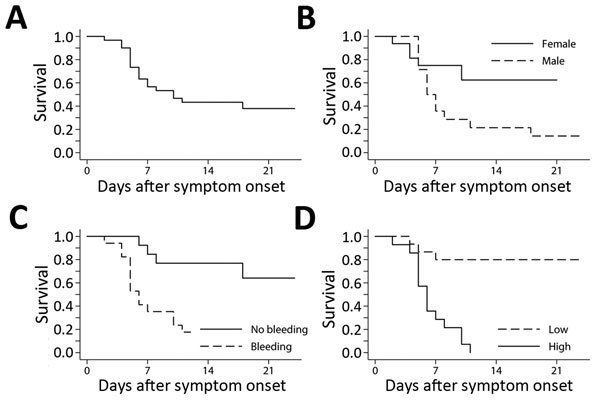
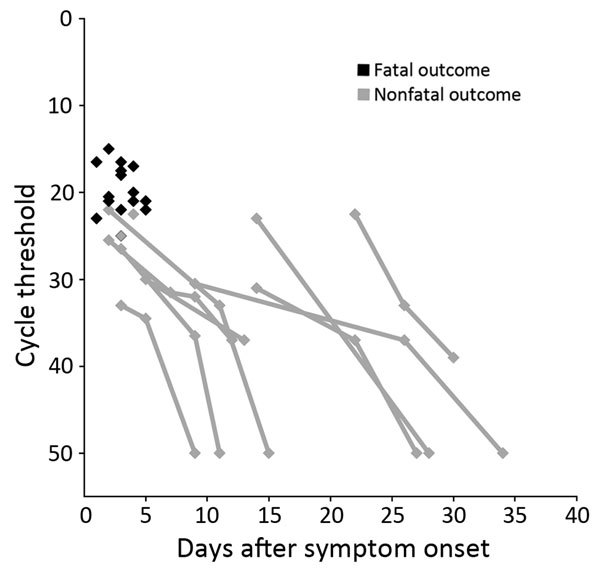
Description:The 2013-2016 outbreak of Ebola virus disease (EVD) in West Africa infected >28,000 people, including >11,000 who died, and disrupted social life in the region. We retrospectively studied clinical signs and symptoms and risk factors for fatal outcome among 31 Ebola virus-positive patients admitted to the Ebola Treatment Center in Moyamba District, Sierra Leone. We found a higher rate of bleeding manifestations than reported elsewhere during the outbreak. Significant predictors for death were shorter time from symptom onset to admission, male sex, high viral load on initial laboratory testing, severe pain, diarrhea, bloody feces, and development of other bleeding manifestations during hospitalization. These risk factors for death could be used to identify patients in need of more intensive medical support. The lack of fever in as many as one third of EVD cases may have implications for temperature-screening practices and case definitions.
-
Subjects:
-
Source:Emerg Infect Dis. 22(9):1537-1544.
-
Pubmed ID:27268303
-
Pubmed Central ID:PMC4994367
-
Document Type:
-
Place as Subject:
-
Volume:22
-
Issue:9
-
Collection(s):
-
Main Document Checksum:urn:sha256:24c1126c982ec1742dbe8900aa50dfaa5adf2f7feeb8dc50c92bca39b349ac4e
-
Download URL:
-
File Type:
 [PDF
- 514.52 KB
]
[PDF
- 514.52 KB
]
Supporting Files


File Language:
English
ON THIS PAGE

CDC STACKS serves as an archival repository of CDC-published products including
scientific findings,
journal articles, guidelines, recommendations, or other public health information authored or
co-authored by CDC or funded partners.
As a repository, CDC STACKS retains documents in their original published format to ensure public access to scientific information.
As a repository, CDC STACKS retains documents in their original published format to ensure public access to scientific information.
You May Also Like
COLLECTION
Emerging Infectious Diseases