


Improving the Accuracy of Smart Devices to Measure Noise Exposure
Supporting Files

-
11 2016
File Language:
English
Details
-
Alternative Title:J Occup Environ Hyg
-
Personal Author:
-
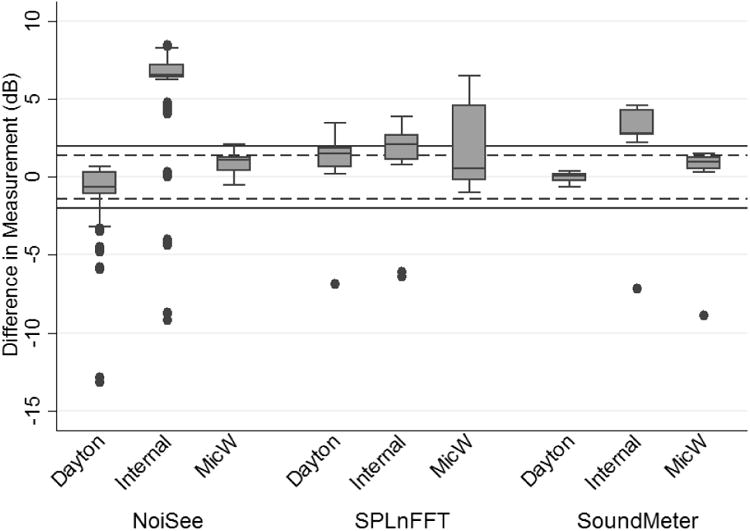
Description:Occupational noise exposure is one of the most frequent hazards present in the workplace; up to 22 million workers have potentially hazardous noise exposures in the U.S. As a result, noise-induced hearing loss is one of the most common occupational injuries in the U.S. Workers in manufacturing, construction, and the military are at the highest risk for hearing loss. Despite the large number of people exposed to high levels of noise at work, many occupations have not been adequately evaluated for noise exposure. The objective of this experiment was to investigate whether or not iOS smartphones and other smart devices (Apple iPhones and iPods) could be used as reliable instruments to measure noise exposures. For this experiment three different types of microphones were tested with a single model of iPod and three generations of iPhones: the internal microphones on the device, a low-end lapel microphone, and a high-end lapel microphone marketed as being compliant with the International Electrotechnical Commission's (IEC) standard for a Class 2-microphone. All possible combinations of microphones and noise measurement applications were tested in a controlled environment using several different levels of pink noise ranging from 60-100 dBA. Results were compared to simultaneous measurements made using a Type 1 sound level measurement system. Analysis of variance and Tukey's honest significant difference (HSD) test were used to determine if the results differed by microphone or noise measurement application. Levels measured with external microphones combined with certain noise measurement applications did not differ significantly from levels measured with the Type 1 sound measurement system. Results showed that it may be possible to use iOS smartphones and smart devices, with specific combinations of measurement applications and calibrated external microphones, to collect reliable, occupational noise exposure data under certain conditions and within the limitations of the device. Further research is needed to determine how these devices compare to traditional noise dosimeter under real-world conditions.
-
Subjects:
-
Source:J Occup Environ Hyg. 13(11):840-846
-
Pubmed ID:27163833
-
Pubmed Central ID:PMC5017896
-
Document Type:
-
Funding:
-
Volume:13
-
Issue:11
-
Collection(s):
-
Main Document Checksum:urn:sha256:7b024c8b02f2bd9b657db88b766e703989cef6b5d18c5424d9622f39baa2f84f
-
Download URL:
-
File Type:
 [PDF
- 104.12 KB
]
[PDF
- 104.12 KB
]
Supporting Files


File Language:
English
ON THIS PAGE


CDC STACKS serves as an archival repository of CDC-published products including
scientific findings,
journal articles, guidelines, recommendations, or other public health information authored or
co-authored by CDC or funded partners.
As a repository, CDC STACKS retains documents in their original published format to ensure public access to scientific information.
As a repository, CDC STACKS retains documents in their original published format to ensure public access to scientific information.
You May Also Like
COLLECTION
CDC Public Access