


Identification of novel reaction products of methylene-bis-phenylisocyanate (“MDI”) with oxidized glutathione in aqueous solution and also during incubation of MDI with a murine hepatic S9 fraction
Supporting Files

-
10 2016
-
File Language:
English
Details
-
Alternative Title:Toxicol In Vitro
-
Personal Author:
-
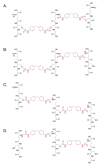
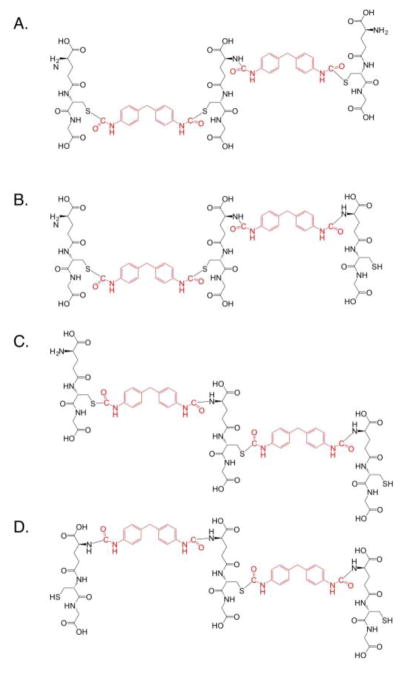
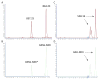
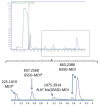
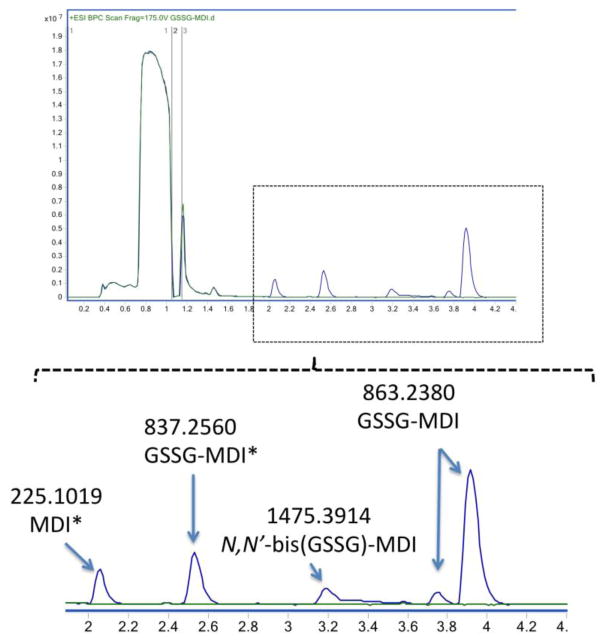
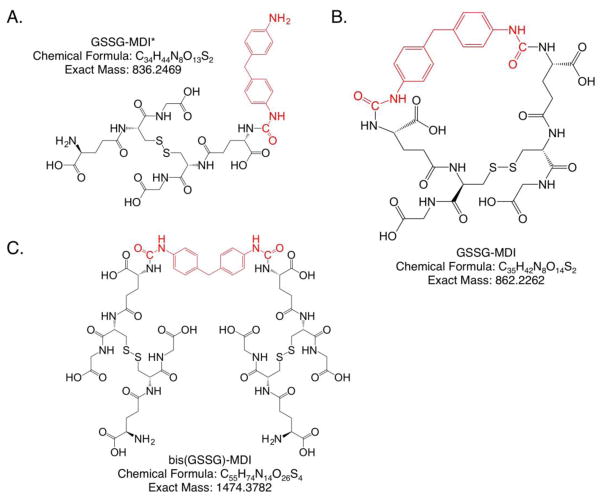
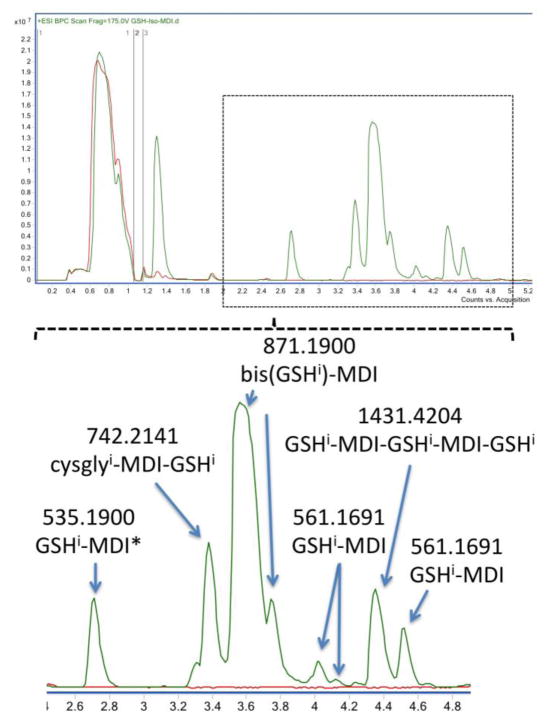
Description:Methylene diphenyl diisocyanate (MDI) is an important industrial chemical and asthmagenic respiratory sensitizer, however its metabolism remains unclear. In this study we used LC-MS and LC-MS/MS to identify novel reaction products of MDI with oxidized glutathione (GSSG), including an 837m/z [M+H](+) ion corresponding to GSSG bound (via one of its N-termini) to partially hydrolyzed MDI, and an 863m/z [M+H](+) ion corresponding to GSSG cross-linked by MDI (via its two γ-glutamate N-termini) [corrected]. Further studies with heavy isotope labeled and native reduced glutathione (GSH) identified an [M+H](+) ion corresponding to previously described mono(GSH)-MDI, and evidence for "oligomeric" GSH-MDI conjugates. This study also investigated transformational changes in MDI after incubation with an S9 fraction prepared from murine liver. LC-MS analyses of the S9 reaction products revealed the formation of [M+H](+) ions with m/z's and retention times identical to the newly described GSSG-MDI (837 and 863) conjugates and the previously described mono(GSH)-MDI conjugate. Together the data identify novel biological transformations of MDI, which could have implications for exposure-related health effects, and may help target future in vivo studies of metabolism.
-
Subjects:
-
Source:Toxicol In Vitro. 36:97-104
-
Pubmed ID:27453132
-
Pubmed Central ID:PMC5010927
-
Document Type:
-
Funding:
-
Volume:36
-
Collection(s):
-
Main Document Checksum:urn:sha256:c15df76af7f0c2da333649619b25347f8da9c239e8ddba3cba88b652498896f5
-
Download URL:
-
File Type:
 [PDF
- 967.95 KB
]
[PDF
- 967.95 KB
]
Supporting Files


File Language:
English
ON THIS PAGE




CDC STACKS serves as an archival repository of CDC-published products including
scientific findings,
journal articles, guidelines, recommendations, or other public health information authored or
co-authored by CDC or funded partners.
As a repository, CDC STACKS retains documents in their original published format to ensure public access to scientific information.
As a repository, CDC STACKS retains documents in their original published format to ensure public access to scientific information.
You May Also Like
COLLECTION
CDC Public Access