



The larvicidal effects of black pepper (Piper nigrum L.) and piperine against insecticide resistant and susceptible strains of Anopheles malaria vector mosquitoes
Supporting Files

-
2016/04/26
-
Available in CDC Stacks on 2016-04-26T00:00:00Z
File Language:
English
Details
-
Alternative Title:Parasit Vectors
-
Personal Author:
-
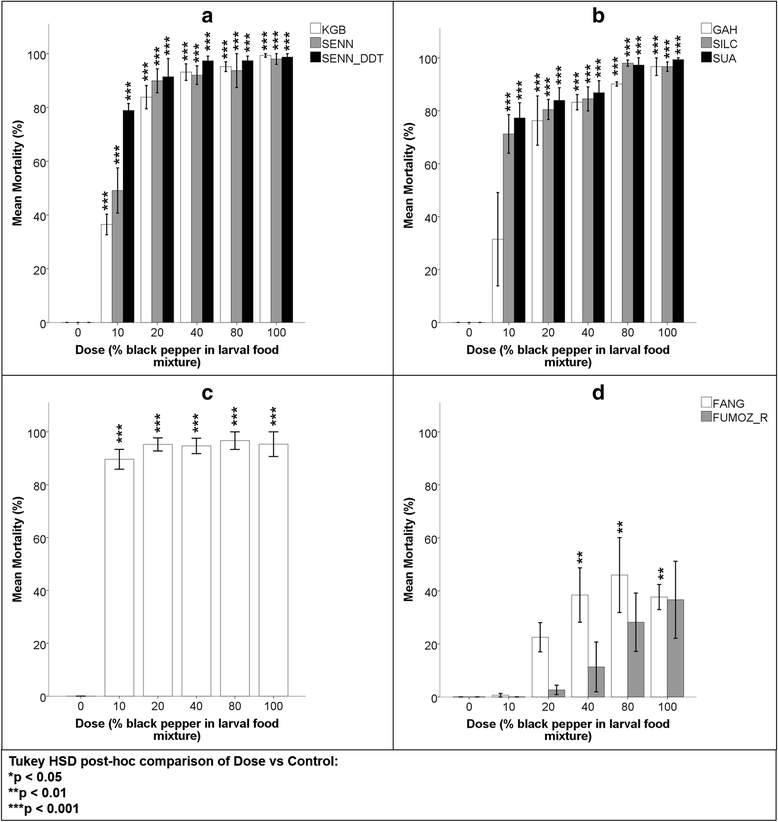
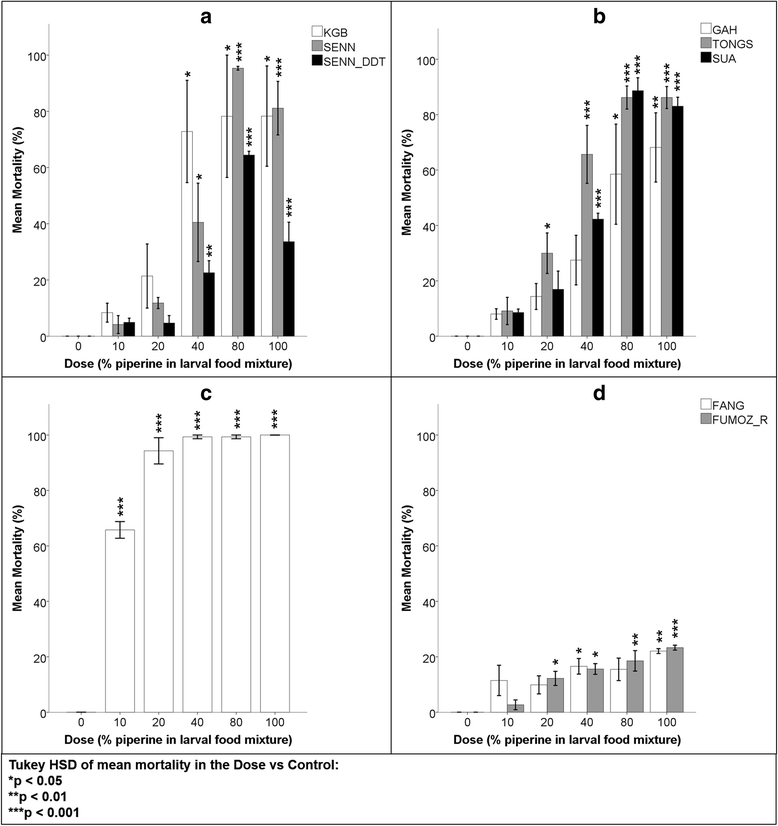
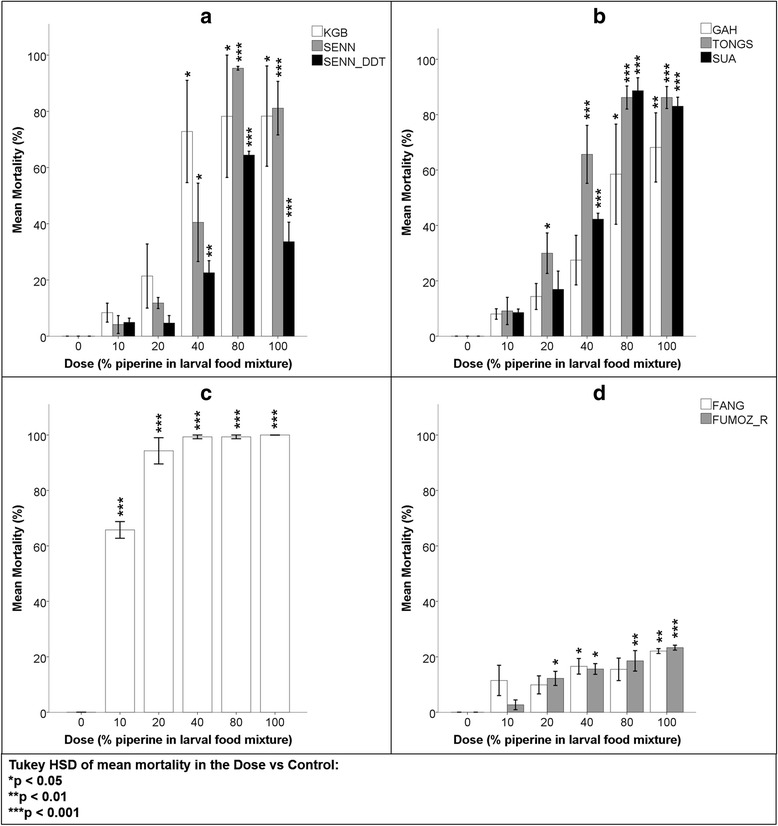
Description:Background ; Insecticide resistance carries the potential to undermine the efficacy of insecticide based malaria vector control strategies. Therefore, there is an urgent need for new insecticidal compounds. Black pepper (dried fruit from the vine, Piper nigrum), used as a food additive and spice, and its principal alkaloid piperine, have previously been shown to have larvicidal properties. The aim of this study was to investigate the larvicidal effects of ground black pepper and piperine against third and fourth instar Anopheles larvae drawn from several laboratory-reared insecticide resistant and susceptible strains of Anopheles arabiensis, An. coluzzii, An. gambiae, An. quadriannulatus and An. funestus. ; Methods ; Larvae were fed with mixtures of standard larval food and either ground black pepper or piperine in different proportions. Mortality was recorded 24 h after black pepper and 48 h after piperine were applied to the larval bowls. ; Results ; Black pepper and piperine mixtures caused high mortality in the An. gambiae complex strains, with black pepper proving significantly more toxic than piperine. The An. funestus strains were substantially less sensitive to black pepper and piperine which may reflect a marked difference in the feeding habits of this species compared to that of the Gambiae complex or a difference in food metabolism as a consequence of differences in breeding habitat between species. ; Conclusions ; Insecticide resistant and susceptible strains by species proved equally susceptible to black pepper and piperine. It is concluded that black pepper shows potential as a larvicide for the control of certain malaria vector species.
-
Subjects:
-
Source:Parasit Vectors. 9.
-
Pubmed ID:27117913
-
Pubmed Central ID:PMC4847181
-
Document Type:
-
Funding:
-
Genre:
-
Volume:9
-
Download URL:
-
File Type:
 [PDF - 1.09 MB]
 -
Collection(s):
-
Main Document Checksum:urn:sha-512:874bdd5e1f820e1358fd114fc51743e5636d736d6e4a342d89c4b07c7d4fcdbc5fc73c712d18796057801f8d82173703e9c39a0085dc634adc24538f6178fc2b
Supporting Files


File Language:
English
 Was this page helpful?
 Found an issue?


CDC STACKS serves as an archival repository of CDC-published products including
scientific findings, journal articles, guidelines, recommendations, or other public health information authored or
co-authored by CDC or funded partners.
As a repository, CDC STACKS retains documents in their original published format to ensure public access to scientific information.
As a repository, CDC STACKS retains documents in their original published format to ensure public access to scientific information.
You May Also Like
COLLECTION
CDC Public Access