



Siloxane nanoprobes for labeling and dual modality imaging of neural stem cells
Supporting Files

-
Nov 23 2015
-
Available in CDC Stacks on March 01, 2017, 12:00 AM
Details
-
Alternative Title:Ann Biomed Eng
-
Personal Author:
-
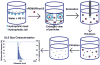
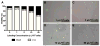
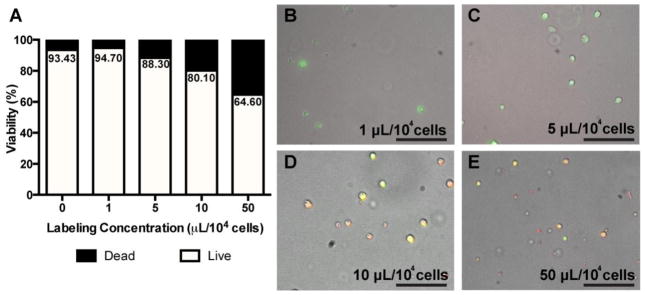
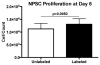
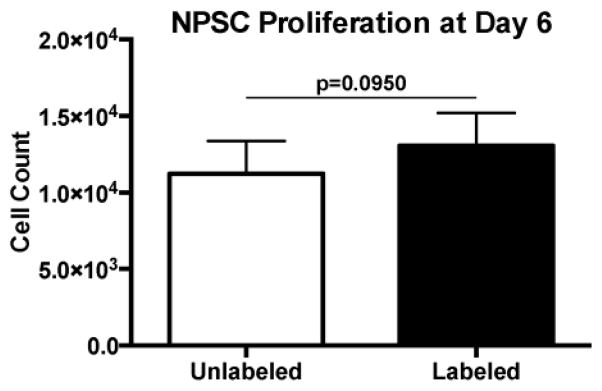
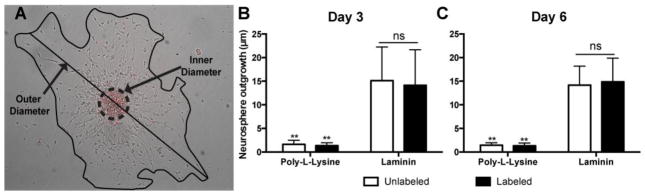
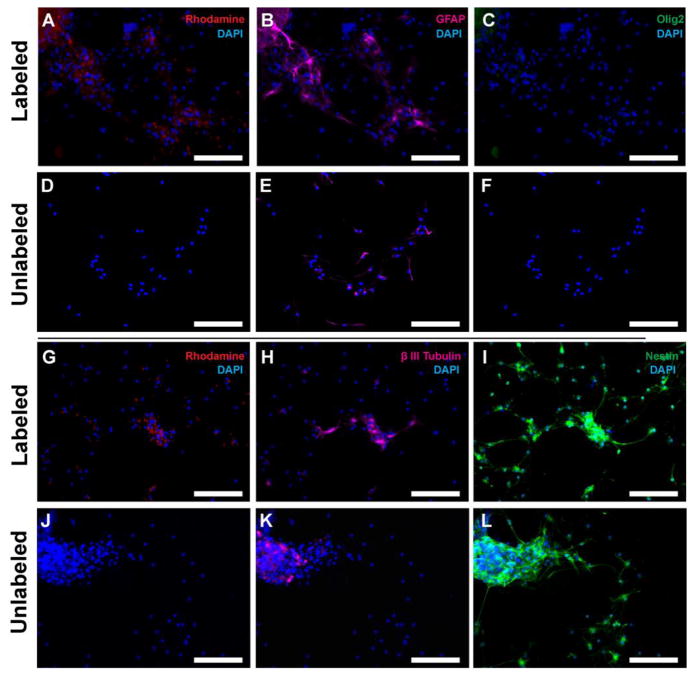
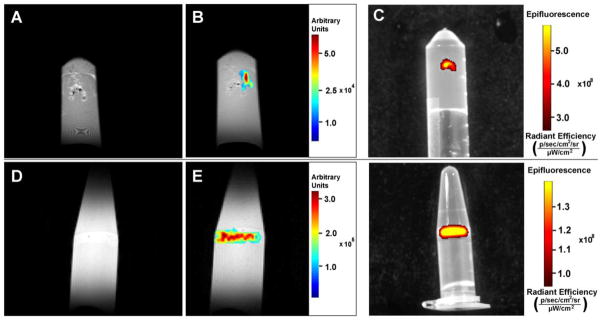
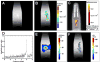
Description:Cell therapy represents a promising therapeutic for a myriad of medical conditions, including cancer, traumatic brain injury, and cardiovascular disease among others. A thorough understanding of the efficacy and cellular dynamics of these therapies necessitates the ability to non-invasively track cells in vivo. Magnetic resonance imaging (MRI) provides a platform to track cells as a non-invasive modality with superior resolution and soft tissue contrast. We recently reported a new nanoprobe platform for cell labeling and imaging using fluorophore doped siloxane core nanoemulsions as dual modality ((1)H MRI/Fluorescence), dual-functional (oximetry/detection) nanoprobes. Here, we successfully demonstrate the labeling, dual-modality imaging, and oximetry of neural progenitor/stem cells (NPSCs) in vitro using this platform. Labeling at a concentration of 10 μL/10(4) cells with a 40%v/v polydimethylsiloxane core nanoemulsion, doped with rhodamine, had minimal effect on viability, no effect on migration, proliferation and differentiation of NPSCs and allowed for unambiguous visualization of labeled NPSCs by (1)H MR and fluorescence and local pO2 reporting by labeled NPSCs. This new approach for cell labeling with a positive contrast (1)H MR probe has the potential to improve mechanistic knowledge of current therapies, and guide the design of future cell therapies due to its clinical translatability.
-
Subjects:
- Article
- neural progenitor/stem cells
- cell-labeling
- polymethyldisiloxane
- rhodamine
- nanoemulsions
- MR oximetry
- fluorescence
- dual-modality imaging
- Animals
- Cell Differentiation
- Cell Movement
- Cell Proliferation
- Cell Tracking
- Fluorescent Dyes
- Mice
- Molecular Imaging
- Nanoparticles
- Neural Stem Cells
- Siloxanes
- Staining and Labeling
-
Source:Ann Biomed Eng. 44(3):816-827.
-
Pubmed ID:26597417
-
Pubmed Central ID:PMC4792673
-
Document Type:
-
Funding:
-
Volume:44
-
Issue:3
-
Download URL:
-
File Type:
 [PDF - 958.35 KB]
 -
Collection(s):
-
Main Document Checksum:urn:sha256:a0a01085d21ea551876e6e363e976df05294b784078732171abf62d930b04761
Supporting Files


 Was this page helpful?
 Found an issue?






CDC STACKS serves as an archival repository of CDC-published products including
scientific findings, journal articles, guidelines, recommendations, or other public health information authored or
co-authored by CDC or funded partners.
As a repository, CDC STACKS retains documents in their original published format to ensure public access to scientific information.
As a repository, CDC STACKS retains documents in their original published format to ensure public access to scientific information.
You May Also Like
COLLECTION
CDC Public Access