



Development of an assay to simultaneously measure orotic acid, amino acids, and acylcarnitines in dried blood spots
Supporting Files

-
9 25 2014 ; 9-25-
-
Available in CDC Stacks on 2016-04-18T00:00:00Z
File Language:
English
Details
-
Alternative Title:Clin Chim Acta
-
Personal Author:
-
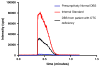
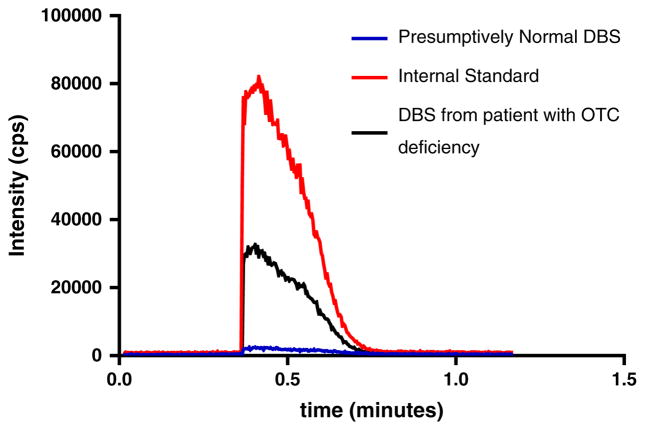
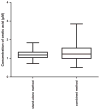
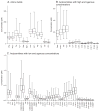
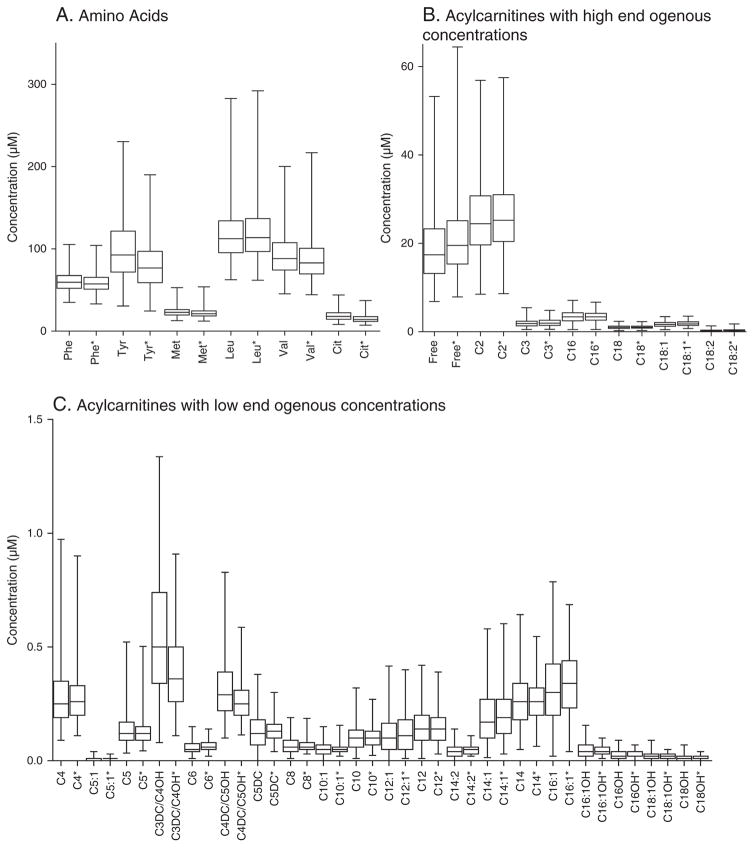
Description:Background ; Orotic aciduria in the presence of hyperammonemia is a key indicator for a defect in the urea cycle, specifically ornithine transcarbamylase (OTC) deficiency. Current newborn screening (NBS) protocols can detect several defects of the urea cycle, but screening for OTC deficiency remains a challenge due to the lack of a suitable assay. The purpose of this study was to develop a high-throughput assay to measure orotic acid in dried blood spot (DBS) specimens as an indicator for urea cycle dysfunction, which can be readily incorporated into routine NBS. ; Methods ; Orotic acid was extracted from DBS punches and analyzed using flow-injection analysis tandem mass spectrometry (FIA–MS/MS) with negative-mode ionization, requiring <2 min/sample run time. This method was then multiplexed into a conventional newborn screening assay for analysis of amino acids, acylcarnitines, and orotic acid. ; Results ; We describe 2 assays which can quantify orotic acid in DBS: a stand-alone method and a combined method for analysis of orotic acid, amino acids, and acylcarnitines. Both methods demonstrated orotic acid recovery of 75–85% at multiple levels of enrichment. Precision was also comparable to traditional FIA–MS/MS methods. Analysis of residual presumptively normal NBS specimens demonstrated a 5:1 signal to noise ratio and the average concentration of orotic acid was approximately 1.2 μmol/l. The concentration of amino acids and acylcarnitines as measured by the combined method showed no significant differences when compared to the conventional newborn screening assay. In addition, retrospective analysis of confirmed patients and presumptively normal newborn screening specimens suggests potential for the methods to identify patients with OTC deficiency, as well as other urea cycle defects. ; Conclusion ; The assays described here quantify orotic acid in DBS using a simple extraction and FIA–MS/MS analysis procedures that can be implemented into current NBS protocols.
-
Keywords:
- Orotic acid
- Ornithine transcarbamylase deficiency
- Urea cycle defects
- Newborn screening
- Amino Acids
- Carnitine
- Dried Blood Spot Testing
- Female
- Flow Injection Analysis
- Humans
- Infant
- Infant, Newborn
- Male
- Orotic Acid
- Reproducibility of Results
- Tandem Mass Spectrometry
- Time Factors
- Urea Cycle Disorders, Inborn
-
Source:Clin Chim Acta. 436:149-154
-
Pubmed ID:24886687
-
Pubmed Central ID:PMC4835024
-
Document Type:
-
Funding:
-
Volume:436
-
Download URL:
-
File Type:
 [PDF - 476.77 KB]
 -
Collection(s):
-
Main Document Checksum:urn:sha256:ecbee22ee11d42a04b7cea773ece47acfa03fe140e93567b08d85e1dfcf96914
Supporting Files


File Language:
English
 Was this page helpful?
 Found an issue?


CDC STACKS serves as an archival repository of CDC-published products including
scientific findings, journal articles, guidelines, recommendations, or other public health information authored or
co-authored by CDC or funded partners.
As a repository, CDC STACKS retains documents in their original published format to ensure public access to scientific information.
As a repository, CDC STACKS retains documents in their original published format to ensure public access to scientific information.
You May Also Like
COLLECTION
CDC Public Access