


A close look at axonal transport: cargos slow down when crossing stationary organelles
Supporting Files

-
Oct 31 2015
Details
-
Alternative Title:Neurosci Lett
-
Personal Author:
-
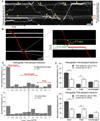
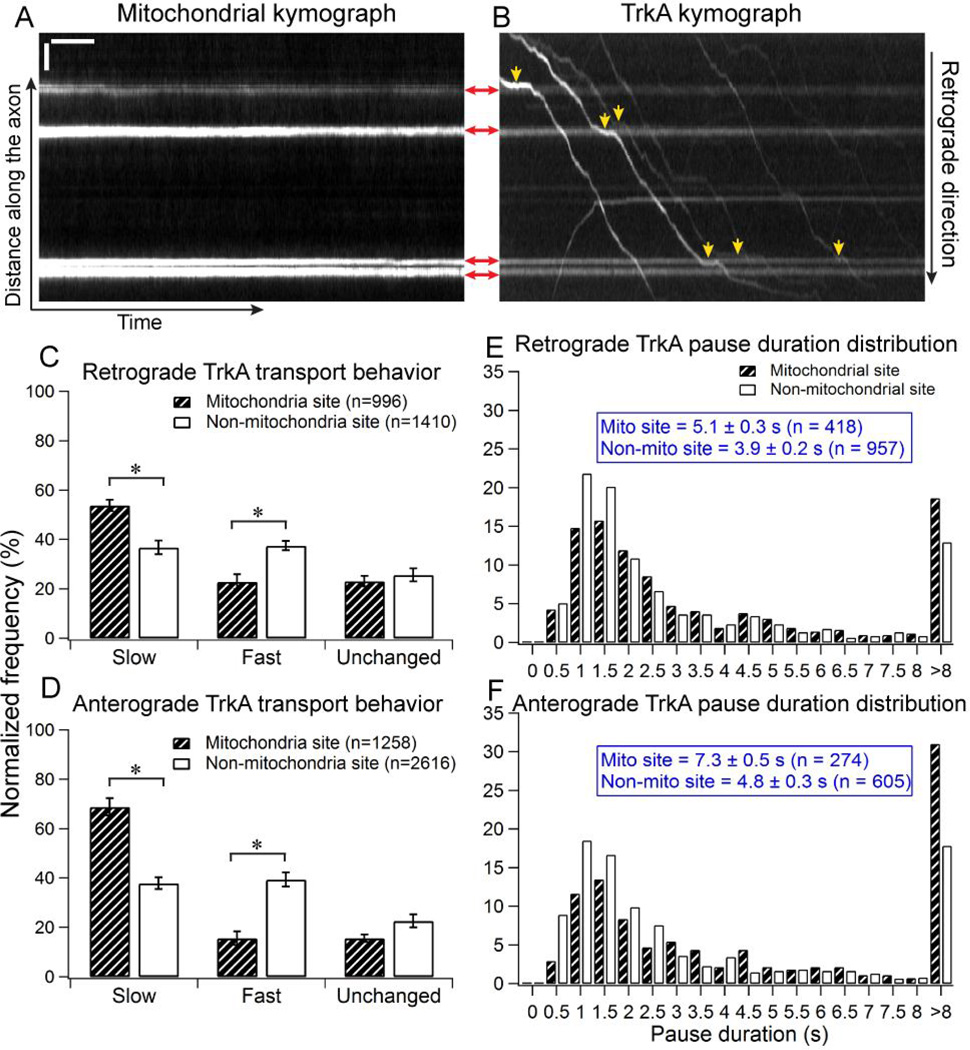
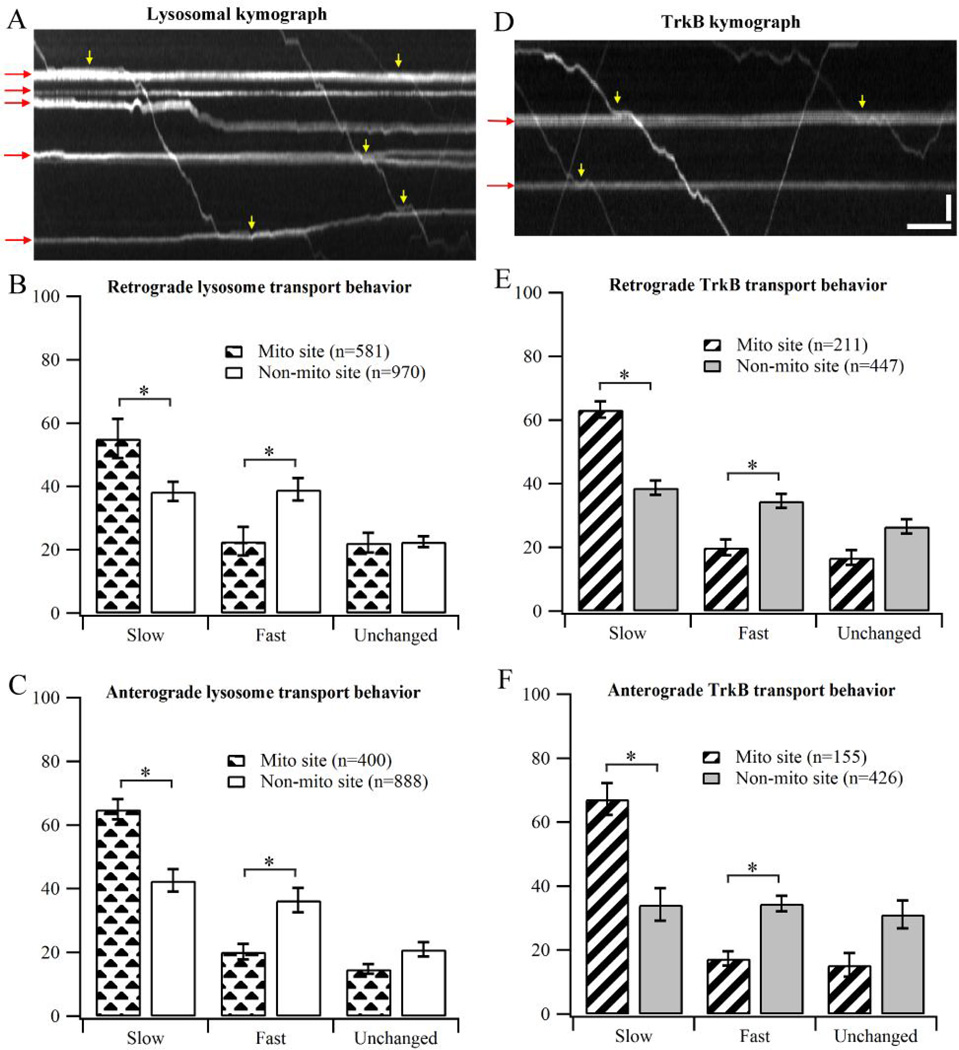
Description:The bidirectional transport of cargos along the thin axon is fundamental for the structure, function and survival of neurons. Defective axonal transport has been linked to the mechanism of neurodegenerative diseases. In this paper, we study the effect of the local axonal environment to cargo transport behavior in neurons. Using dual-color fluorescence imaging in microfluidic neuronal devices, we quantify the transport dynamics of cargos when crossing stationary organelles such as non-moving endosomes and stationary mitochondria in the axon. We show that the axonal cargos tend to slow down, or pause transiently within the vicinity of stationary organelles. The slow-down effect is observed in both retrograde and anterograde transport directions of three different cargos (TrkA, lysosomes and TrkB). Our results agree with the hypothesis that bulky axonal structures can pose as steric hindrance for axonal transport. However, the results do not rule out the possibility that cellular mechanisms causing stationary organelles are also responsible for the delay in moving cargos at the same locations.
-
Subjects:
-
Source:Neurosci Lett. 610:110-116.
-
Pubmed ID:26528790
-
Pubmed Central ID:PMC4695265
-
Document Type:
-
Funding:
-
Volume:610
-
Collection(s):
-
Main Document Checksum:urn:sha256:136ec19271852d29baa6a815db983f91917248a922bda0c8606468c98080f16d
-
Download URL:
-
File Type:
 [PDF
- 1.32 MB
]
[PDF
- 1.32 MB
]
Supporting Files


ON THIS PAGE




CDC STACKS serves as an archival repository of CDC-published products including
scientific findings,
journal articles, guidelines, recommendations, or other public health information authored or
co-authored by CDC or funded partners.
As a repository, CDC STACKS retains documents in their original published format to ensure public access to scientific information.
As a repository, CDC STACKS retains documents in their original published format to ensure public access to scientific information.
You May Also Like
COLLECTION
CDC Public Access