


Targeting indoor residual spraying for malaria using epidemiological data: a case study of the Zambia experience
Supporting Files
Public Domain

-
Jan 06 2016
-
Details
-
Alternative Title:Malar J
-
Personal Author:
-
Description:Background
In Zambia and other sub-Saharan African countries affected by ongoing malaria transmission, indoor residual spraying (IRS) for malaria prevention has typically been implemented over large areas, e.g., district-wide, and targeted to peri-urban areas. However, there is a recent shift in some countries, including Zambia, towards the adoption of a more strategic and targeted IRS approach, in coordination with increased emphasis on universal coverage of long-lasting insecticidal nets (LLINs) and effective insecticide resistance management. A true targeted approach would deliver IRS to sub-district areas identified as high-risk, with the goal of maximizing the prevention of malaria cases and deaths.
Results
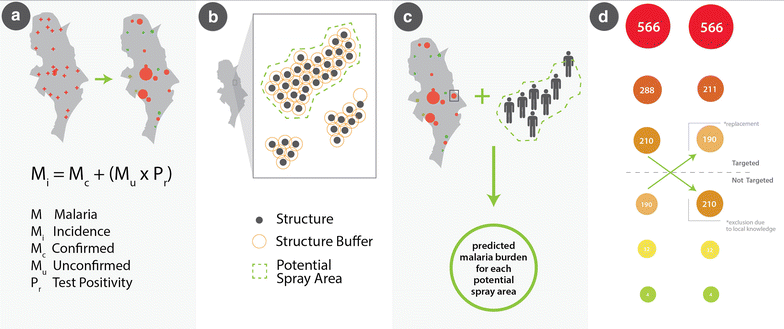
Together with the Government of the Republic of Zambia, a new methodology was developed applying geographic information systems and satellite imagery to support a targeted IRS campaign during the 2014 spray season using health management information system data.
Discussion/Conclusion
This case study focuses on the developed methodology while also highlighting the significant research gaps which must be filled to guide countries on the most effective strategy for IRS targeting in the context of universal LLIN coverage and evolving insecticide resistance.
-
Subjects:
-
Source:Malar J. 15.
-
Pubmed ID:26738936
-
Pubmed Central ID:PMC4704423
-
Document Type:
-
Volume:15
-
Collection(s):
-
Main Document Checksum:urn:sha256:a91cb450bc0396a9ace1d8890cc8641081ac047e3c8336b449a317a8503ba0ba
-
Download URL:
-
File Type:
 [PDF
- 975.28 KB
]
[PDF
- 975.28 KB
]
Supporting Files


ON THIS PAGE

CDC STACKS serves as an archival repository of CDC-published products including
scientific findings,
journal articles, guidelines, recommendations, or other public health information authored or
co-authored by CDC or funded partners.
As a repository, CDC STACKS retains documents in their original published format to ensure public access to scientific information.
As a repository, CDC STACKS retains documents in their original published format to ensure public access to scientific information.
You May Also Like
COLLECTION
CDC Public Access