



Reactivity measurement in estimation of benzoquinone and benzoquinone derivatives’ allergenicity
Supporting Files

-
-
By Show All

-
-
Available in CDC Stacks on
Details
-
Alternative Title:Toxicology
-
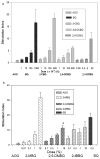
Description:Benzoquinone (BQ) and benzoquinone derivatives (BQD) are used in the production of dyes and cosmetics. While BQ, an extreme skin sensitizer, is an electrophile known to covalently modify proteins via Michael Addition (MA) reaction whilst halogen substituted BQD undergo nucleophilic vinylic substitution (SNV) mechanism onto amine and thiol moieties on proteins, the allergenic effects of adding substituents on BQ have not been reported. The effects of inserting substituents on the BQ ring has not been studied in animal assays. However, mandated reduction/elimination of animals used in cosmetics testing in Europe has led to an increased need for alternatives for the prediction of skin sensitization potential. Electron withdrawing and electron donating substituents on BQ were assessed for effects on BQ reactivity toward nitrobenzene thiol (NBT). The NBT binding studies demonstrated that addition of EWG to BQ as exemplified by the chlorine substituted BQDs increased reactivity while addition of EDG as in the methyl substituted BQDs reduced reactivity. BQ and BQD skin allerginicity was evaluated in the murine local lymph node assay (LLNA). BQD with electron withdrawing groups had the highest chemical potency followed by unsubstituted BQ and the least potent were the BQD with electron donating groups. The BQD results demonstrate the impact of inductive effects on both BQ reactivity and allergenicity, and suggest the potential utility of chemical reactivity data for electrophilic allergen identification and potency ranking.
-
Subjects:
- Article
- Allergic contact dermatitis
- Benzoquinone
- Local lymph node assay
- Michael addition
- SNV
- Nucleophilic vinylic substitution
- Stimulation index
- Algorithms
- Allergens
- Animal Testing Alternatives
- Animals
- Benzoquinones
- Dermatitis, Allergic Contact
- Female
- Local Lymph Node Assay
- Methylation
- Mice
- Mice, Inbred BALB C
- Quantitative Structure-Activity Relationship
- Skin
- Structure-Activity Relationship
- Sulfhydryl Compounds
- Vinyl Compounds
-
Pubmed ID:26612505
-
Pubmed Central ID:PMC4724239
-
Document Type:
-
Funding:
-
Volume:339
-
Download URL:
-
File Type:
 [PDF - 567.24 KB]
-
Collection(s):
-
Main Document Checksum:urn:sha256:72ed315e40d6778f806db31c09c195e2c5be888d51c6aa57e4275614c52fde20
Supporting Files


 Was this page helpful?
 Found an issue?




CDC STACKS serves as an archival repository of CDC-published products including
scientific findings, journal articles, guidelines, recommendations, or other public health information authored or
co-authored by CDC or funded partners.
As a repository, CDC STACKS retains documents in their original published format to ensure public access to scientific information.
You May Also Like
COLLECTION
CDC Public Access