



The association between weekly work hours, crew familiarity, and occupational injury and illness in emergency medical services workers
Supporting Files

-
Aug 25 2015
-
Available in CDC Stacks on December 01, 2016, 12:00 AM
Details
-
Alternative Title:Am J Ind Med
-
Personal Author:
-
Description:Objective
Emergency Medical Services (EMS) workers are shift workers in a high-risk, uncontrolled occupational environment. EMS-worker fatigue has been associated with self-reported injury, but the influence of extended weekly work hours is unknown.
Methods
A retrospective cohort study was designed using historical shift schedules and occupational injury and illness reports. Using multilevel models, we examined the association between weekly work hours, crew familiarity, and injury or illness.
Results
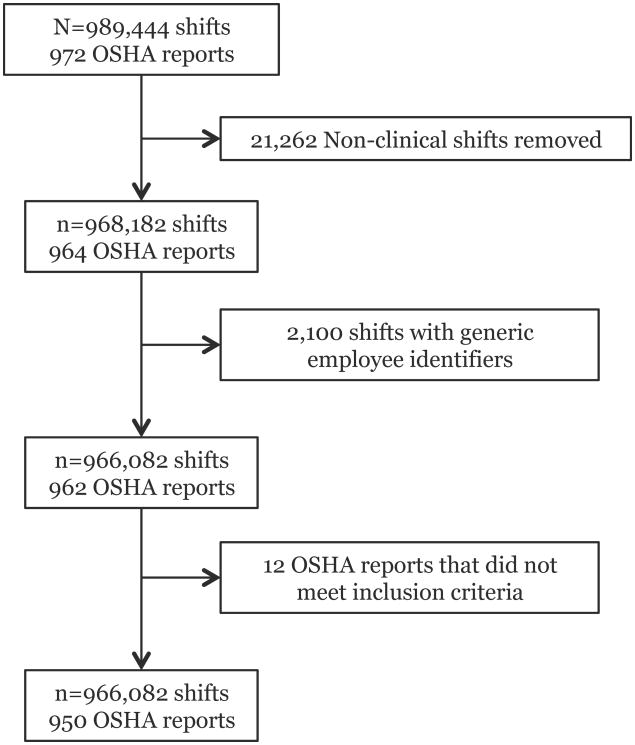
In total, 966,082 shifts and 950 reports across 14 EMS agencies were obtained over a 1-3 year period. Weekly work hours were not associated with occupational injury or illness. Schedule characteristics that yield decreased exposure to occupational hazards, such as part-time work and night work, conferred reduced risk of injury or illness.
Conclusions
Extended weekly work hours were not associated with occupational injury or illness. Future work should focus on transient exposures and agency-level characteristics that may contribute to adverse work events. -
Subjects:
- Article
- Emergency Medical Services
- Shift work
- Occupational injury
- Accidents, Occupational
- Emergency Medical Technicians
- Fatigue
- Humans
- Interprofessional Relations
- Occupational Diseases
- Occupational Injuries
- Personnel Staffing and Scheduling
- Retrospective Studies
- Risk Factors
- Time Factors
- Work Schedule Tolerance
-
Source:Am J Ind Med. 58(12):1270-1277.
-
Pubmed ID:26391202
-
Pubmed Central ID:PMC4715701
-
Document Type:
-
Funding:
-
Volume:58
-
Issue:12
-
Download URL:
-
File Type:
 [PDF - 324.94 KB]
 -
Collection(s):
-
Main Document Checksum:urn:sha-512:775f31e5932c356fab8588c5312f9946acd1747016c71d38744d9dbead54b74b08f6f1987920c08bed5a88c83ef8234ca0c6bda30a3fe55e9d14ea70060b0976
Supporting Files


 Was this page helpful?
 Found an issue?

CDC STACKS serves as an archival repository of CDC-published products including
scientific findings, journal articles, guidelines, recommendations, or other public health information authored or
co-authored by CDC or funded partners.
As a repository, CDC STACKS retains documents in their original published format to ensure public access to scientific information.
As a repository, CDC STACKS retains documents in their original published format to ensure public access to scientific information.
You May Also Like
COLLECTION
CDC Public Access