



Antimicrobial Treatment for Systemic Anthrax: Analysis of Cases from 1945–2014 Identified through Systematic Literature Review
Supporting Files

-
2015 Nov-Dec
-
Available in CDC Stacks on 2016-12-01T00:00:00Z
Details
-
Alternative Title:Health Secur
-
Personal Author:
-
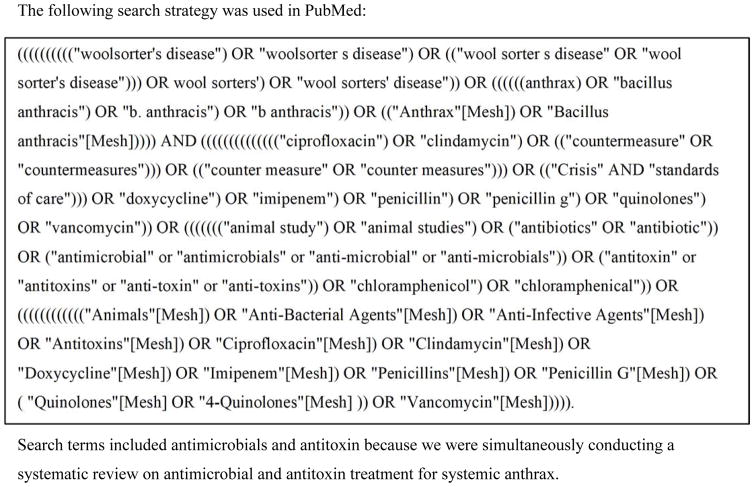
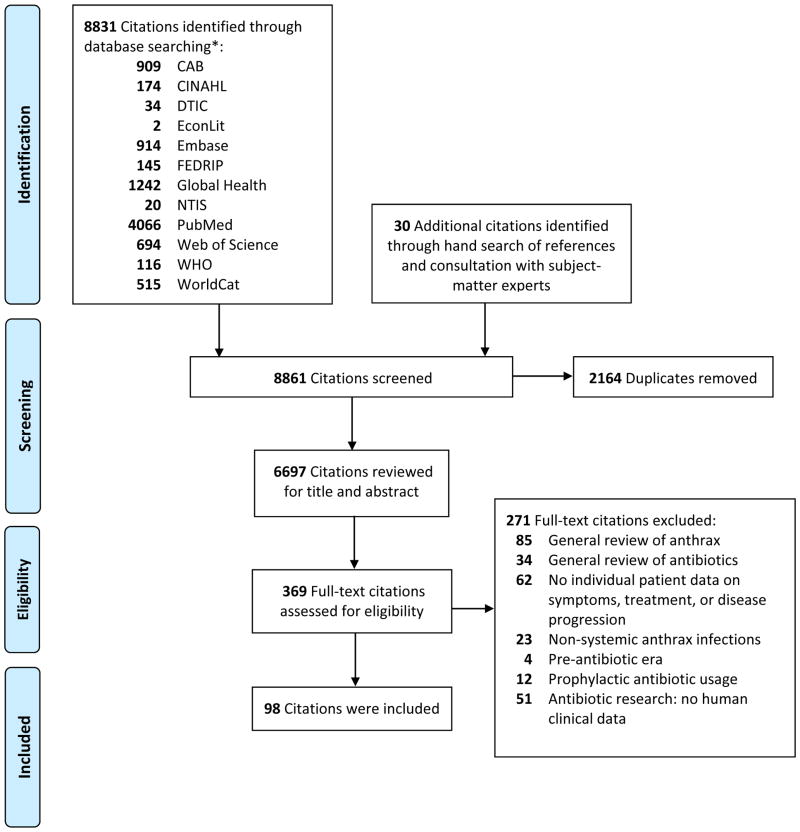
Description:Background ; Systemic anthrax is associated with high mortality. Current national guidelines, developed for the individualized treatment of systemic anthrax, outline the use of combination intravenous antimicrobials for a minimum of two weeks; bactericidal and protein synthesis inhibitor antimicrobials for all cases of systemic anthrax; and at least 3 antimicrobials with good blood-brain barrier penetration for anthrax meningitis. However, in an anthrax mass casualty incident, large numbers of anthrax cases may create challenges in meeting antimicrobial needs. ; Methods ; To further inform our understanding of the role of antimicrobials in treating systemic anthrax, a systematic review of the English language literature was conducted to identify cases of systemic anthrax treated with antimicrobials for which a clinical outcome was recorded. ; Results ; A total of 149 cases of systemic anthrax were identified (cutaneous n=59, gastrointestinal n=28, inhalation n=26, primary anthrax meningitis n=19, multiple routes n=9, and injection n=8). Among the identified 59 cases of cutaneous anthrax, 33 were complicated by meningitis (76% mortality), while 26 simply had evidence of the systemic inflammatory response syndrome (4% mortality); 21 of 26 (81%) of this latter group received monotherapy. Subsequent analysis regarding combination antimicrobial therapy was restricted to the remaining 123 cases of more severe anthrax (overall 67% mortality). Recipients of combination bactericidal and protein synthesis inhibitor therapy had a 45% survival versus 28% in the absence of combination therapy (p = 0.07). For meningitis cases (n=77), survival was greater for those receiving a total of ≥3 antimicrobials over the course of treatment (3 of 4; 75%), compared to receipt of 1 or 2 antimicrobials (12 of 73; 16%) (p = 0.02). Median parenteral antimicrobial duration was 14 days. ; Conclusion ; Combination bactericidal and protein synthesis inhibitor therapy may be appropriate in severe anthrax disease, particularly anthrax meningitis, in a mass casualty incident.
-
Subjects:
-
Source:Health Secur. 13(6):355-364.
-
Pubmed ID:26623698
-
Pubmed Central ID:PMC4710510
-
Document Type:
-
Funding:
-
Volume:13
-
Issue:6
-
Download URL:
-
File Type:
 [PDF - 801.89 KB]
 -
Collection(s):
-
Main Document Checksum:urn:sha256:c7b753f564ad2ea658c853feb29b9753a5a46e02a86ebf50ec667c0827eaf141
Supporting Files


 Was this page helpful?
 Found an issue?

CDC STACKS serves as an archival repository of CDC-published products including
scientific findings, journal articles, guidelines, recommendations, or other public health information authored or
co-authored by CDC or funded partners.
As a repository, CDC STACKS retains documents in their original published format to ensure public access to scientific information.
As a repository, CDC STACKS retains documents in their original published format to ensure public access to scientific information.
You May Also Like
COLLECTION
CDC Public Access