


Multifacility Outbreak of Middle East Respiratory Syndrome in Taif, Saudi Arabia
Supporting Files
Public Domain

-
Jan 2016
-
File Language:
English
Details
-
Alternative Title:Emerg Infect Dis
-
Personal Author:Assiri, Abdullah ; Abedi, Glen R. ; Saeed, Abdulaziz A. Bin ; Abdalla, Mutwakil A. ; al-Masry, Malak ; Choudhry, Abdul Jamil ; Lu, Xiaoyan ; Erdman, Dean D. ; Tatti, Kathleen ; Binder, Alison M. ; Rudd, Jessica ; Tokars, Jerome ; Miao, Congrong ; Alarbash, Hussain ; Nooh, Randa ; Pallansch, Mark ; Gerber, Susan I. ; Watson, John T.
-
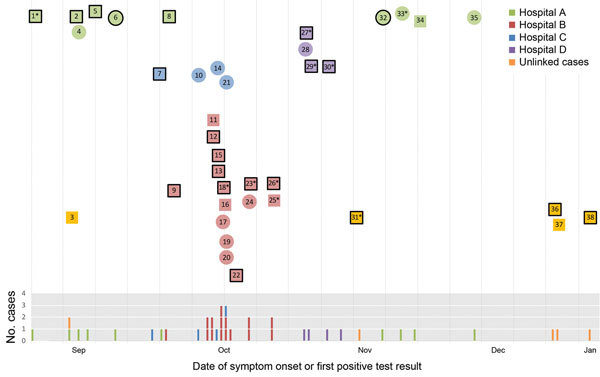
Description:Middle East respiratory syndrome (MERS) coronavirus (MERS-CoV) is a novel respiratory pathogen first reported in 2012. During September 2014-January 2015, an outbreak of 38 cases of MERS was reported from 4 healthcare facilities in Taif, Saudi Arabia; 21 of the 38 case-patients died. Clinical and public health records showed that 13 patients were healthcare personnel (HCP). Fifteen patients, including 4 HCP, were associated with 1 dialysis unit. Three additional HCP in this dialysis unit had serologic evidence of MERS-CoV infection. Viral RNA was amplified from acute-phase serum specimens of 15 patients, and full spike gene-coding sequencing was obtained from 10 patients who formed a discrete cluster; sequences from specimens of 9 patients were closely related. Similar gene sequences among patients unlinked by time or location suggest unrecognized viral transmission. Circulation persisted in multiple healthcare settings over an extended period, underscoring the importance of strengthening MERS-CoV surveillance and infection-control practices.
-
Subjects:
-
Source:Emerg Infect Dis. 22(1):32-40.
-
Pubmed ID:26692003
-
Pubmed Central ID:PMC4696715
-
Document Type:
-
Place as Subject:
-
Volume:22
-
Issue:1
-
Collection(s):
-
Main Document Checksum:urn:sha256:9cbcf3059fa025b4d6351242659f3fc926bc5138d77a24edc9e1818b881922ef
-
Download URL:
-
File Type:
 [PDF
- 1.12 MB
]
[PDF
- 1.12 MB
]
Supporting Files


File Language:
English
ON THIS PAGE



CDC STACKS serves as an archival repository of CDC-published products including
scientific findings,
journal articles, guidelines, recommendations, or other public health information authored or
co-authored by CDC or funded partners.
As a repository, CDC STACKS retains documents in their original published format to ensure public access to scientific information.
As a repository, CDC STACKS retains documents in their original published format to ensure public access to scientific information.
You May Also Like
COLLECTION
Emerging Infectious Diseases