


THE EFFECT OF TUNGSTATE NANOPARTICLES ON REACTIVE OXYGEN SPECIES AND CYTOTOXICITY IN RAW 264.7 MOUSE MONOCYTE MACROPHAGE CELLS
Supporting Files

-
2014
File Language:
English
Details
-
Alternative Title:J Toxicol Environ Health A
-
Personal Author:
-
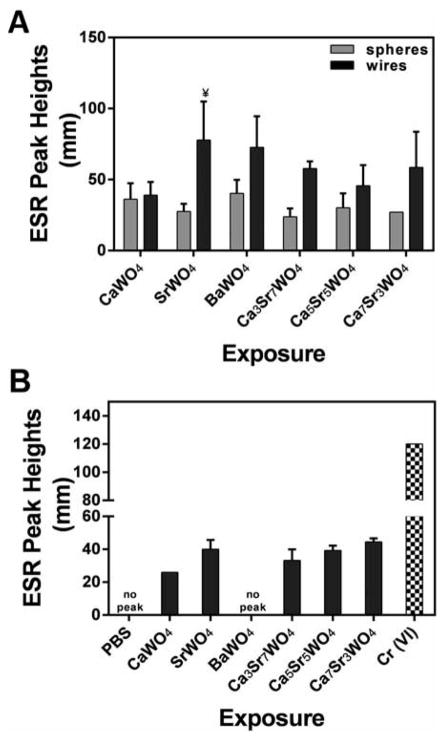
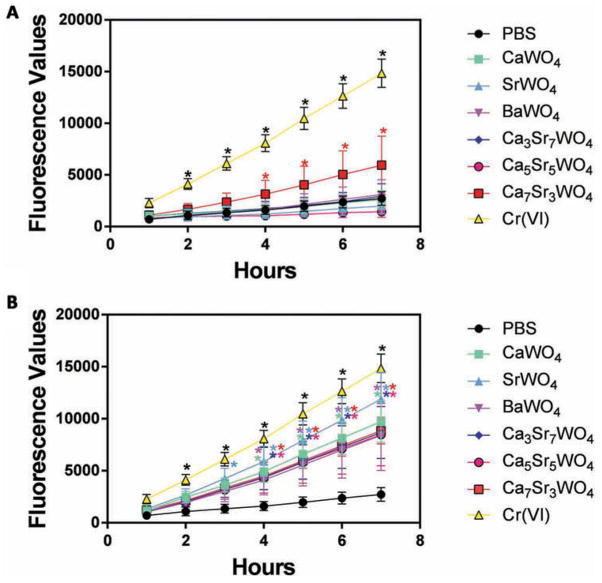
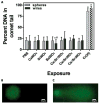
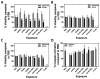
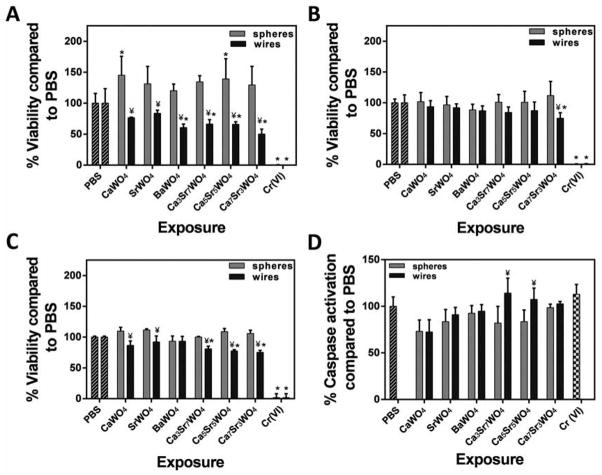
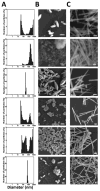
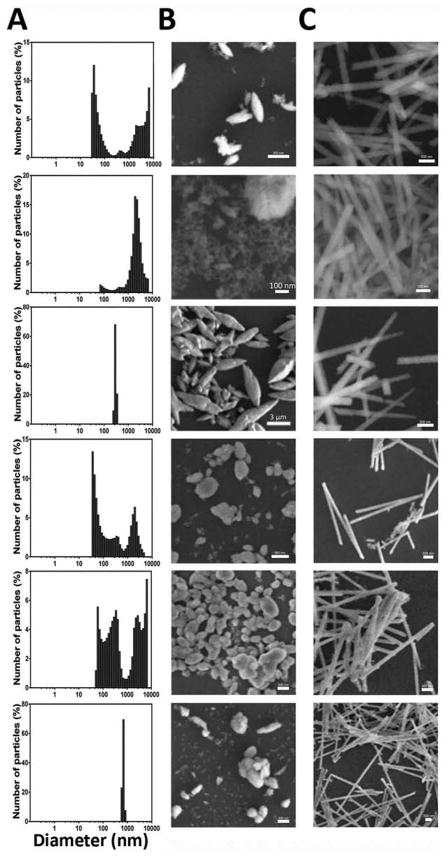
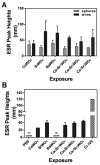
Description:Due to their unique size, surface area, and chemical characteristics, nanoparticles' use in consumer products has increased. However, the toxicity of nanoparticle (NP) exposure during the manufacturing process has not been fully assessed. Tungstate NP are used in numerous products, including but not limited to scintillator detectors and fluorescent lighting. As with many NP, no apparent toxicity studies have been completed with tungstate NP. The hypothesis that tungstate NP in vitro exposure results in reactive oxygen species (ROS) formation and cytotoxicity was examined. Differences in toxicity based on tungstate NP size, shape (sphere vs. wire), and chemical characteristics were determined. RAW 264.7 mouse monocyte macrophages were exposed to tungstate NP, and ROS formation was assessed via electron spin resonance (ESR), and several assays including hydrogen peroxide, intracellular ROS, and Comet. Results showed ROS production induced by tungstate nanowire exposure, but this exposure did not result in oxidative DNA damage. Nanospheres showed neither ROS nor DNA damage following cellular exposure. Cells were exposed over 72 h to assess cytotoxicity using an MTT (tetrazolium compound) assay. Results showed that differences in cell death between wires and spheres occurred at 24 h but were minimal at both 48 and 72 h. The present results indicate that tungstate nanowires are more reactive and produce cell death within 24 h of exposure, whereas nanospheres are less reactive and did not produce cell death. Results suggest that differences in shape may affect reactivity. However, regardless of the differences in reactivity, in general both shapes produced mild ROS and resulted in minimal cell death at 48 and 72 h in RAW 264.7 cells.
-
Keywords:
-
Source:J Toxicol Environ Health A. 77(20):1251-1268
-
Pubmed ID:25208664
-
Pubmed Central ID:PMC4701033
-
Document Type:
-
Funding:
-
Volume:77
-
Issue:20
-
Collection(s):
-
Main Document Checksum:urn:sha256:152ca5ca51a658f74678ee10affafa9274bbc238c19378aa0de6f0233e9a5204
-
Download URL:
-
File Type:
 [PDF
- 1.31 MB
]
[PDF
- 1.31 MB
]
Supporting Files


File Language:
English
ON THIS PAGE




CDC STACKS serves as an archival repository of CDC-published products including
scientific findings,
journal articles, guidelines, recommendations, or other public health information authored or
co-authored by CDC or funded partners.
As a repository, CDC STACKS retains documents in their original published format to ensure public access to scientific information.
As a repository, CDC STACKS retains documents in their original published format to ensure public access to scientific information.
You May Also Like
COLLECTION
CDC Public Access