


Typical noise exposure in daily life
Supporting Files

-
Feb 2012
-
File Language:
English
Details
-
Alternative Title:Int J Audiol
-
Personal Author:
-
Description:Objective
Identify the distribution of typical noise levels present in daily life and identify factors associated with average sound levels.
Design
This was an observational study.
Study sample
Participants (N = 286) were 20 to 68 year old men and women, drawn from the general population of Kalamazoo County, Michigan . A total of 73 000 person-hours of noise monitoring were conducted.
Results
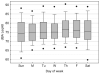
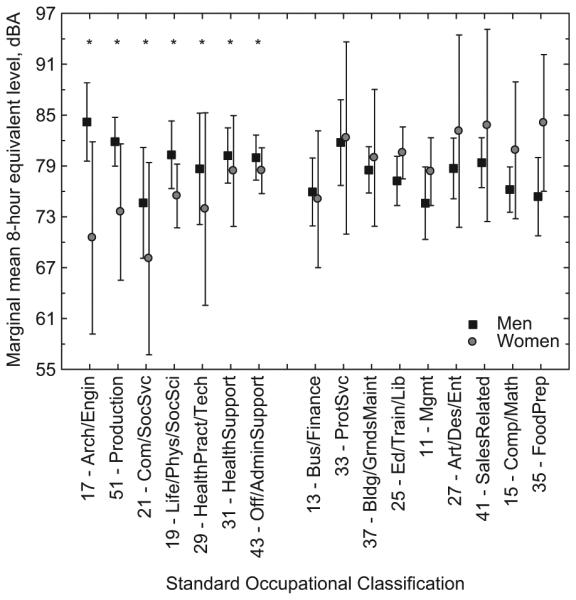
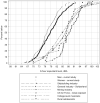
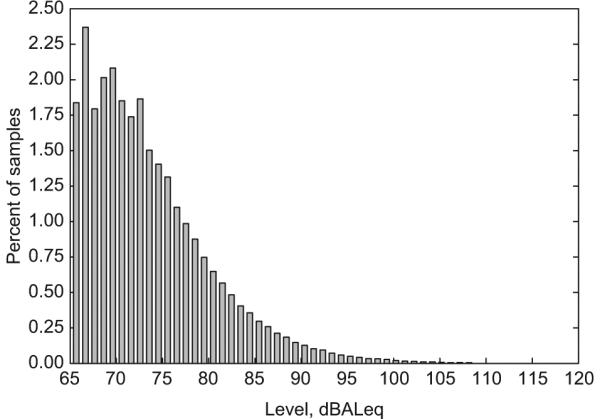
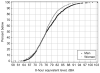
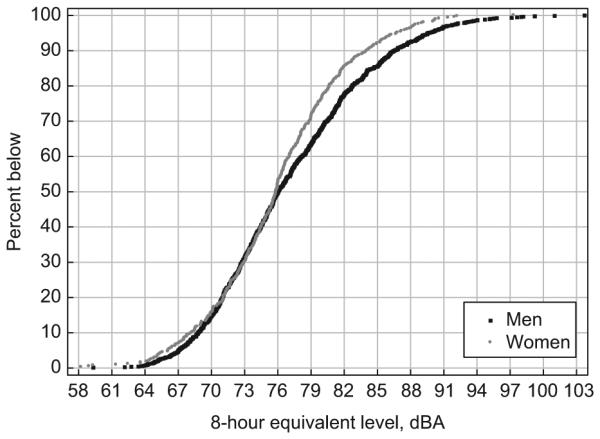
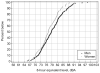
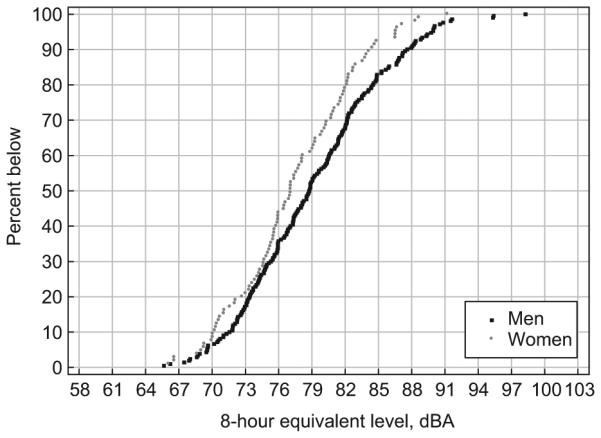
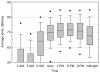
Median overall daily average levels were 79 and 77 dBLeqA,8,equiv , with average levels exceeding EPA recommended levels for 70% of participants. Median levels were similar between the hours of 9 a.m. and 9 p.m., and varied little across days of the week. Gender, occupational classification, and history of occupational noise exposure were related to average noise levels, but age, educational attainment, and non-occupational noise exposures were not.
Conclusions
A large portion of the general population is exposed to noise levels that could result in long-term adverse effects on hearing. Gender and occupation were most strongly related to exposure, though most participants in this study had occupations that are not conventionally considered noisy.
-
Subjects:
-
Source:Int J Audiol. 51(0 1):S3-11.
-
Pubmed ID:22264061
-
Pubmed Central ID:PMC4685462
-
Document Type:
-
Funding:
-
Volume:51
-
Collection(s):
-
Main Document Checksum:urn:sha256:2ab465a96e7ce795e858a408b50268a45b265c219141a4e05a5b9f5d6405a45f
-
Download URL:
-
File Type:
 [PDF
- 462.84 KB
]
[PDF
- 462.84 KB
]
Supporting Files


File Language:
English
ON THIS PAGE






CDC STACKS serves as an archival repository of CDC-published products including
scientific findings,
journal articles, guidelines, recommendations, or other public health information authored or
co-authored by CDC or funded partners.
As a repository, CDC STACKS retains documents in their original published format to ensure public access to scientific information.
As a repository, CDC STACKS retains documents in their original published format to ensure public access to scientific information.
You May Also Like
COLLECTION
CDC Public Access