


Domestic exposure to fungal allergenic particles determined by halogen immunoassay using subject's serum versus particles carrying three non-fungal allergens determined by allergen-specific HIA
Supporting Files

-
January 13 2014
-
File Language:
English
Details
-
Alternative Title:Indoor Air
-
Personal Author:
-
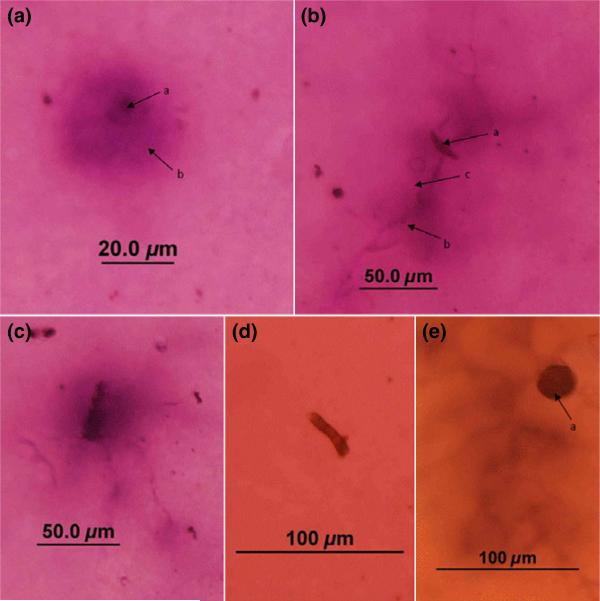
Description:Studies that estimate indoor aeroallergen exposure typically measure a pre-selected limited range of allergens. In this study, inhalable aeroallergen particles were quantified using the halogen immunoassay (HIA) to determine the contribution of fungal and non-fungal aeroallergens to total allergen exposure. Bioaerosols from 39 homes of fungal-allergic subjects were sampled using inhalable fraction samplers and immunostained by HIA using resident subject's immunoglobulin E (IgE) to detect allergen-laden particles. Fungal aerosols as well as particles carrying mite, cat, and cockroach allergens were identified and enumerated by HIA. Reservoir dust-mite (Der p 1), cat (Fel d 1), and cockroach (Bla g 1) allergen concentrations were quantified by ELISA. Fungal particles that bound subject's IgE in the HIA were 1.7 (bedroom)- and 1.4 (living room)-fold more concentrated than Der p 1, Fel d 1, and Bla g 1 allergen particles combined. Predominant fungal conidia that bound IgE were derived from common environmental genera including Cladosporium and other fungi that produce amerospores. Airborne mite, cat, and cockroach allergen particle counts were not associated with reservoir concentrations determined by ELISA. This study demonstrates that inhalable fungal aerosols are the predominant aeroallergen sources in Sydney homes and should be considered in future exposure assessments.|Indoor allergen exposure assessment studies have primarily focused on a limited range of allergen sources in samples derived from reservoir dust samples. Using an innovative immunodiagnostic approach, this study demonstrates that fungal bioaerosols are the dominant source of aeroallergen exposure in the domestic environment, providing unique insight into domestic aeroallergen exposure.
-
Subjects:
-
Source:Indoor Air. 24(4):438-445
-
Pubmed ID:24354925
-
Pubmed Central ID:PMC4678322
-
Document Type:
-
Funding:
-
Volume:24
-
Issue:4
-
Collection(s):
-
Main Document Checksum:urn:sha256:89002d8d0b34b0ab656a5e24472dbf0d19d8f2321351e7bd81e8ff523a30e537
-
Download URL:
-
File Type:
 [PDF
- 347.70 KB
]
[PDF
- 347.70 KB
]
Supporting Files


File Language:
English
ON THIS PAGE

CDC STACKS serves as an archival repository of CDC-published products including
scientific findings,
journal articles, guidelines, recommendations, or other public health information authored or
co-authored by CDC or funded partners.
As a repository, CDC STACKS retains documents in their original published format to ensure public access to scientific information.
As a repository, CDC STACKS retains documents in their original published format to ensure public access to scientific information.
You May Also Like
COLLECTION
CDC Public Access