



Airborne Fiber Size Characterization in Exposure Estimation: Evaluation of a Modified Transmission Electron Microcopy Protocol for Asbestos and Potential Use for Carbon Nanotubes and Nanofibers
Supporting Files
Peer Reviewed

-
2015/02/12
-
Available in CDC Stacks on May 01, 2016, 12:00 AM
File Language:
English
Details
-
Journal Article:American Journal of Industrial Medicine
-
Personal Author:
-
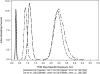
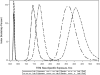
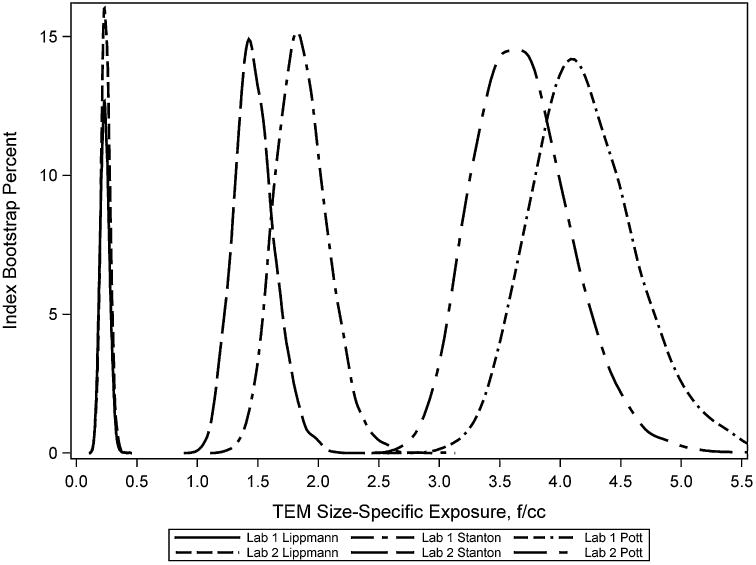
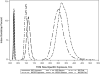
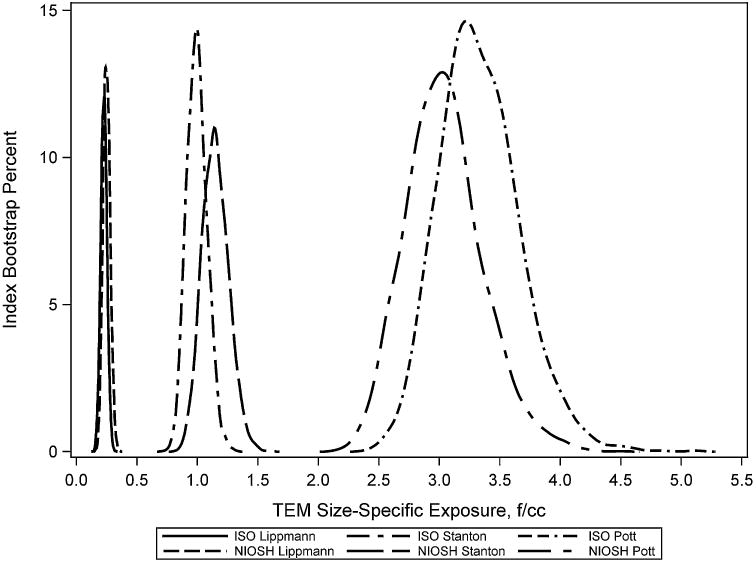
Description:Background: Airborne fiber size has been shown to be an important factor relative to adverse lung effects of asbestos and suggested in animal studies of carbon nanotubes and nanofibers (CNT/CNF). Materials and Methods: The International Standards Organization (ISO) transmission electron microscopy (TEM) method for asbestos was modified to increase the statistical precision of fiber size determinations, improve efficiency, and reduce analysis costs. Comparisons of the fiber size distributions and exposure indices by laboratory and counting method were performed. Results: No significant differences in size distributions by the ISO and modified ISO methods were observed. Small but statistically-significant inter-lab differences in the proportion of fibers in some size bins were found, but these differences had little impact on the summary exposure indices. The modified ISO method produced slightly more precise estimates of the long fiber fraction (>15 µm). Conclusions: The modified ISO method may be useful for estimating size-specific structure exposures, including CNT/CNF, for risk assessment research. Description provided by NIOSH
-
Subjects:
-
Keywords:
-
Source:Am J Ind Med 2015 May; 58(5):494-508
-
ISSN:0271-3586
-
Pubmed ID:25675894
-
Pubmed Central ID:PMC4672997
-
Document Type:
-
Funding:
-
Genre:
-
Place as Subject:
-
CIO:
-
Division:
-
Topic:
-
Location:
-
Pages in Document:29 pdf pages
-
Volume:58
-
Issue:5
-
NIOSHTIC Number:nn:20045757
-
Contact Point Address:John M. Dement, PhD, Department of Community & Family Medicine, Division of Occupational & Environmental Medicine, Duke University Medical Center, 2200 W. Main Street, Suite 400, Durham, NC 27705
-
Email:ohn.dement@duke.edu
-
CAS Registry Number:
-
Federal Fiscal Year:2015
-
NORA Priority Area:
-
Peer Reviewed:True
-
Download URL:
-
File Type:
 [PDF - 323.22 KB]
 -
Collection(s):
-
Main Document Checksum:urn:sha-512:2a729be3ddbfdd42d2f2384bd612427288035dc8898784001eb5f75b36b8aeb542f3f1c58e48268e140f511b67450ea4c36759e0f18f70f10c6cbb0846e37a68
Supporting Files


File Language:
English
 Was this page helpful?
 Found an issue?




CDC STACKS serves as an archival repository of CDC-published products including
scientific findings, journal articles, guidelines, recommendations, or other public health information authored or
co-authored by CDC or funded partners.
As a repository, CDC STACKS retains documents in their original published format to ensure public access to scientific information.
As a repository, CDC STACKS retains documents in their original published format to ensure public access to scientific information.
You May Also Like