



Zoonotic Leprosy in the Southeastern United States
Supporting Files
Public Domain

-
2015/12/01
File Language:
English
Details
-
Alternative Title:Emerg Infect Dis
-
Personal Author:Sharma, Rahul ; Singh, Pushpendra ; Loughry, W.J. ; Lockhart, J. Mitchell ; Inman, W. Barry ; Duthie, Malcolm S. ; Pena, Maria T. ; Marcos, Luis A. ; Scollard, David M. ; Cole, Stewart T. ; Truman, Richard W.
-
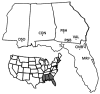
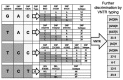
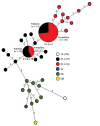
Description:Nine-banded armadillos (Dasypus novemcinctus) are naturally infected with Mycobacterium leprae and have been implicated in zoonotic transmission of leprosy. Early studies found this disease mainly in Texas and Louisiana, but armadillos in the southeastern United States appeared to be free of infection. We screened 645 armadillos from 8 locations in the southeastern United States not known to harbor enzootic leprosy for M. leprae DNA and antibodies. We found M. leprae-infected armadillos at each location, and 106 (16.4%) animals had serologic/PCR evidence of infection. Using single-nucleotide polymorphism variable number tandem repeat genotyping/genome sequencing, we detected M. leprae genotype 3I-2-v1 among 35 armadillos. Seven armadillos harbored a newly identified genotype (3I-2-v15). In comparison, 52 human patients from the same region were infected with 31 M. leprae types. However, 42.3% (22/52) of patients were infected with 1 of the 2 M. leprae genotype strains associated with armadillos. The geographic range and complexity of zoonotic leprosy is expanding.
-
Subjects:
-
Source:Emerg Infect Dis. 21(12):2127-2134
-
Pubmed ID:26583204
-
Pubmed Central ID:PMC4672434
-
Document Type:
-
Genre:
-
Place as Subject:
-
Location:
-
Volume:21
-
Issue:12
-
Download URL:
-
File Type:
 [PDF - 578.13 KB]
 -
Collection(s):
-
Main Document Checksum:urn:sha-512:7ed6539c5818d623facd54762dcbdb909d13600cc04a6a57c474338a915d6c50d5caf6742070e8fe9ffd41a60009258209e39d8c60491e73b74369ca1934133b
Supporting Files


File Language:
English
 Was this page helpful?
 Found an issue?




CDC STACKS serves as an archival repository of CDC-published products including
scientific findings, journal articles, guidelines, recommendations, or other public health information authored or
co-authored by CDC or funded partners.
As a repository, CDC STACKS retains documents in their original published format to ensure public access to scientific information.
As a repository, CDC STACKS retains documents in their original published format to ensure public access to scientific information.
You May Also Like
COLLECTION
Emerging Infectious Diseases