



Pulmonary inflammatory effects of source-oriented particulate matter from California’s San Joaquin Valley
Supporting Files

-
Oct 1 2015
-
Details
-
Alternative Title:Atmos Environ (1994)
-
Personal Author:
-
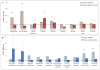
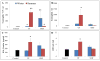
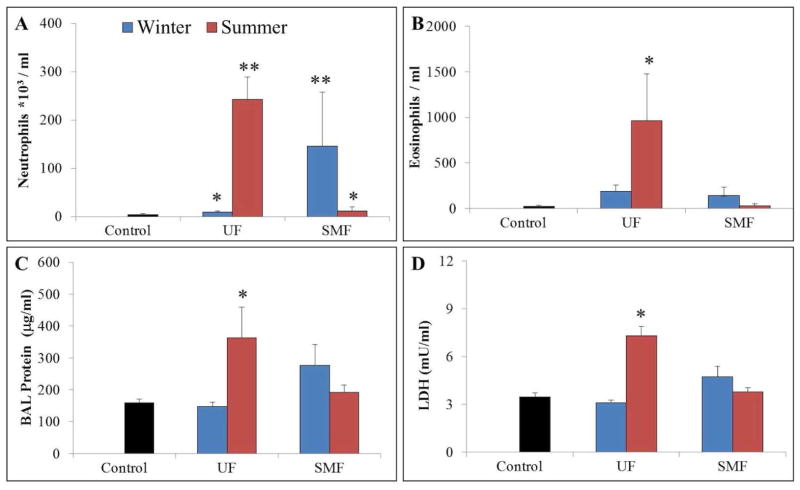
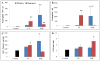
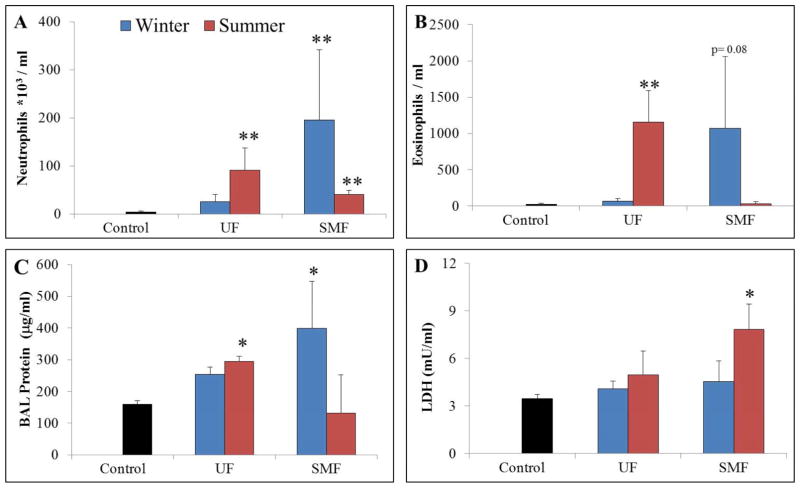
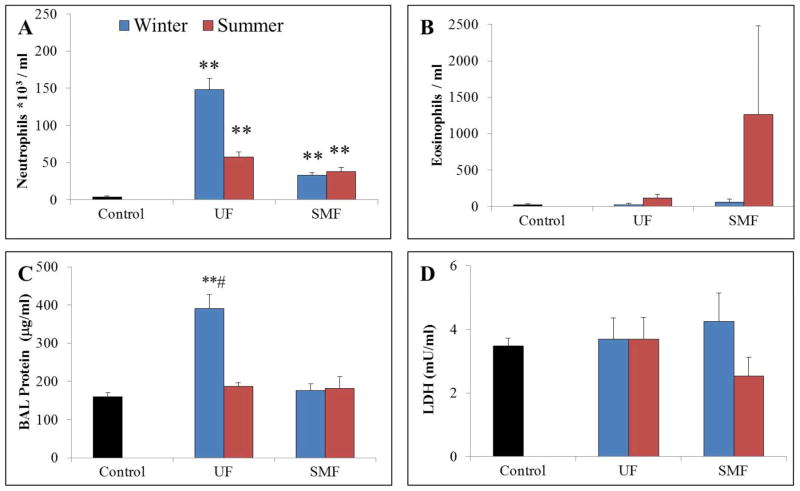
Description:The EPA regulates ambient particulate matter (PM) because substantial associations have been established between PM and health impacts. Presently, regulatory compliance involves broad control of PM emission sources based on mass concentration rather than chemical composition, although PM toxicity is likely to vary depending upon PM physicochemical properties. The overall objective of this study was to help inform source-specific PM emission control regulations. For the first time, source-oriented PM was collected from the atmosphere in Fresno, CA, onto 38 source/size substrates. Mice were exposed via oropharyngeal aspiration to equivalent mass doses [50 μg] of two size fractions: ultrafine (Dp < 0.17μm) and submicron fine (0.17 < Dp < 1 μm) during summer and winter seasons. At 24 hours post-exposure, cellular and biochemical indicators of pulmonary inflammation were evaluated in the bronchoalveolar lavage fluid. Significant inflammatory responses were elicited by vehicle, regional background, and cooking PM sources that were dependent on season and particle size. This is the first study of source-oriented toxicity of atmospheric PM and supports source-specific emissions control strategies.
-
Subjects:
-
Source:Atmos Environ (1994). 119:174-181.
-
Pubmed ID:26568698
-
Pubmed Central ID:PMC4639935
-
Document Type:
-
Funding:
-
Volume:119
-
Collection(s):
-
Main Document Checksum:urn:sha256:2726bdda19687c29551edf7eb30550b1d161b8b6342377431d7d25cd92b45afe
-
Download URL:
-
File Type:
 [PDF
- 1.20 MB
]
[PDF
- 1.20 MB
]
Supporting Files


 Was this page helpful?
 Found an issue?





CDC STACKS serves as an archival repository of CDC-published products including
scientific findings,
journal articles, guidelines, recommendations, or other public health information authored or
co-authored by CDC or funded partners.
As a repository, CDC STACKS retains documents in their original published format to ensure public access to scientific information.
As a repository, CDC STACKS retains documents in their original published format to ensure public access to scientific information.
You May Also Like
COLLECTION
CDC Public Access