



On-line solid phase extraction-high performance liquid chromatography–isotope dilution–tandem mass spectrometry approach to quantify N,N-diethyl-m-toluamide and oxidative metabolites in urine
Supporting Files

-
Jun 06 2013
-
Available in CDC Stacks on 2015-11-02T00:00:00Z
Details
-
Alternative Title:Anal Chim Acta
-
Personal Author:
-
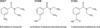
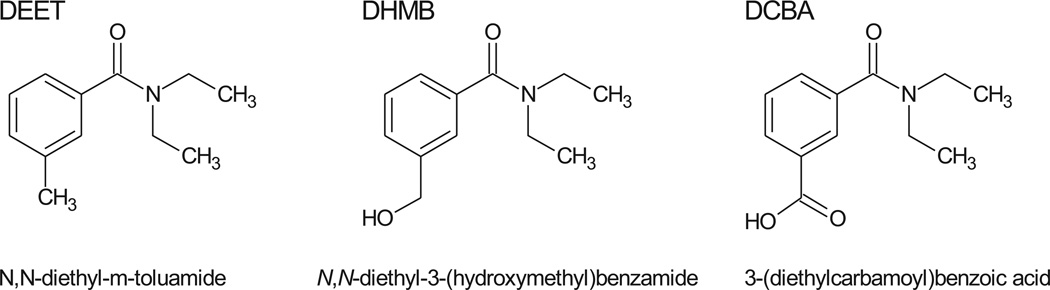
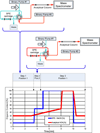
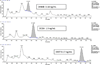
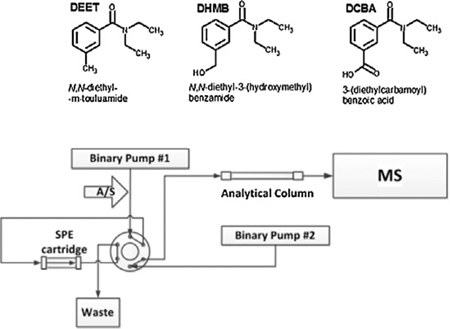
Description:Human exposure to N,N-diethyl-m-toluamide (DEET) occurs because of the widespread use of DEET as an active ingredient in insect repellents. However, information on the extent of such exposure is rather limited. Therefore, we developed a fast on-line solid phase extraction-high performance liquid chromatography-isotope dilution tandem mass spectrometry (HPLC-MS/MS) method to measure in urine the concentrations of DEET and two of its oxidative metabolites: N,N-diethyl-3-(hydroxymethyl)benzamide and 3-(diethylcarbamoyl)benzoic acid (DCBA). To the best of our knowledge, this is the first HPLC-MS/MS method for the simultaneous quantification of DEET and its select metabolites in human urine. After enzymatic hydrolysis of the conjugated species in 0.1 mL of urine, the target analytes were retained and pre-concentrated on a monolithic column, separated from each other and from other urinary biomolecules on a reversed-phase analytical column, and detected by atmospheric pressure chemical ionization in positive ion mode. The limits of detection ranged from 0.1 ng mL(-1) to 1.0 ng mL(-1), depending on the analyte. Accuracy ranged between 90.4 and 104.9%, and precision ranged between 5.5 and 13.1% RSD, depending on the analyte and the concentration. We tested the usefulness of this method by analyzing 75 urine samples collected anonymously in the Southeastern United States in June 2012 from adults with no known exposure to DEET. Thirty eight samples (51%) tested positive for at least one of the analytes. We detected DCBA most frequently and at the highest concentrations. Our results suggest that this method can be used for the analysis of a large number of samples for epidemiological studies to assess human exposure to DEET.
-
Subjects:
-
Source:Anal Chim Acta. 787:267-273.
-
Pubmed ID:23830449
-
Pubmed Central ID:PMC4629821
-
Document Type:
-
Funding:
-
Volume:787
-
Download URL:
-
File Type:
 [PDF - 1.07 MB]
 -
Collection(s):
-
Main Document Checksum:urn:sha256:3de549236b36420aad0bf97aa1b10a86e47f8b8c16220cd5a670ce80280eb8a2
Supporting Files


 Was this page helpful?
 Found an issue?



CDC STACKS serves as an archival repository of CDC-published products including
scientific findings, journal articles, guidelines, recommendations, or other public health information authored or
co-authored by CDC or funded partners.
As a repository, CDC STACKS retains documents in their original published format to ensure public access to scientific information.
As a repository, CDC STACKS retains documents in their original published format to ensure public access to scientific information.
You May Also Like
COLLECTION
CDC Public Access