



Connectedness and Perceived Burdensomeness among Adolescents at Elevated Suicide Risk: An Examination of the Interpersonal Theory of Suicidal Behavior
Supporting Files

-
Mar 09 2015
-
Available in CDC Stacks on March 09, 2016, 12:00 AM
Details
-
Alternative Title:Arch Suicide Res
-
Personal Author:
-
Description:Objective
The interpersonal theory of suicidal behavior emphasizes the constructs of perceived burdensomeness, thwarted belongingness, and acquired capacity, which warrant investigation in adolescents at-risk for suicide due to interpersonal stressors.
Methods
This study examined one component of the interpersonal theory of suicidal behavior, “suicidal desire” (suicidal ideation), in 129 adolescents (12–15 years) recruited from a general medical emergency department who screened positive for bully victimization, bully perpetration, or low interpersonal connectedness.
Results
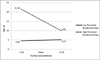
Greater perceived burdensomeness combined with low family connectedness was a significant predictor of suicidal ideation.
Conclusion
This suggests the importance of addressing connectedness and perceptions of burdensomeness in prevention and early intervention efforts with at-risk adolescents. -
Subjects:
-
Source:Arch Suicide Res. 19(3):385-400.
-
Pubmed ID:25751375
-
Pubmed Central ID:PMC4665648
-
Document Type:
-
Funding:
-
Volume:19
-
Issue:3
-
Download URL:
-
File Type:
 [PDF - 519.35 KB]
 -
Collection(s):
-
Main Document Checksum:urn:sha256:254f8027d72fbc7fd0384f0d30f5a32eb01d84240dfef8d63e4b6b9303599b5b
Supporting Files


 Was this page helpful?
 Found an issue?


CDC STACKS serves as an archival repository of CDC-published products including
scientific findings, journal articles, guidelines, recommendations, or other public health information authored or
co-authored by CDC or funded partners.
As a repository, CDC STACKS retains documents in their original published format to ensure public access to scientific information.
As a repository, CDC STACKS retains documents in their original published format to ensure public access to scientific information.
You May Also Like
COLLECTION
CDC Public Access