



Risks of miscarriage and inadvertent exposure to artemisinin derivatives in the first trimester of pregnancy: a prospective cohort study in western Kenya
Supporting Files
Public Domain

-
Nov 18 2015
-
Available in CDC Stacks on 2015-11-18T00:00:00Z
Details
-
Alternative Title:Malar J
-
Personal Author:Dellicour, Stephanie ; Desai, Meghna ; Aol, George ; Oneko, Martina ; Ouma, Peter ; Bigogo, Godfrey ; Burton, Deron C. ; Breiman, Robert F. ; Hamel, Mary J. ; Slutsker, Laurence ; Feikin, Daniel ; Kariuki, Simon ; Odhiambo, Frank ; Pandit, Jayesh ; Laserson, Kayla F. ; Calip, Greg ; Stergachis, Andy ; ter Kuile, Feiko O.
-
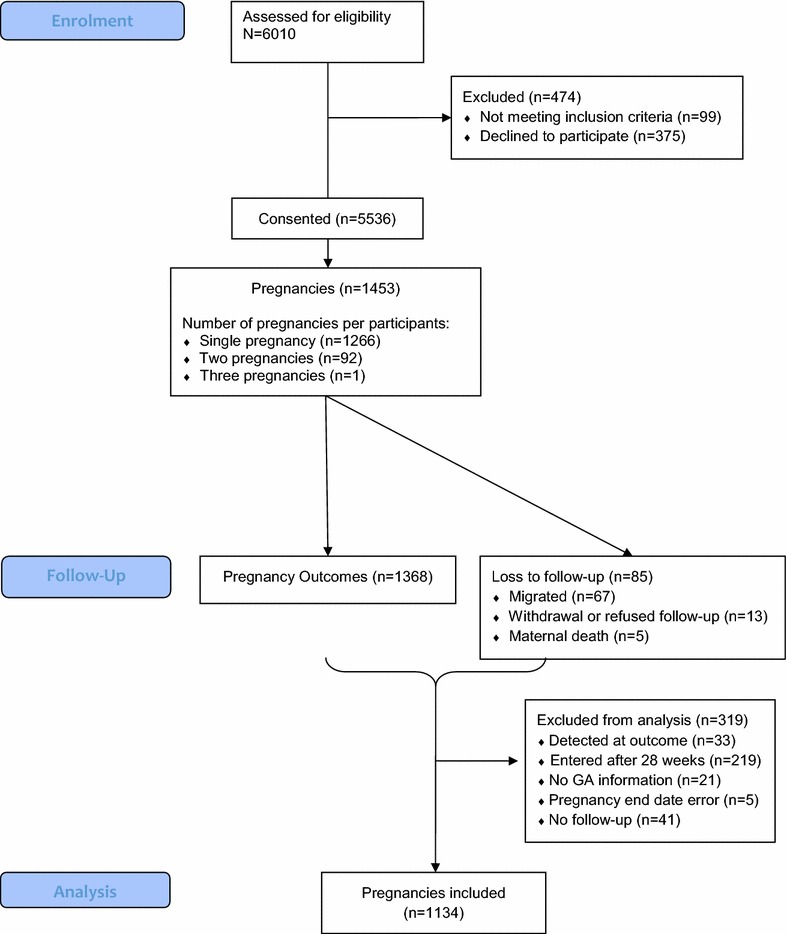
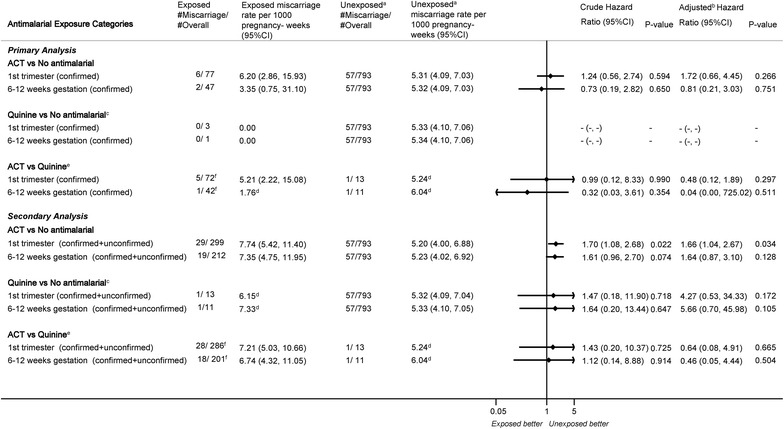
Description:Background ; The artemisinin anti-malarials are widely deployed as artemisinin-based combination therapy (ACT). However, they are not recommended for uncomplicated malaria during the first trimester because safety data from humans are scarce. ; Methods ; This was a prospective cohort study of women of child-bearing age carried out in 2011–2013, evaluating the relationship between inadvertent ACT exposure during first trimester and miscarriage. Community-based surveillance was used to identify 1134 early pregnancies. Cox proportional hazard models with left truncation were used. ; Results ; The risk of miscarriage among pregnancies exposed to ACT (confirmed + unconfirmed) in the first trimester, or during the embryo-sensitive period (≥6 to <13 weeks gestation) was higher than among pregnancies unexposed to anti-malarials in the first trimester: hazard ratio (HR) = 1.70, 95 % CI (1.08–2.68) and HR = 1.61 (0.96–2.70). For confirmed ACT-exposures (primary analysis) the corresponding values were: HR = 1.24 (0.56–2.74) and HR = 0.73 (0.19–2.82) relative to unexposed women, and HR = 0.99 (0.12–8.33) and HR = 0.32 (0.03–3.61) relative to quinine exposure, but the numbers of quinine exposures were very small. ; Conclusion ; ACT exposure in early pregnancy was more common than quinine exposure. Confirmed inadvertent artemisinin exposure during the potential embryo-sensitive period was not associated with increased risk of miscarriage. Confirmatory studies are needed to rule out a smaller than three-fold increase in risk. ; Electronic supplementary material ; The online version of this article (doi:10.1186/s12936-015-0950-6) contains supplementary material, which is available to authorized users.
-
Subjects:
-
Source:Malar J. 14.
-
Pubmed ID:26581434
-
Pubmed Central ID:PMC4652370
-
Document Type:
-
Place as Subject:
-
Volume:14
-
Download URL:
-
File Type:
 [PDF - 1.00 MB]
 -
Collection(s):
-
Main Document Checksum:urn:sha256:c45b14108a1138c02911335cea17684faf14a6ed633f07e938eabaac28320cab
Supporting Files


 Was this page helpful?
 Found an issue?



CDC STACKS serves as an archival repository of CDC-published products including
scientific findings, journal articles, guidelines, recommendations, or other public health information authored or
co-authored by CDC or funded partners.
As a repository, CDC STACKS retains documents in their original published format to ensure public access to scientific information.
As a repository, CDC STACKS retains documents in their original published format to ensure public access to scientific information.
You May Also Like
COLLECTION
CDC Public Access