


USA300 Methicillin-Resistant Staphylococcus aureus, United States, 2000–2013
Supporting Files
Public Domain

-
Nov 2015
File Language:
English
Details
-
Alternative Title:Emerg Infect Dis
-
Personal Author:
-
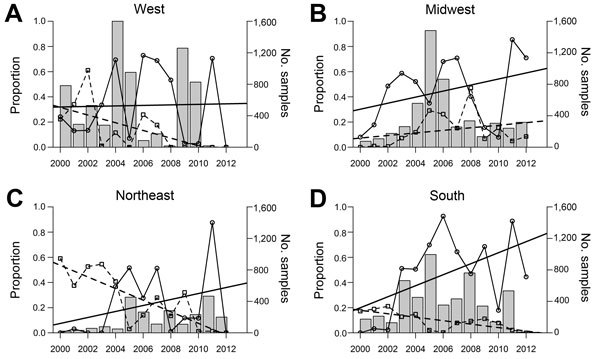
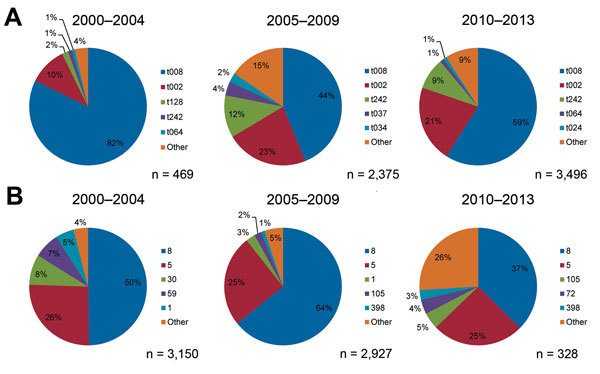
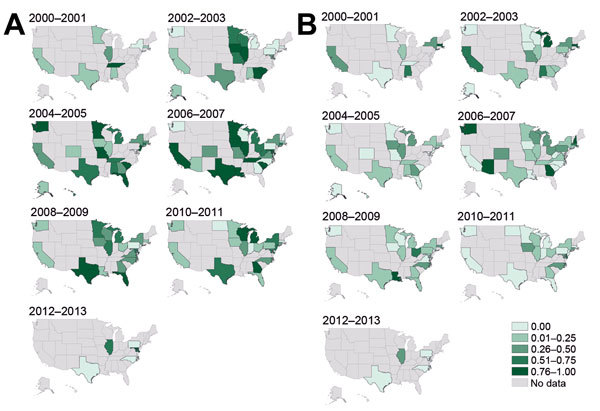
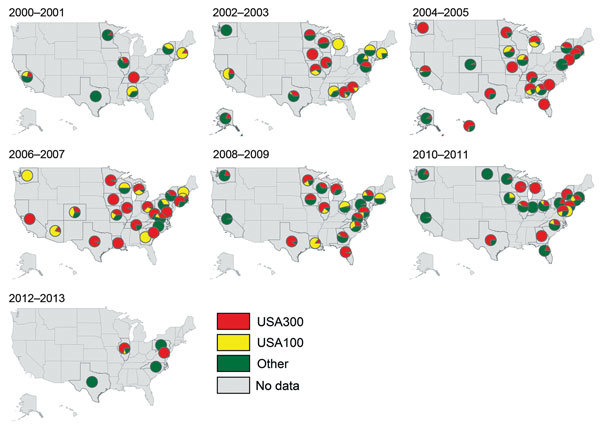
Description:In the United States, methicillin-resistant Staphylococcus aureus (MRSA) with the USA300 pulsed-field gel electrophoresis type causes most community-associated MRSA infections and is an increasingly common cause of health care-associated MRSA infections. USA300 probably emerged during the early 1990s. To assess the spatiotemporal diffusion of USA300 MRSA and USA100 MRSA throughout the United States, we systematically reviewed 354 articles for data on 33,543 isolates, of which 8,092 were classified as USA300 and 2,595 as USA100. Using the biomedical literature as a proxy for USA300 prevalence among genotyped MRSA samples, we found that USA300 was isolated during 2000 in several states, including California, Texas, and midwestern states. The geographic mean center of USA300 MRSA then shifted eastward from 2000 to 2013. Analyzing genotyping studies enabled us to track the emergence of a new, successful MRSA type in space and time across the country.
-
Subjects:
-
Source:Emerg Infect Dis. 21(11):1973-1980
-
Pubmed ID:26484389
-
Pubmed Central ID:PMC4622244
-
Document Type:
-
Place as Subject:
-
Location:
-
Volume:21
-
Issue:11
-
Collection(s):
-
Main Document Checksum:urn:sha256:b326ab9dc85b044c53bb0e66177c6141ab06af2fa8d9e722df848c9640cc5351
-
Download URL:
-
File Type:
 [PDF
- 2.25 MB
]
[PDF
- 2.25 MB
]
Supporting Files


File Language:
English
ON THIS PAGE





CDC STACKS serves as an archival repository of CDC-published products including
scientific findings,
journal articles, guidelines, recommendations, or other public health information authored or
co-authored by CDC or funded partners.
As a repository, CDC STACKS retains documents in their original published format to ensure public access to scientific information.
As a repository, CDC STACKS retains documents in their original published format to ensure public access to scientific information.
You May Also Like
COLLECTION
Emerging Infectious Diseases