


Human Infection with Ehrlichia muris–like Pathogen, United States, 2007–20131
Supporting Files
Public Domain

-
Oct 2015
File Language:
English
Details
-
Alternative Title:Emerg Infect Dis
-
Personal Author:Johnson, Diep K. Hoang ; Schiffman, Elizabeth K. ; Davis, Jeffrey P. ; Neitzel, David F. ; Sloan, Lynne M. ; Nicholson, William L. ; Fritsche, Thomas R. ; Steward, Christopher R. ; Ray, Julie A. ; Miller, Tracy K. ; Feist, Michelle A. ; Uphoff, Timothy S. ; Franson, Joni J. ; Livermore, Amy L. ; Deedon, Alecia K. ; Theel, Elitza S. ; Pritt, Bobbi S.
-
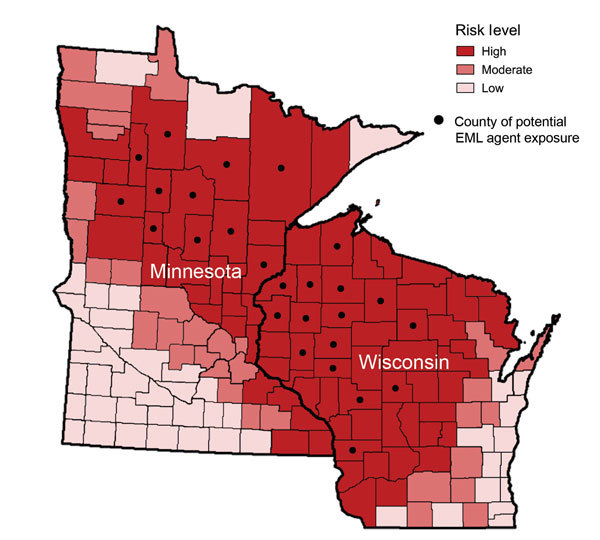
Description:An Ehrlichia muris-like (EML) pathogen was detected among 4 patients in Minnesota and Wisconsin during 2009. We characterized additional cases clinically and epidemiologically. During 2004-2013, blood samples from 75,077 patients from all 50 United States were tested by PCR from the groEL gene for Ehrlichia spp. and Anaplasma phagocytophilum. During 2007-2013, samples from 69 (0.1%) patients were positive for the EML pathogen; patients were from 5 states: Indiana (1), Michigan (1), Minnesota (33), North Dakota (3), and Wisconsin (31). Most (64%) patients were male; median age was 63 (range 15-94) years; and all 69 patients reported likely tick exposure in Minnesota or Wisconsin. Fever, malaise, thrombocytopenia, and lymphopenia were the most common symptoms. Sixteen (23%) patients were hospitalized (median 4 days); all recovered, and 96% received doxycycline. Infection with the EML pathogen should be considered for persons reporting tick exposure in Minnesota or Wisconsin.
-
Subjects:
-
Source:Emerg Infect Dis. 21(10):1794-1799
-
Pubmed ID:26402378
-
Pubmed Central ID:PMC4593436
-
Document Type:
-
Place as Subject:
-
Location:
-
Volume:21
-
Issue:10
-
Collection(s):
-
Main Document Checksum:urn:sha256:3e4a1c5d1e09ecd5270c598ee02aebaf81fa4285c2c0bacdeaf787c8b8082985
-
Download URL:
-
File Type:
 [PDF
- 448.66 KB
]
[PDF
- 448.66 KB
]
Supporting Files


File Language:
English
ON THIS PAGE




CDC STACKS serves as an archival repository of CDC-published products including
scientific findings,
journal articles, guidelines, recommendations, or other public health information authored or
co-authored by CDC or funded partners.
As a repository, CDC STACKS retains documents in their original published format to ensure public access to scientific information.
As a repository, CDC STACKS retains documents in their original published format to ensure public access to scientific information.
You May Also Like
COLLECTION
Emerging Infectious Diseases