


Characteristics and Factors Associated with Death among Patients Hospitalized for Severe Fever with Thrombocytopenia Syndrome, South Korea, 2013
Supporting Files
Public Domain

-
Oct 2015
-
File Language:
English
Details
-
Alternative Title:Emerg Infect Dis
-
Personal Author:
-
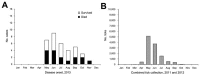
Description:In South Korea, nationwide surveillance for severe fever with thrombocytopenia syndrome (SFTS) began during 2013. Among 301 surveillance cases, 35 hospitalized case-patients in 25 areas were confirmed by using virologic testing, and 16 (46%) case-patients subsequently died. The SFTS cases occurred during May-November and peaked during June (9 cases, 26%). The incidence of SFTS was higher in the southern regions of South Korea. Age and neurologic symptoms, including decreased level of consciousness and slurred speech, were heavily associated with death; neurologic symptoms during the first week after disease onset were also associated with death. Although melena was common among patients who died, no other hemorrhagic manifestations were substantively more common among those who died. No effective treatments, including ribavirin, were identified. Expansion of SFTS surveillance to include the outpatient sector and development of an antibody test would enhance completeness of SFTS detection in South Korea.
-
Subjects:
-
Source:Emerg Infect Dis. 21(10):1704-1710
-
Pubmed ID:26402575
-
Pubmed Central ID:PMC4593431
-
Document Type:
-
Place as Subject:
-
Location:
-
Volume:21
-
Issue:10
-
Collection(s):
-
Main Document Checksum:urn:sha256:90380342b1899dbd02af50b3cdabfa0496164db56595c20df8e67a7881dc9f1f
-
Download URL:
-
File Type:
 [PDF
- 460.37 KB
]
[PDF
- 460.37 KB
]
Supporting Files


File Language:
English
ON THIS PAGE




CDC STACKS serves as an archival repository of CDC-published products including
scientific findings,
journal articles, guidelines, recommendations, or other public health information authored or
co-authored by CDC or funded partners.
As a repository, CDC STACKS retains documents in their original published format to ensure public access to scientific information.
As a repository, CDC STACKS retains documents in their original published format to ensure public access to scientific information.
You May Also Like
COLLECTION
Emerging Infectious Diseases